This article was originally written in Japanese and translated into English by Muse, an AI assistant.
During Golden Week 2026, I rode Amtrak’s long-distance California Zephyr train and crossed (more or less) the entire American continent. Here’s a write-up of the experience.
This travelogue is a trilogy, and this article is Part 2: the ride itself. Links to each part are below — start wherever you like. I’ll add links as each part is finished.
Boarding
This time, we bought tickets from San Francisco to Chicago. Surprisingly, San Francisco has no Amtrak railway station, so you get to the nearby Emeryville station on a connecting bus run by Amtrak.
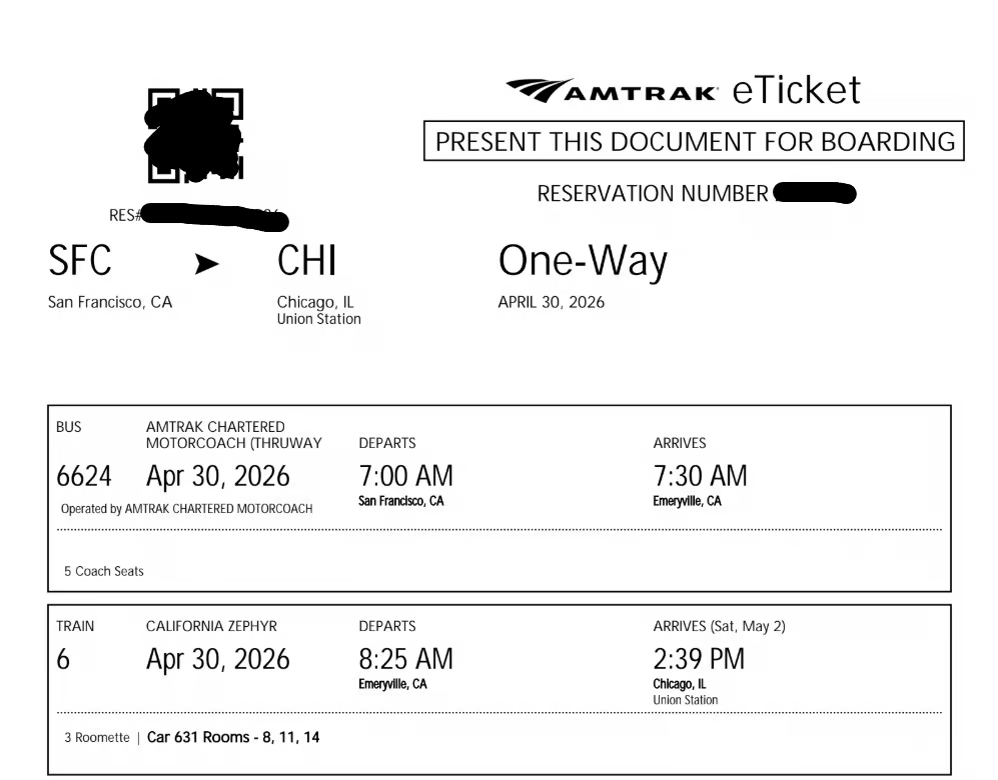
Unlike a plane ticket, it was a single eTicket for all five of us (our five names are listed below it).
Amtrak’s San Francisco bus stop is at Salesforce Plaza. It was registered in the right place on Google Maps, and there’s nothing else eye-catching around, so you should spot it right away.
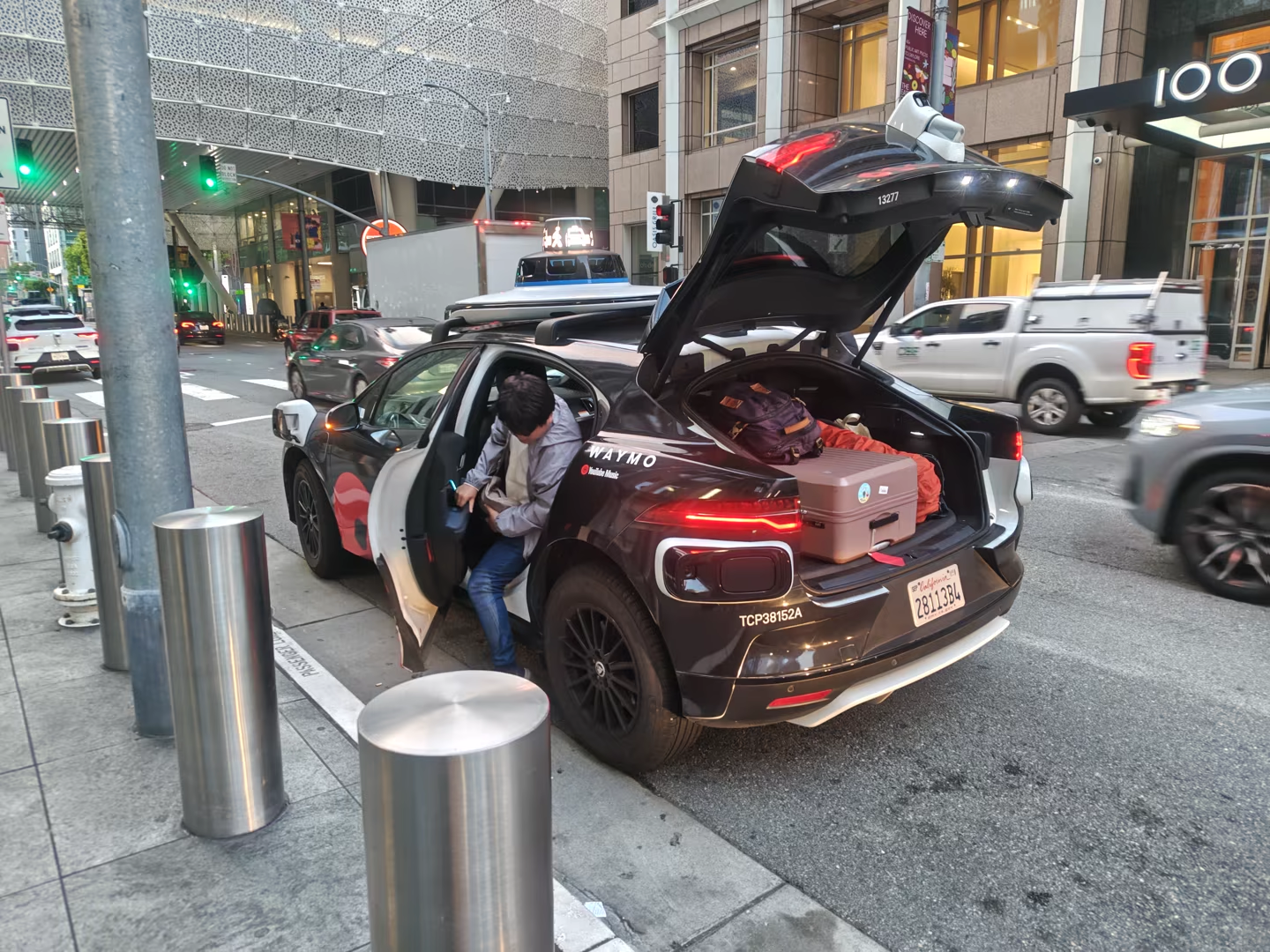
Early morning and lots of luggage, so we took a Waymo. Cheap and comfortable! Please come to Japan soon!
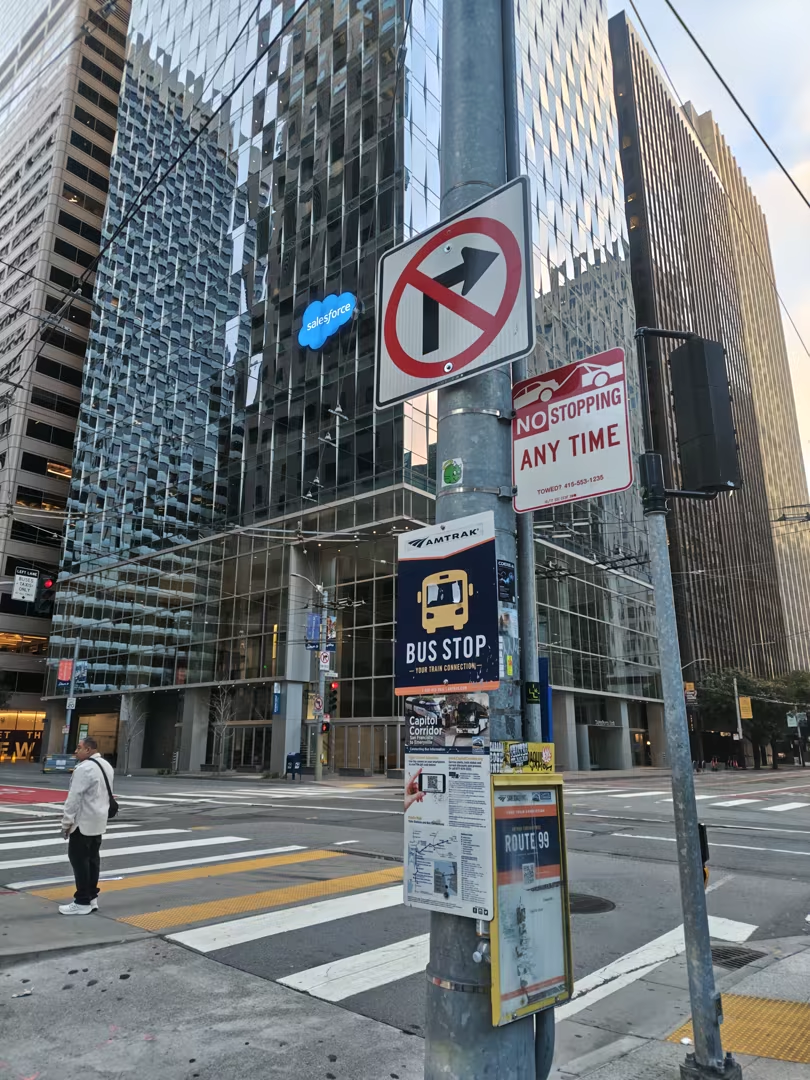
A modest little BUS STOP sign.
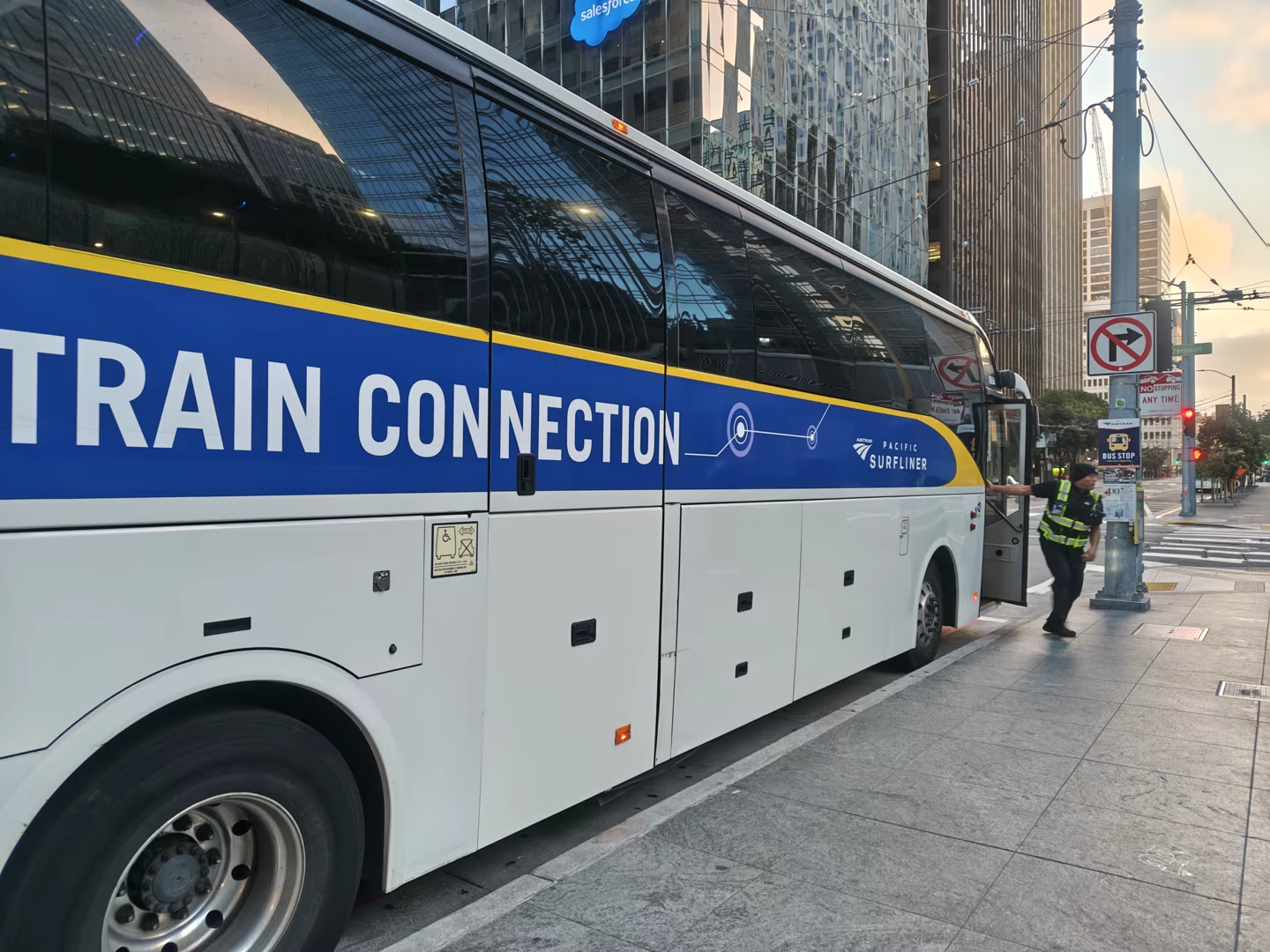
A huge bus.
You board by having your eTicket scanned, and sit wherever you like — it was unreserved seating. Luggage goes in the trunk underneath, loaded by the crew, just like a Japanese highway bus. It felt less than half full that day. Practically empty.
After about thirty minutes of swaying, we arrived at Emeryville station. For the starting point of a 3,000 km, 50-plus-hour journey, the station is absurdly shabby: toilets, a cash-only café, and an ATM are all there is. Online sources say Amtrak stations have lounges that long-distance passengers can use, but Emeryville simply has no lounge, so that was irrelevant. It’s the departure station — build one, please! Then again, there are only a few trains a day, so maybe I should just be grateful there’s a café at all…
The station was so shabby I forgot to take photos, but this is where you check in your hold luggage. There’s a little check-in counter, like at a small airport (Chofu Airport in Tokyo is similar — not that many people will get that reference), and you hand your bags over there. Note that anything you check in here won’t be returned until you get off. Like an airline, they issue a proper ticket from your eTicket — in our case, all five stapled together.
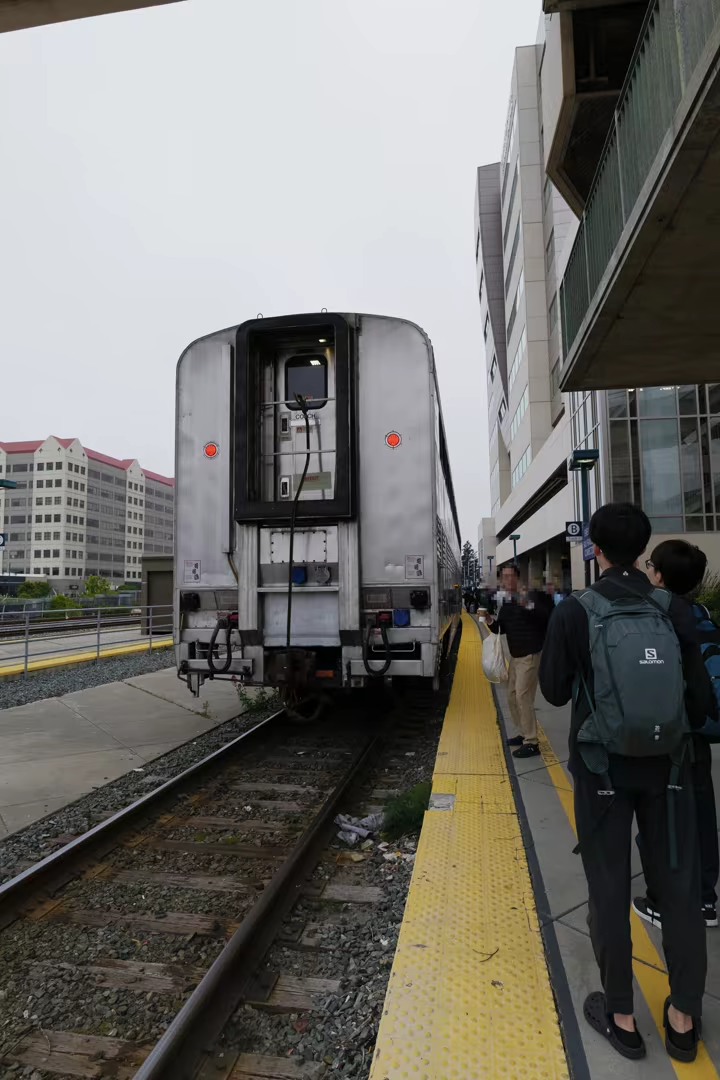
Fully double-decker. Huge!
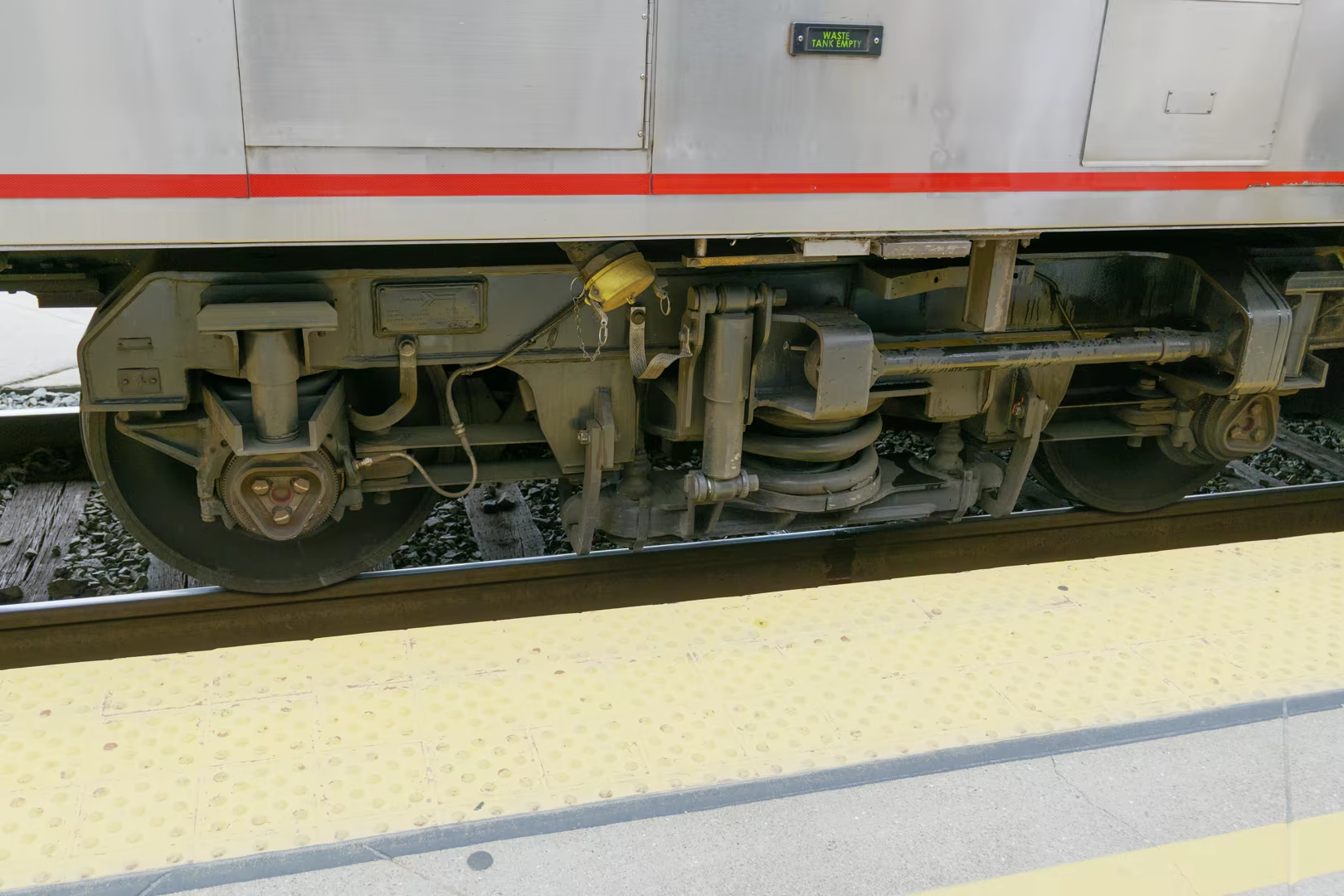
The bogies that carried us.
When it’s time to board, you’re called over the PA and everyone shuffles to the platform. Your ticket shows your car number (631 on the ticket pictured above), and you head for that car’s entrance. The car number is written faintly near the entrance, so look carefully. I was busy taking photos so I don’t remember it well, but the car attendant introduces themselves and gives some kind of briefing; after everyone listens, you show your ticket and climb aboard.
The Room
Finally on board, so let me introduce the car and the room. This time, the five of us had booked private rooms, and we’d been assigned three two-person rooms. Even though we booked together, for some reason they weren’t adjacent: one on each side of the lower level in the direction of travel, and one on the upper level. I’ll show the room I used in photos; the other rooms are mirror images and such, but all the two-person rooms are the same.
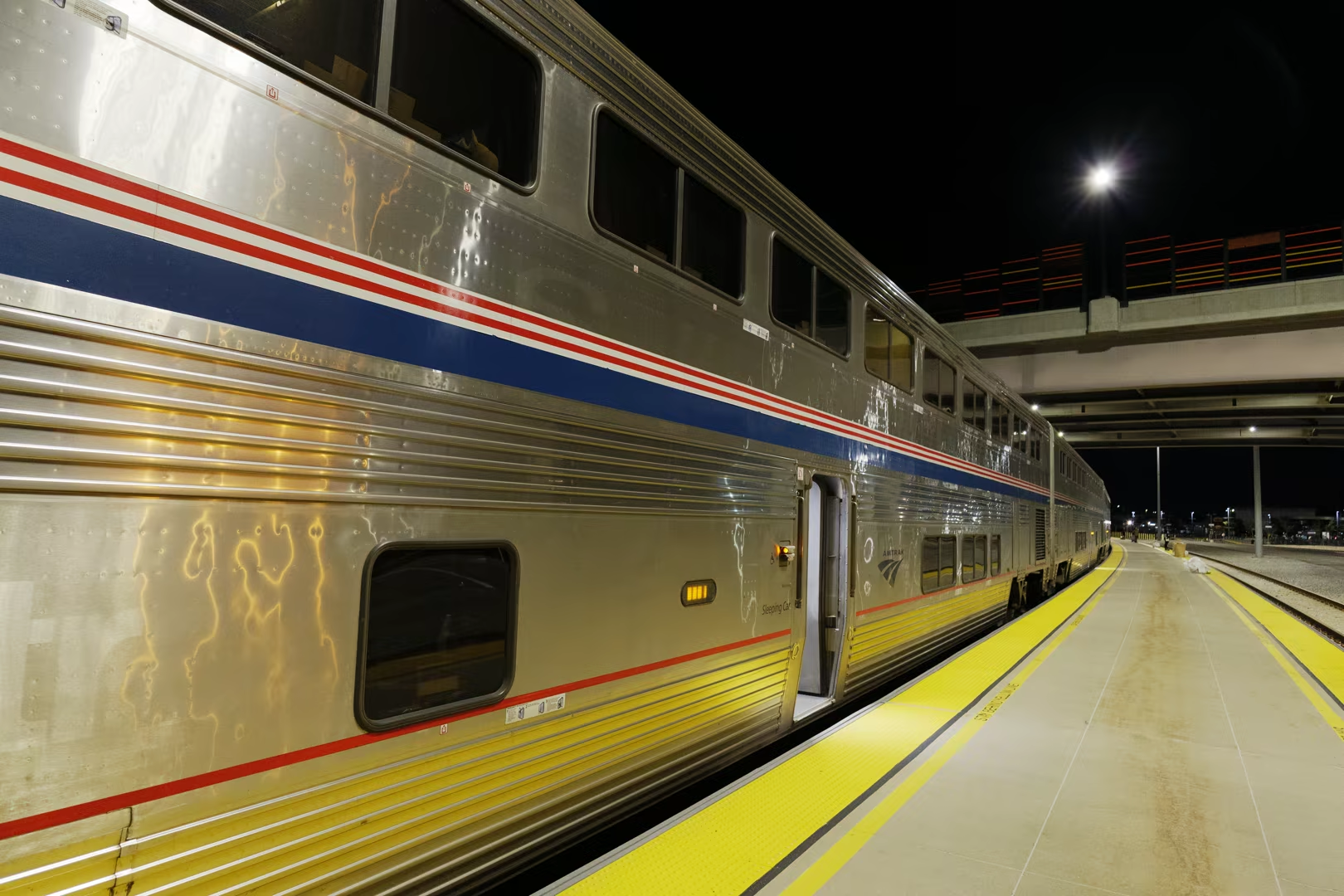
Suddenly a night photo, but the entrance is in the middle of the car.
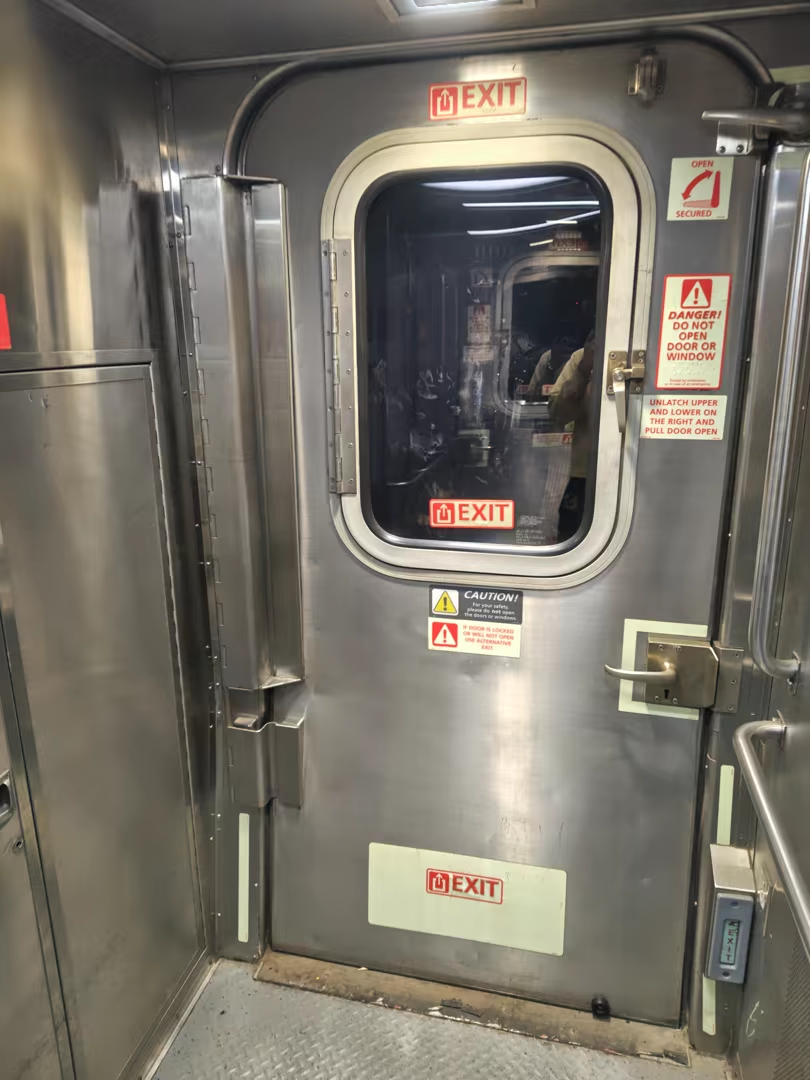
The entrance seen from inside. Chunky!
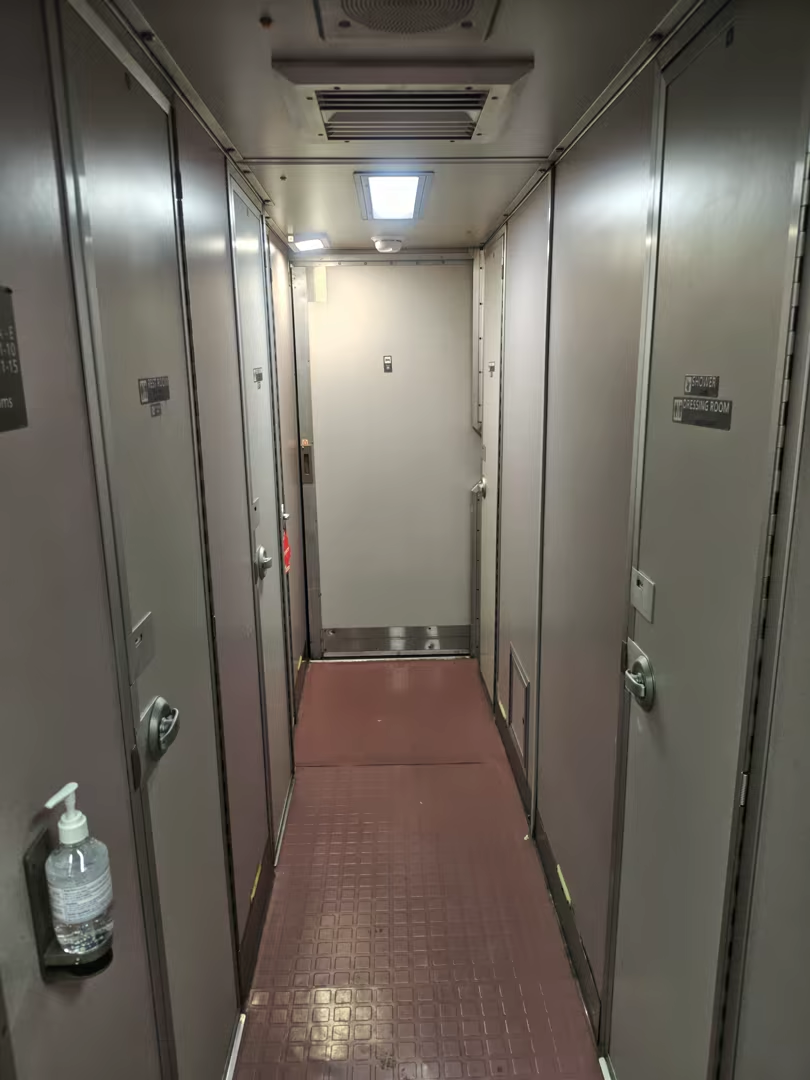
Looking left after boarding. Front-right is the shower room; the rest is private rooms with toilets on both sides. At the far end is a larger-looking room.
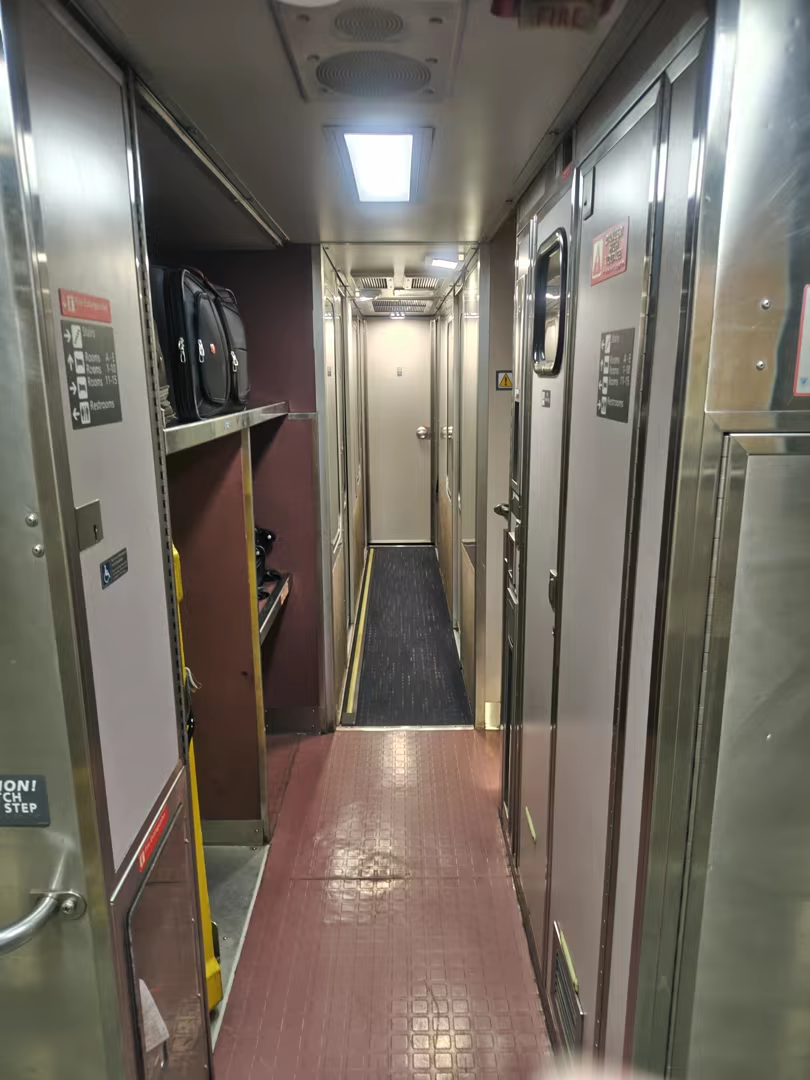
Looking right after boarding. Front-left is the luggage rack, center-right is the stairs to the upper level. The carpeted area at the back has rooms — two on each side, four in total. At the far end is a big room, apparently the accessible one.
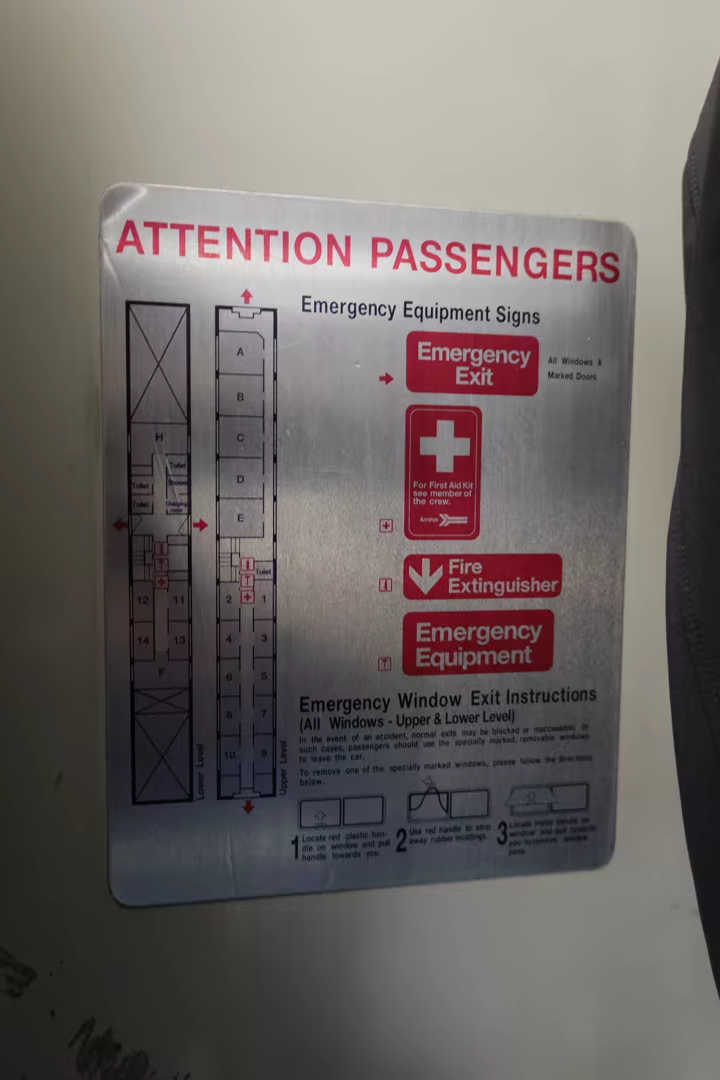
The layout is something like this. The upper level has the same two-person rooms, plus larger first-class rooms.
The room has two sofa seats facing each other. At night, you recline them all the way to form one bed, and pull down the second bed stored above to make bunk beds.
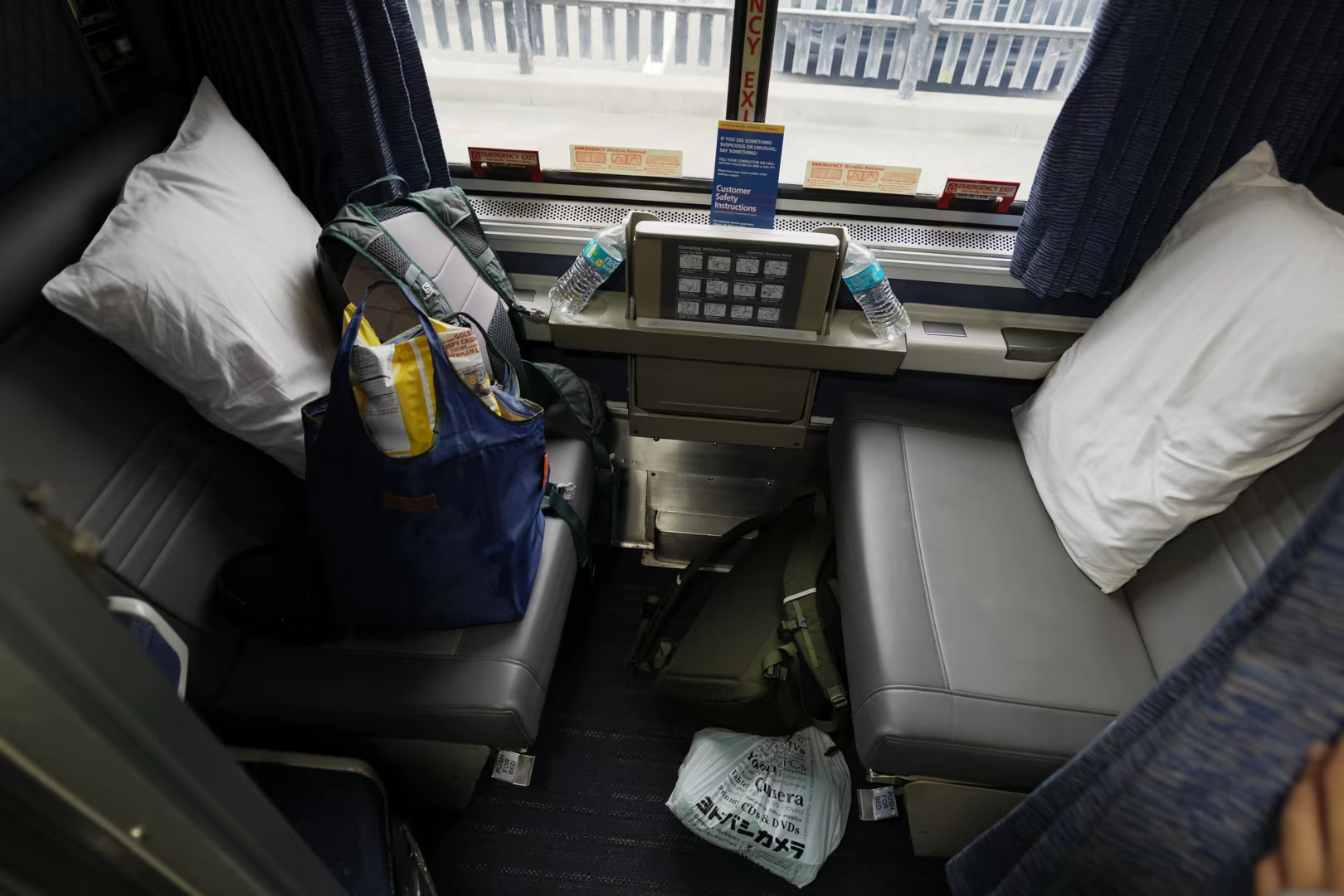
The sofa reclines if you pull the bar underneath. It’s wide enough for two people to just about sit side by side, so it’s comfortable.
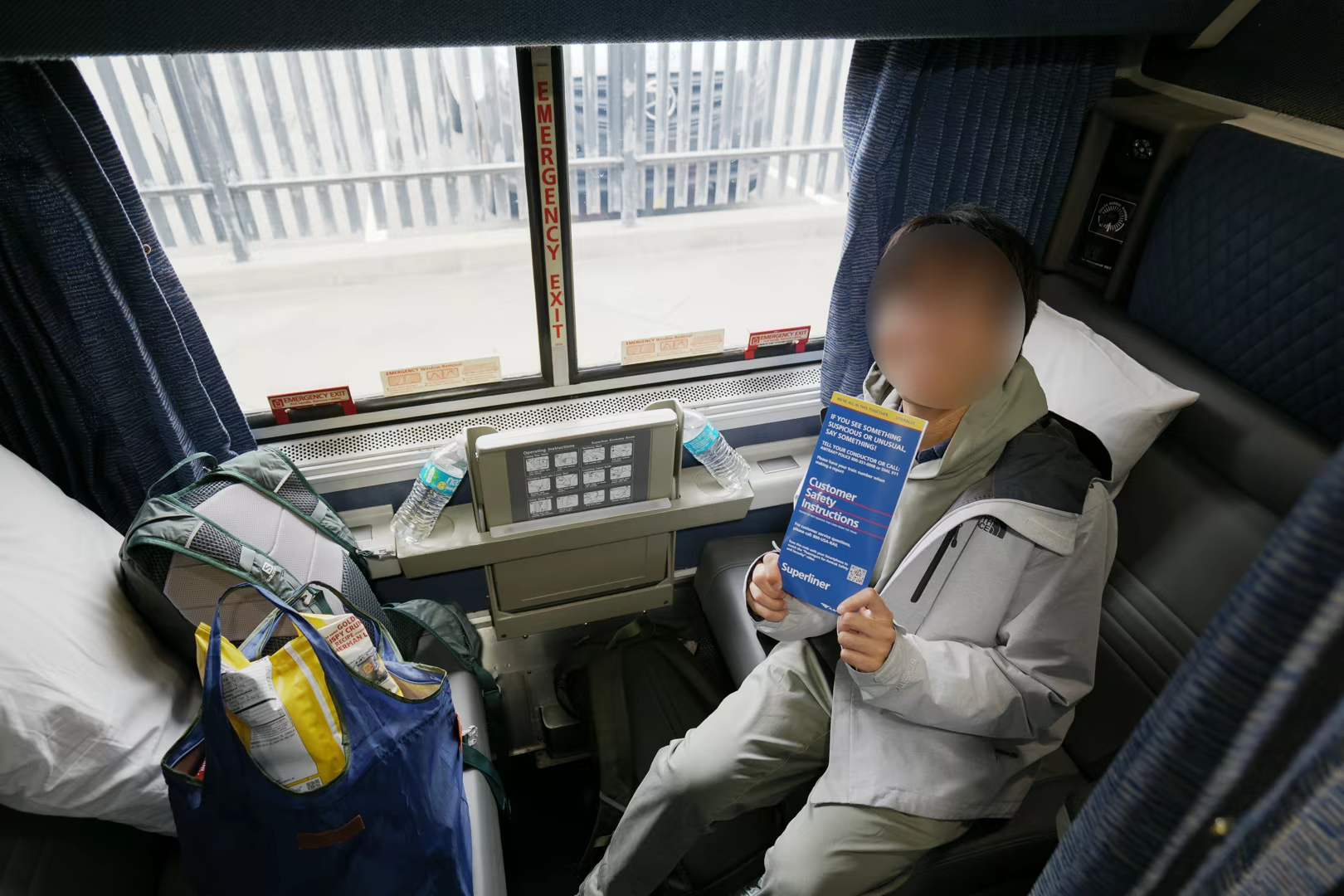
The author, in person. Water was provided as a service. There’s a single power outlet around the back of my head.
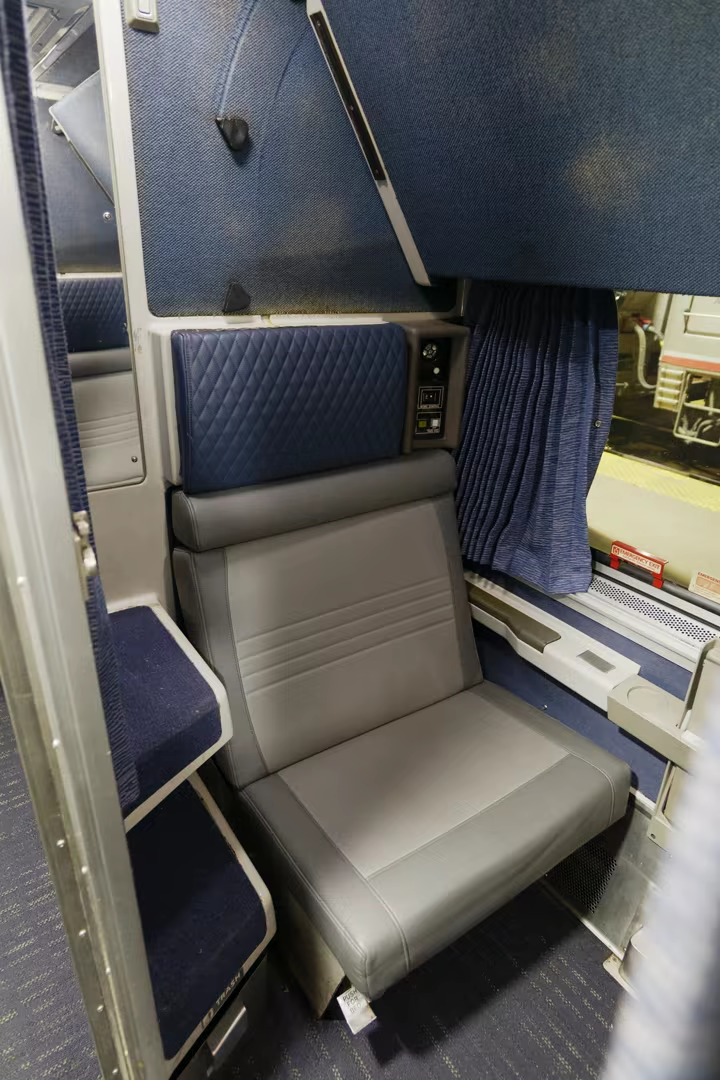
On the corridor side of the left seat are the steps for when the beds are made up. The grubby blue thing angled at the top right is the upper berth.
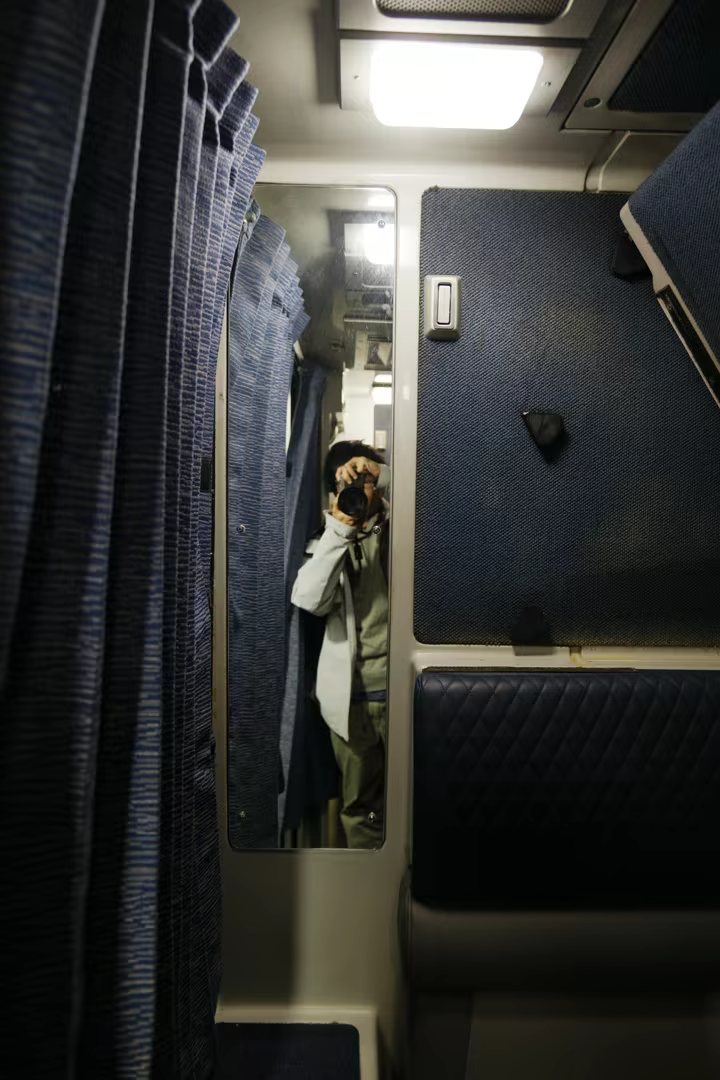
There was a mirror above the steps.
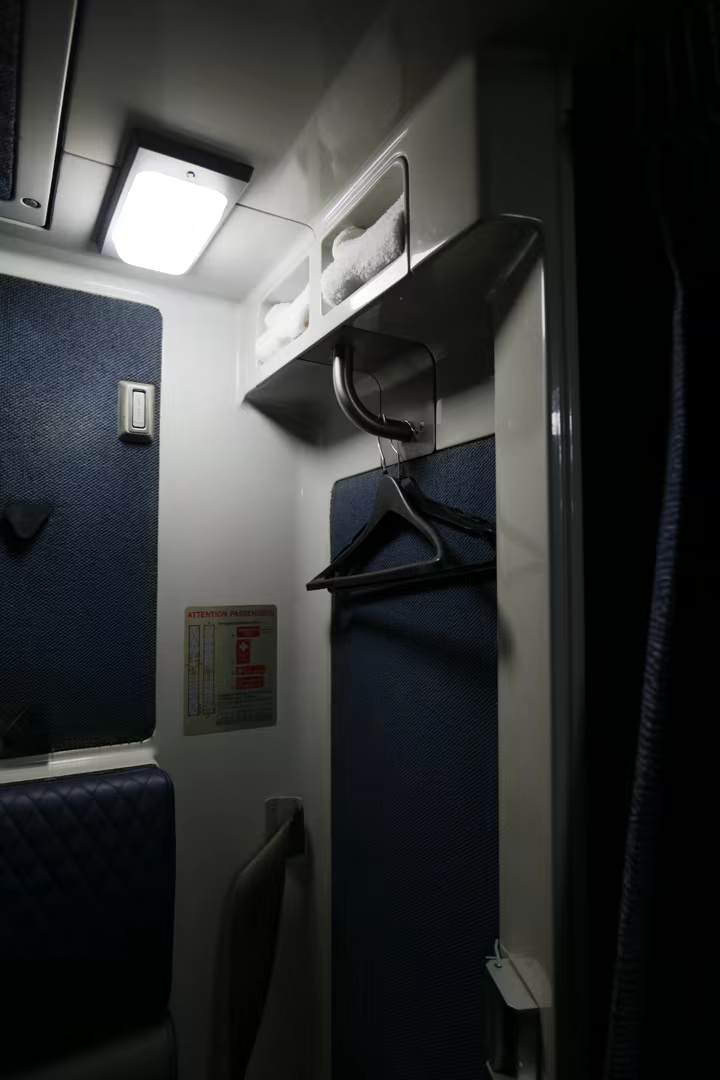
On the non-step side (right as you enter) there are mismatched hangers and towels. When the beds are in use, the only place for a backpack or other luggage is under these hangers. Anything bigger gets checked in or put on the luggage rack by the deck.
No photo of this, but the lower bed isn’t finished just by reclining it flat — you also lay out the mattress stored in the upper berth. There are synthetic-fiber blankets too (one was worn thin, the other brand new and fluffy), so even if you’re using a room alone, don’t forget to check the upper berth!
The room is plenty spacious for two people, and you can stand up properly in it, so you can change clothes inside. Between the room and the corridor there’s a solid (if badly fitted) door with a lock on the inside, so privacy and security are solid. There’s no lock that works from outside, so keep your valuables with you. There’s a window on the corridor side too, so with the curtain open it doesn’t feel claustrophobic.
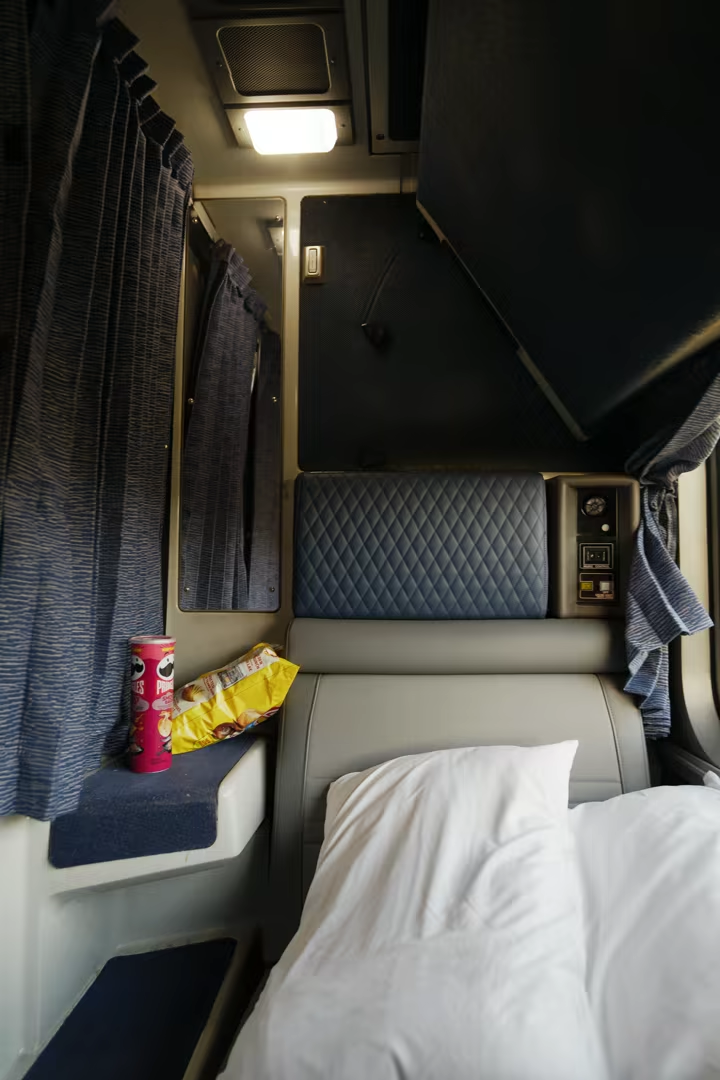
This is what you see sitting down, facing forward. The steps double as storage (a bit dirty, though). There was a trash bin under the steps.
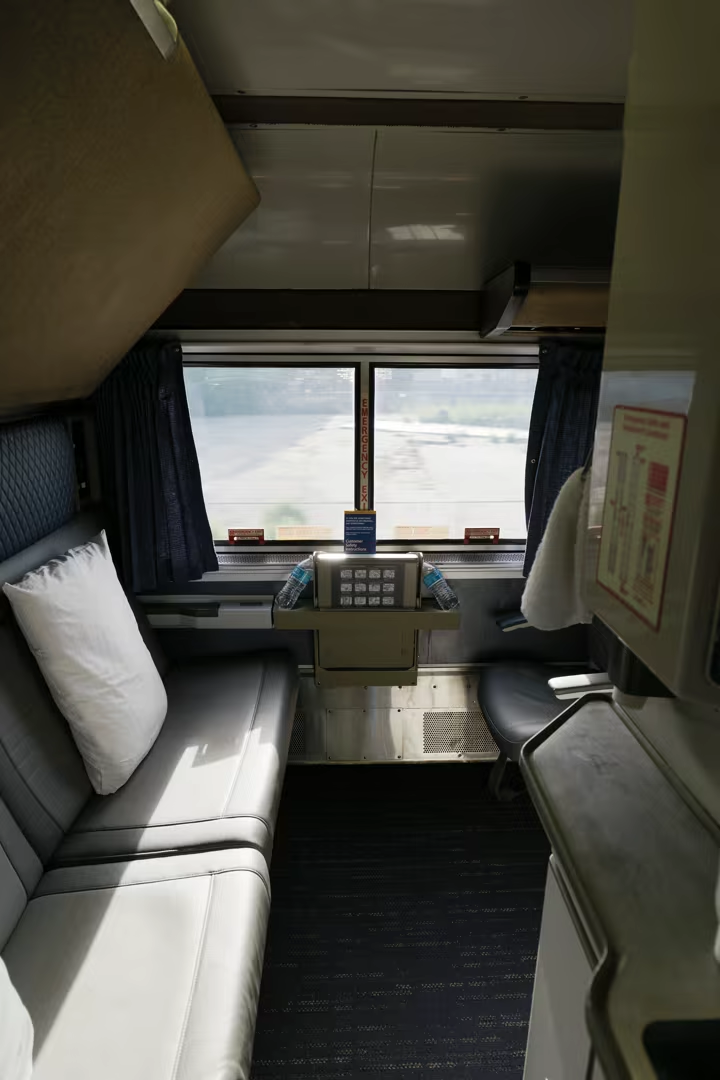
This is a first-class room on the upper level. The lower bed looks like a double, so with the upper one it’s a three-person room? Front-right there’s a shower and toilet. Our two-person rooms have no shower, toilet, or washbasin.
Departure at Last! DAY 1
Now we finally get to the main event. After leaving Emeryville, the train ran through town for a while. Over the PA, our car attendant introduced himself and explained things like how to use the call bell for the attendant (like the button that calls a flight attendant on a plane). There are quite a few announcements about meal times and scenic spots, so it might be better to keep your room door open. The audio quality is a bit crackly, so you’ll need advanced English listening skills.
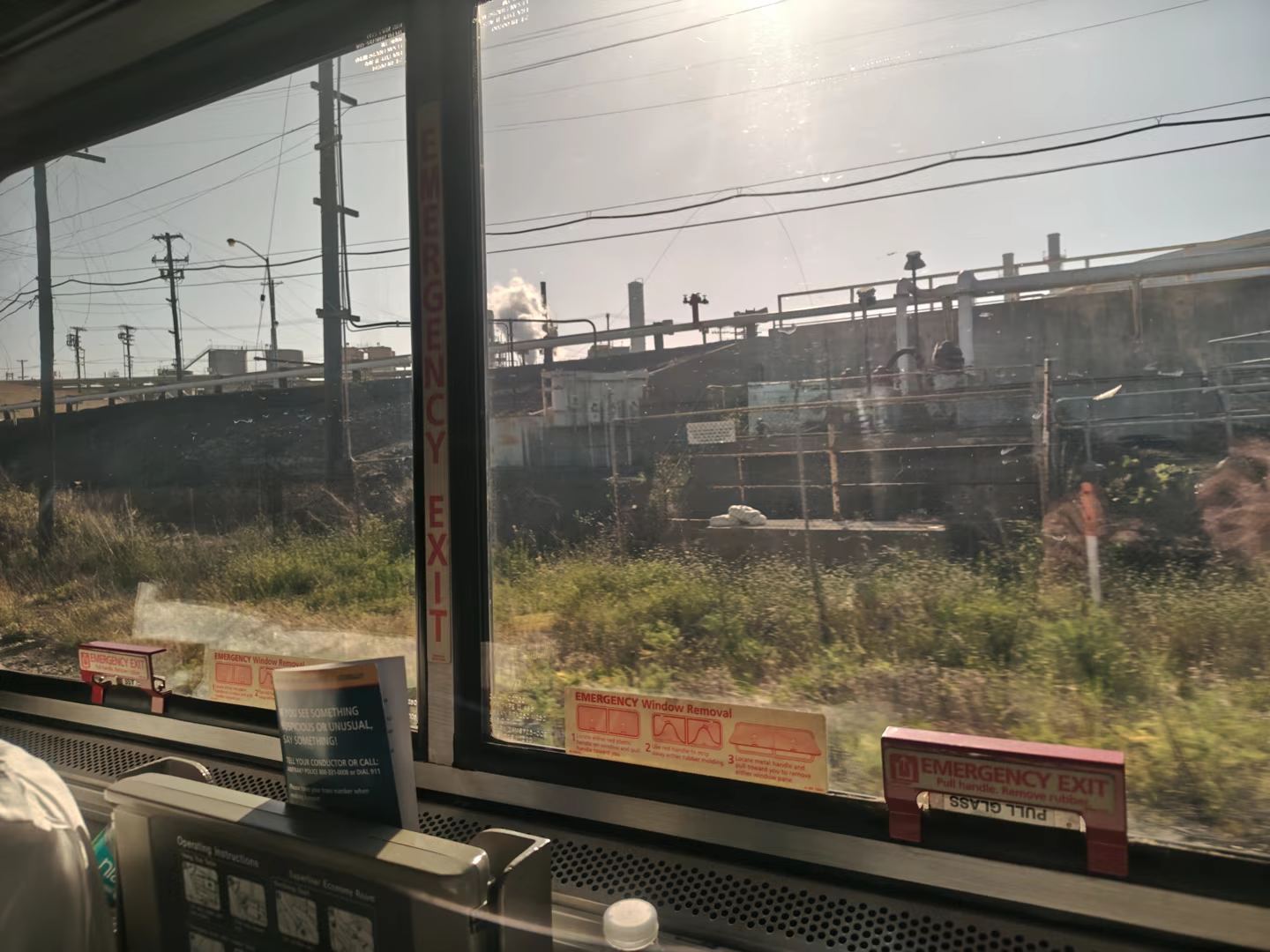
Just departed. Even from the room window, the scenery is plenty enjoyable — though you can only see one side in the direction of travel.
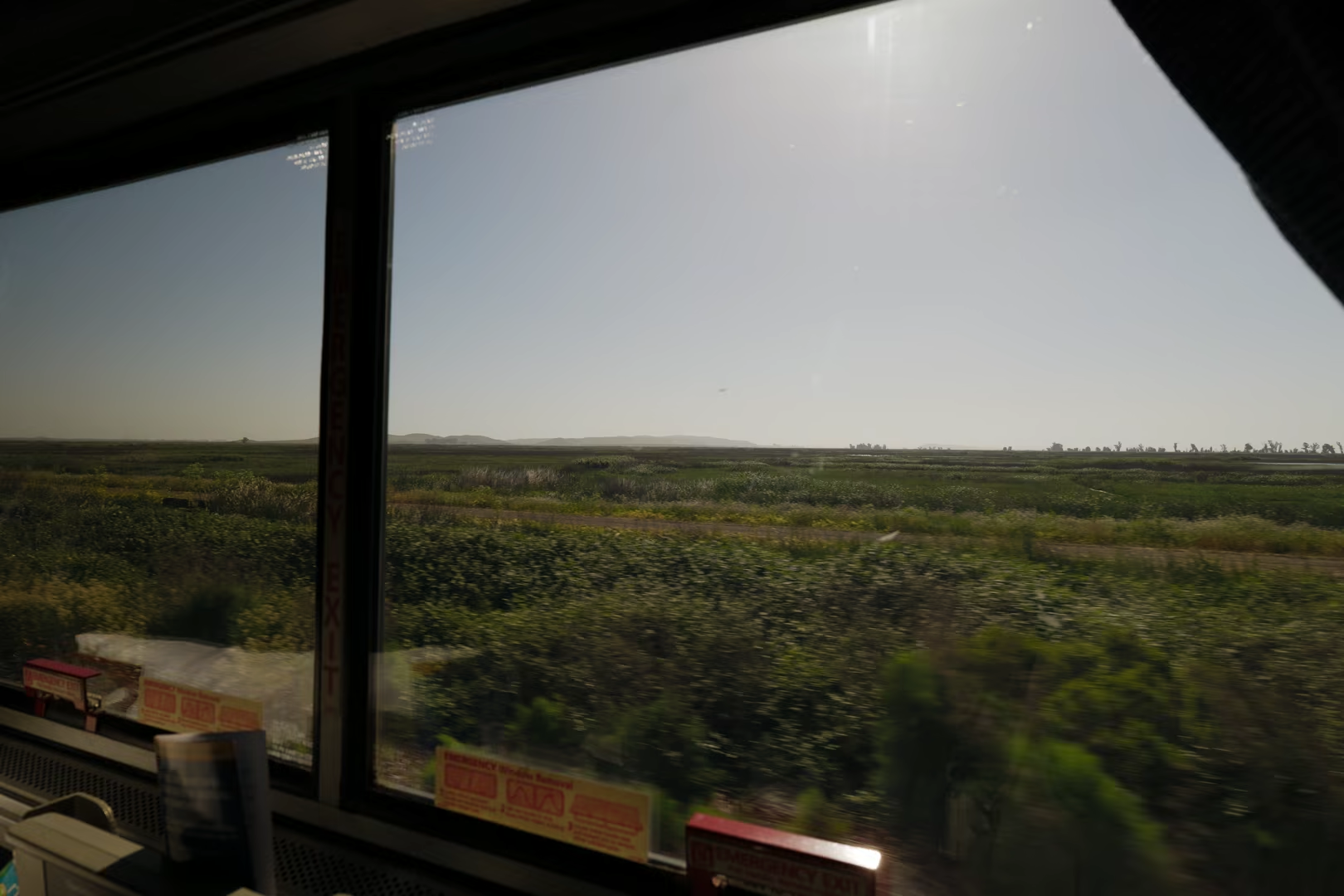
An hour after departure, we could already see the horizon. Lots of plants that look like they grow somewhere warm, still glossy and deep green.
First, let’s explore the train. The cars and the dining car are all connected on the upper level. The train we rode was made up, in order, of: two coach cars – the lounge car (café on the lower level) – the dining car – two sleeping cars. On top of that there were crew cars and a baggage car at the front and back, making eight to ten cars in total. They’re double-deckers and longer than Japanese cars, so it’s a pretty big train.
At this point there were still few passengers on board, and it felt deserted. Apparently nobody rides all the way from San Francisco to Chicago (naturally). The couple in the room next door got off a couple of stops before Chicago, so as far as I could tell, we were the only ones who rode the whole way.
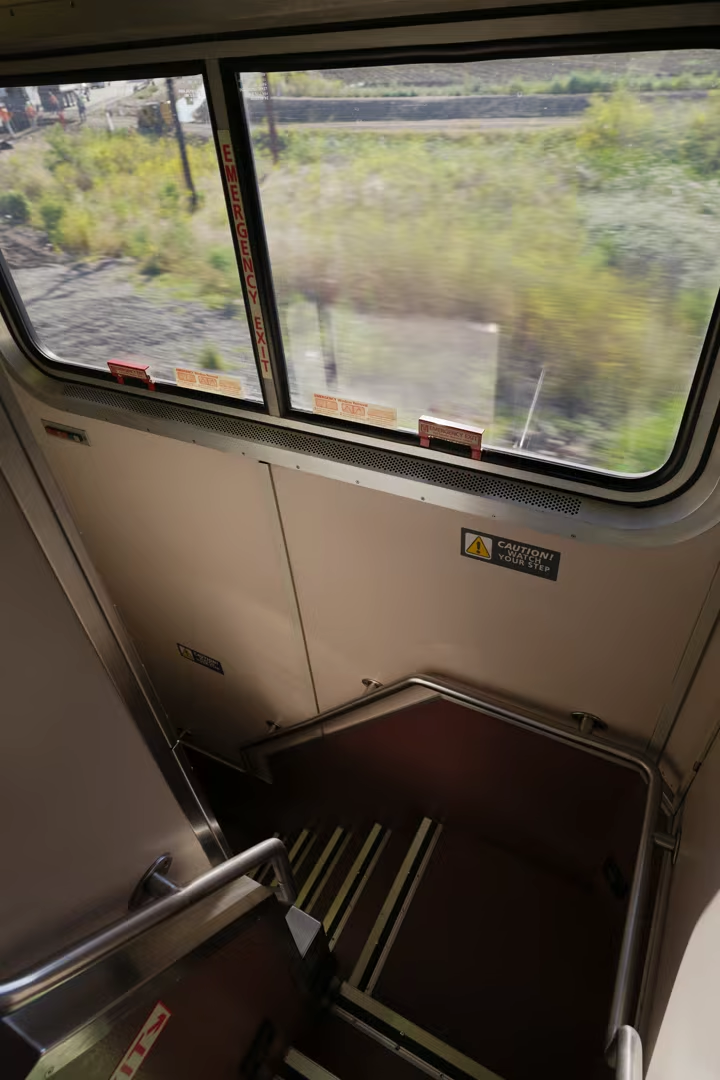
(Looking down) the stairs to the upper level. There’s a window, so it feels open. If American rationalism were taken to its limit, I don’t think they’d put a window in a place like this, but Amtrak’s cars are geared more toward comfort than I expected.
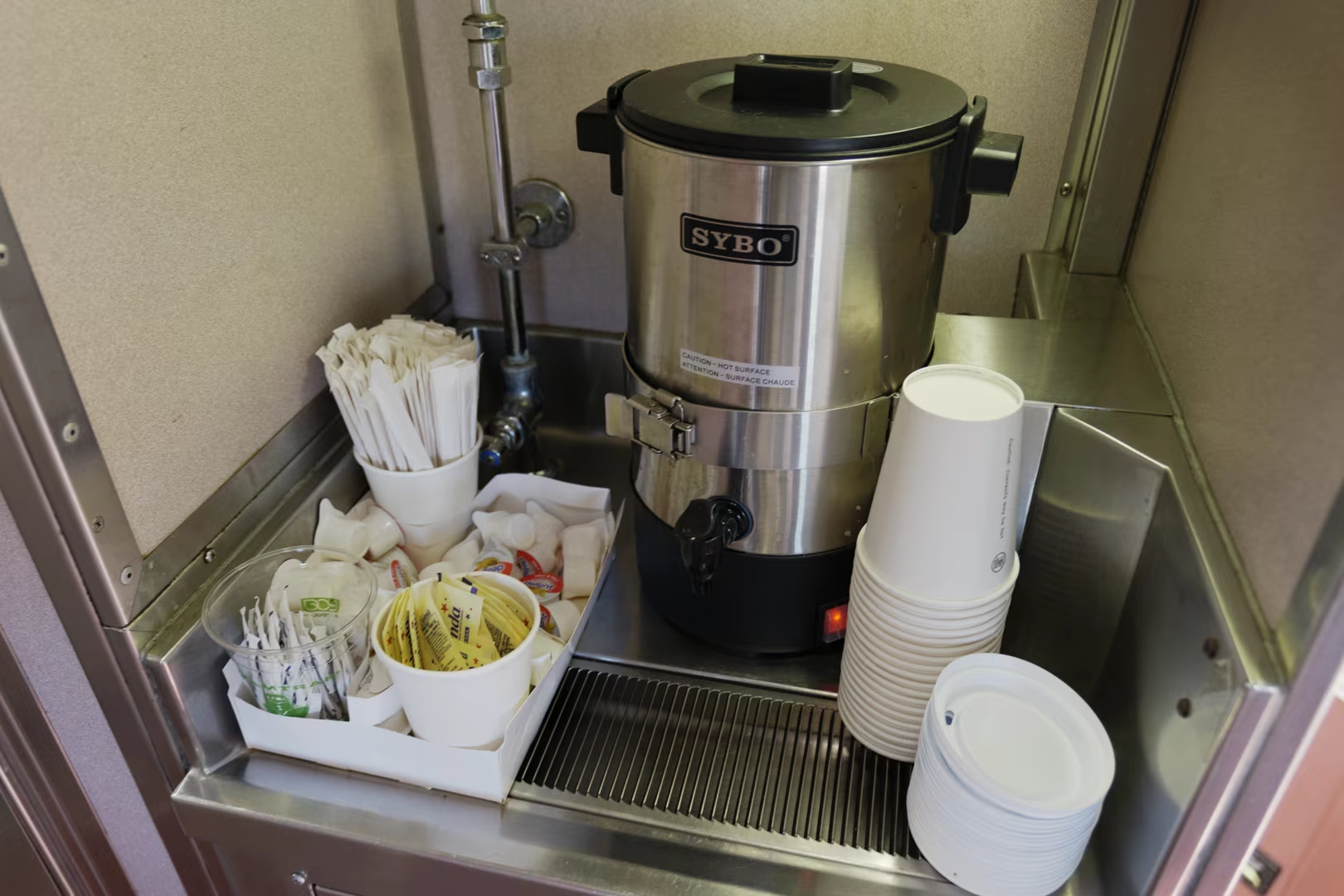
At the top of the stairs there’s a coffee station, and if there’s any left you can drink coffee any time during the day. It doesn’t taste bad — properly hot drip coffee. It was popular on our trip: even when it was refilled in the morning, it was gone by around noon. I recommend getting your after-lunch coffee in the dining car.
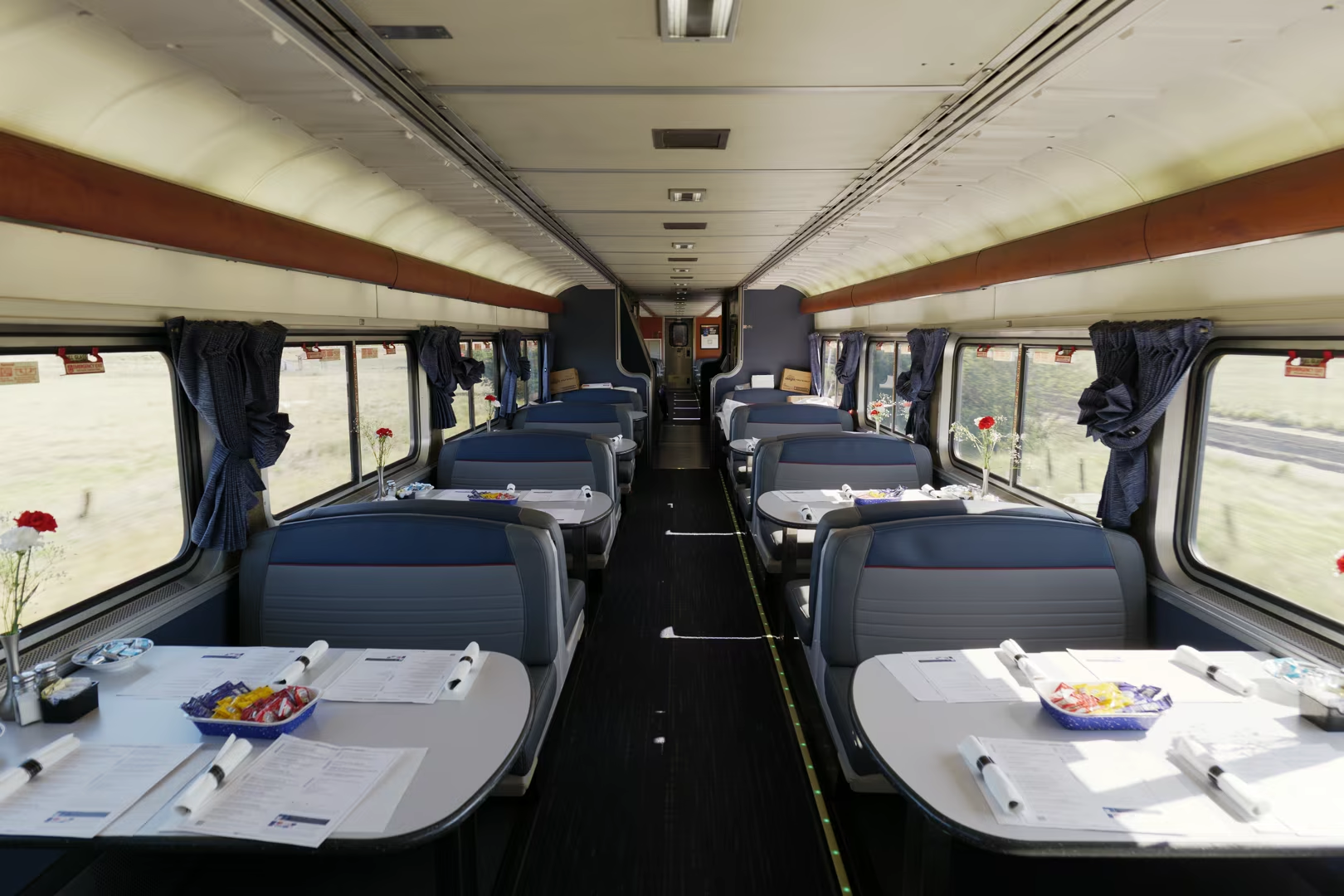
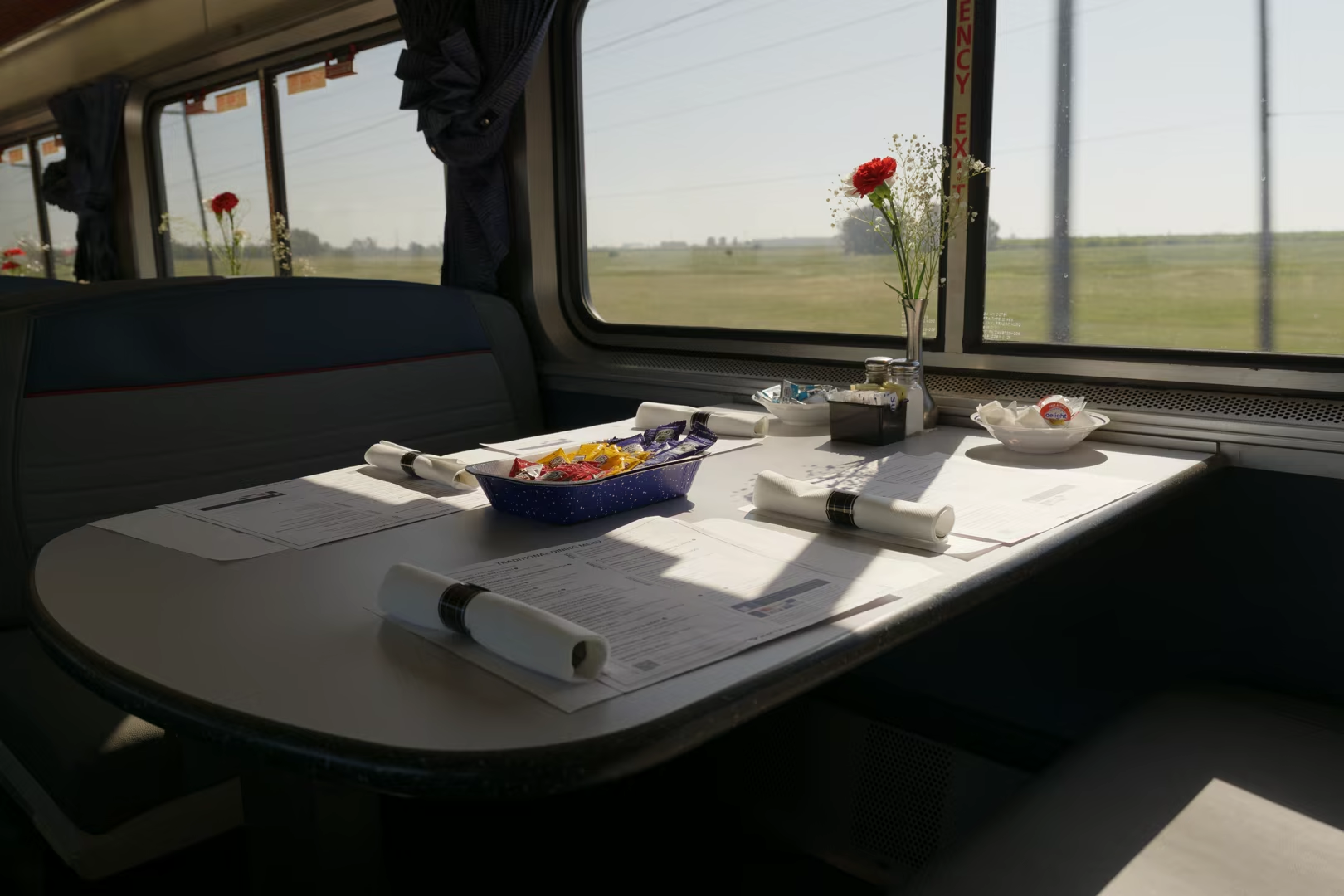
The dining car before lunch service starts, still empty. It’s on the upper level, so the views are great and it feels wonderfully open. There were even flowers on every table — on my trips abroad I usually cheap out and only eat at the most bare-bones places, so I was moved.
Pass through the dining car and you reach the lounge car, with the café on its lower level. You can buy light meals there until late at night, around 22:00. Sleeper passengers have dining car meals included, so it seems to be mostly the coach passengers who buy food here.
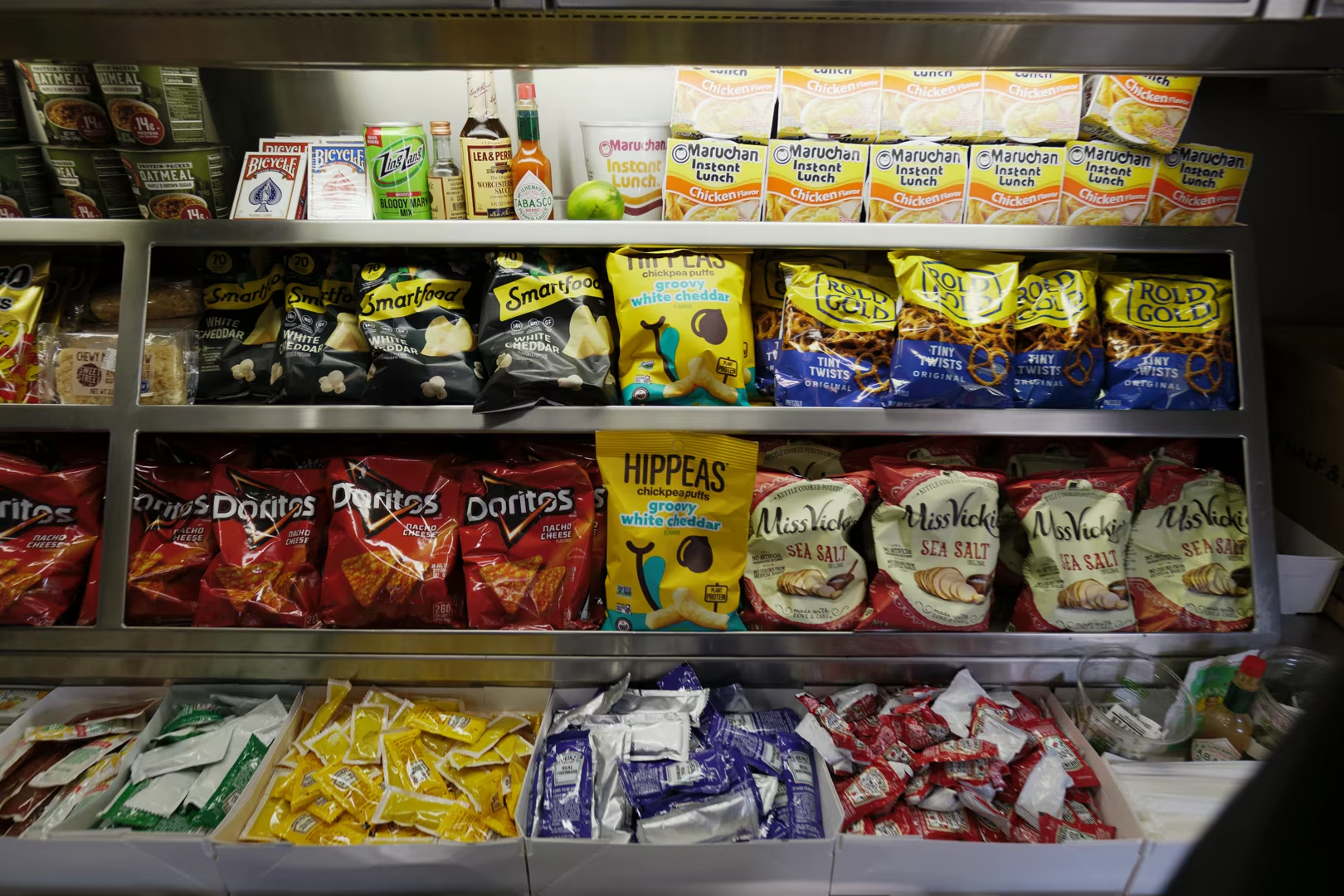
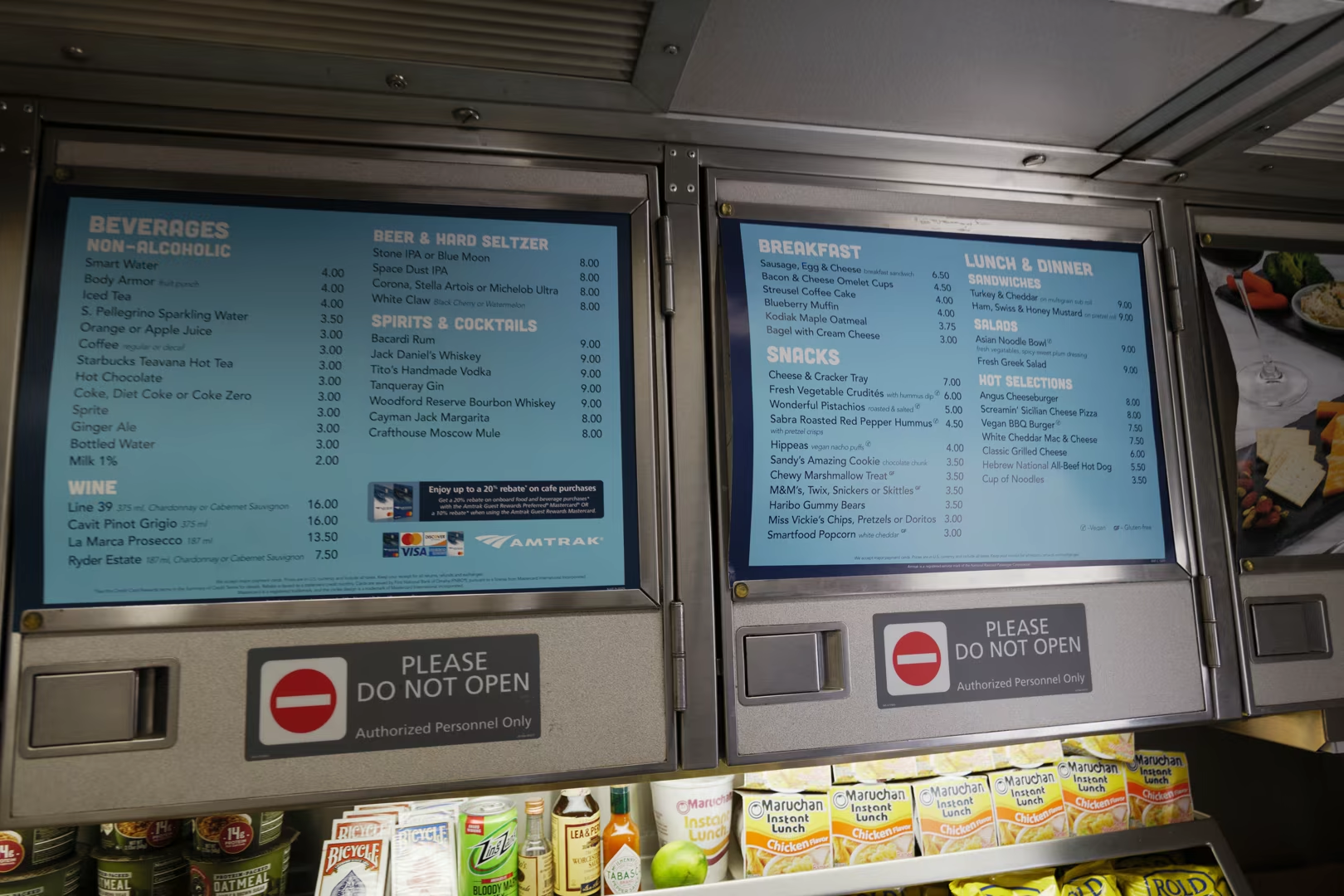
Drinks: water $4, coffee $3, beer $8, and so on. Breakfast omelette $4.50, sandwiches $9, cup ramen (Maruchan) $9, cheeseburger $8 — a little pricey, but they have a bit of everything. There’s a microwave too, so you can eat hot food. Cards accepted.
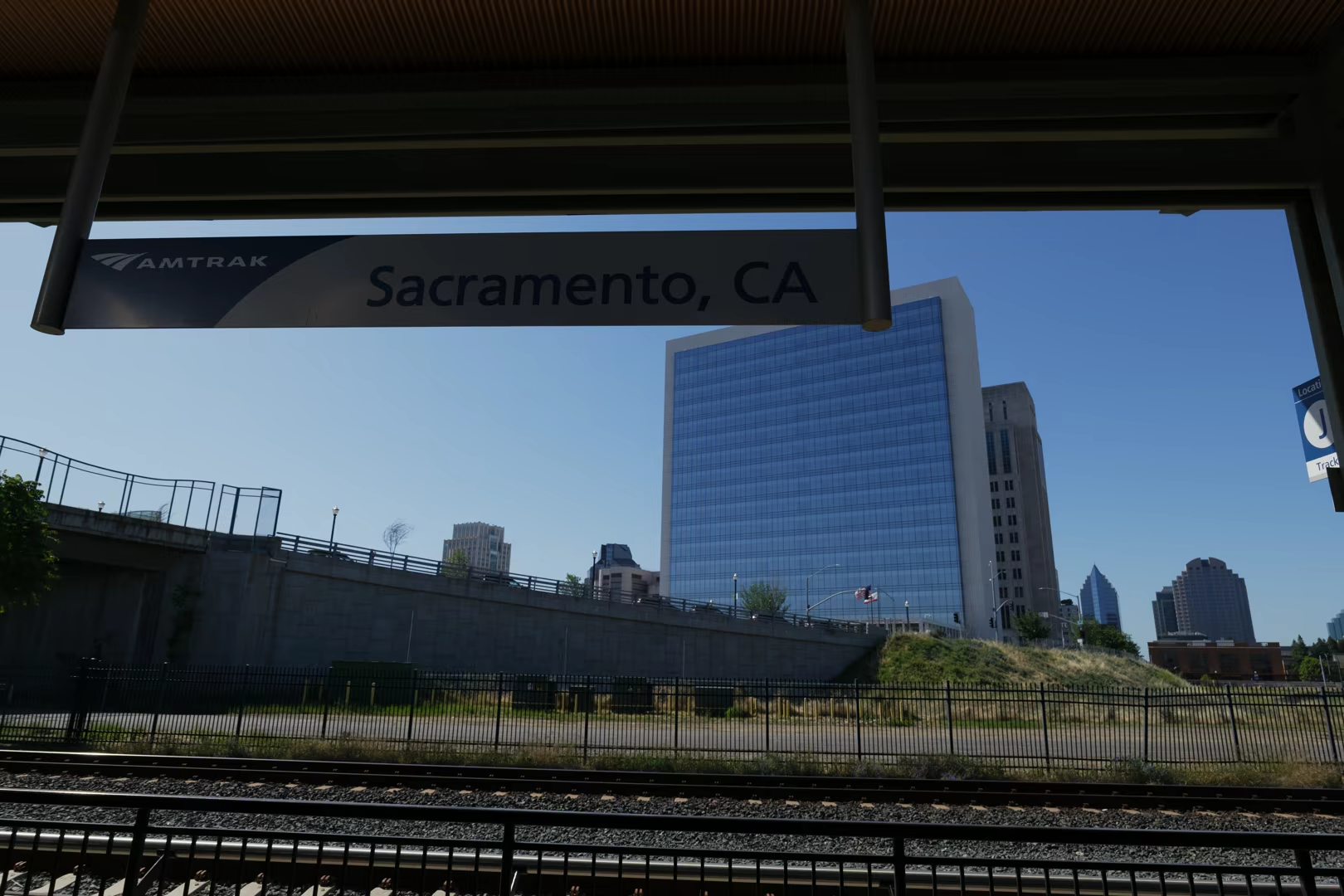
While all this was going on, we arrived in Sacramento. Sacramento has what’s called a “smoke stop” — a smoking/fresh-air break of about twenty minutes — so you can stroll around the platform. Stops like this came every few hours for the rest of the trip. There are a little over thirty stops over the three days, so the train stops roughly once every one to two hours. At the bigger stations people get on and off; the train is clearly used as everyday transport by locals.
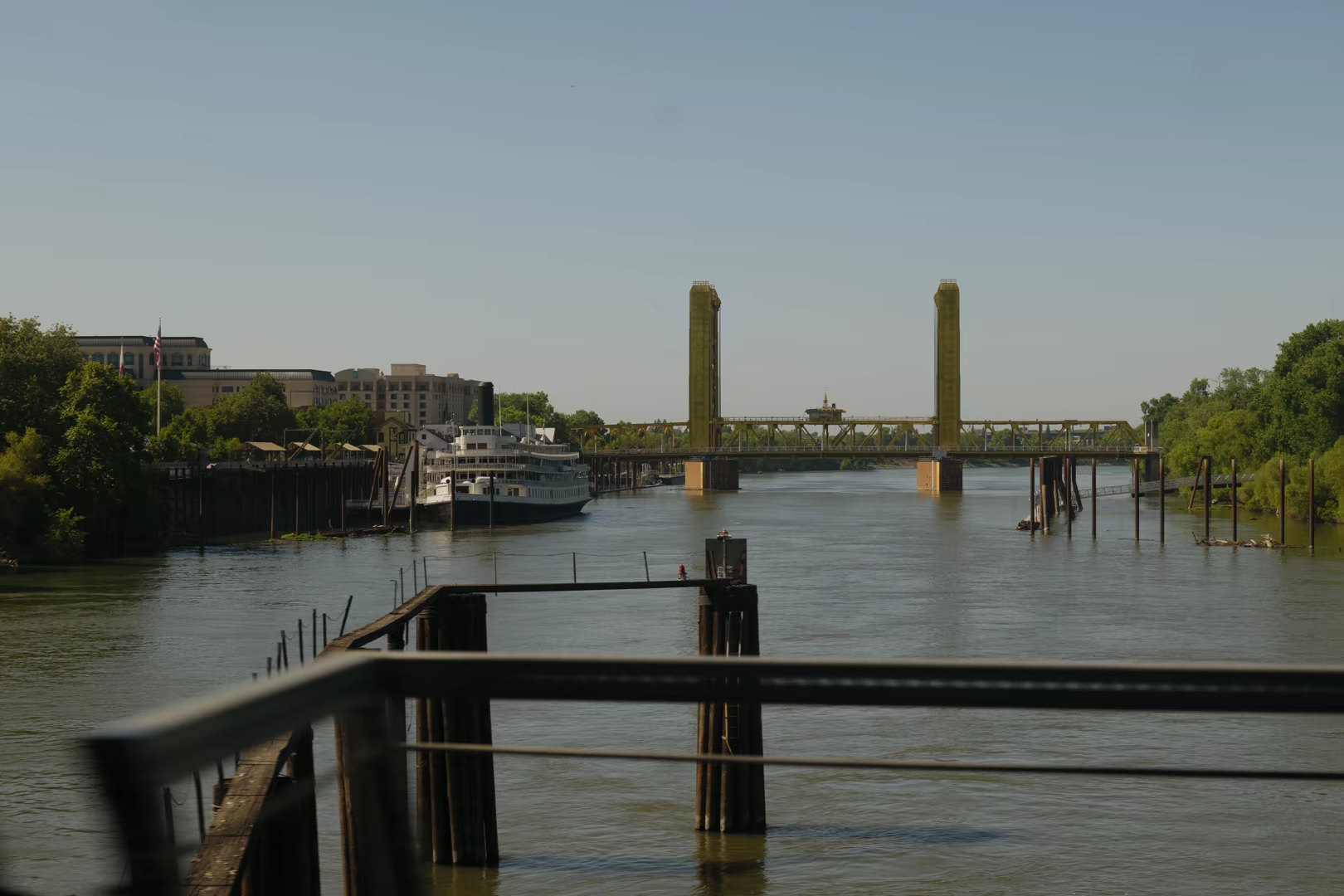
The Sacramento River and the Sacramento Tower Bridge.
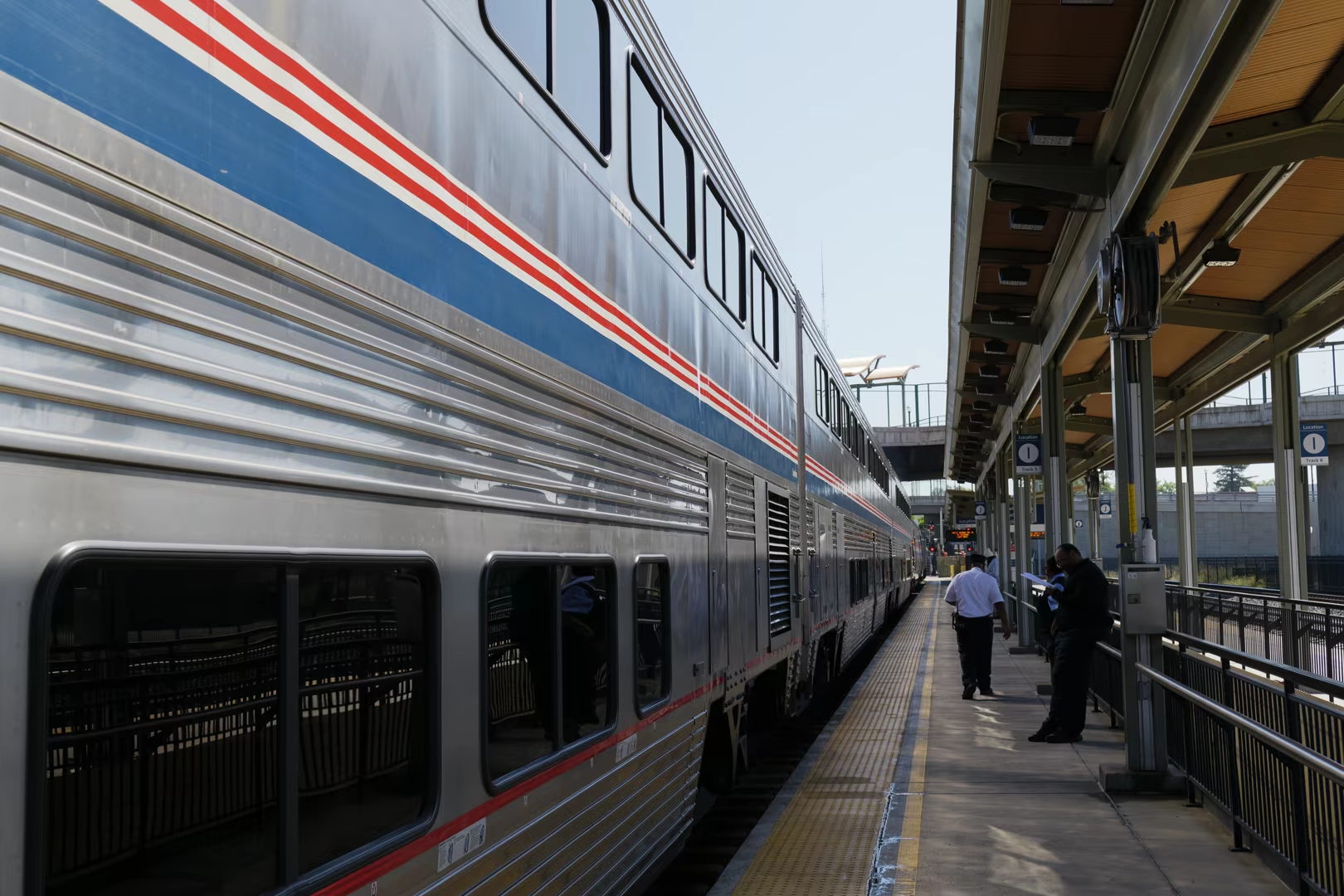
Front-right is our car attendant, Greg.
There’s one attendant per sleeping car, and he stayed with us all the way from San Francisco to Chicago. What a tough job…! Separately from the attendants there’s a conductor on board, who seems to be in charge of the cars. The conductor changed about once a day.
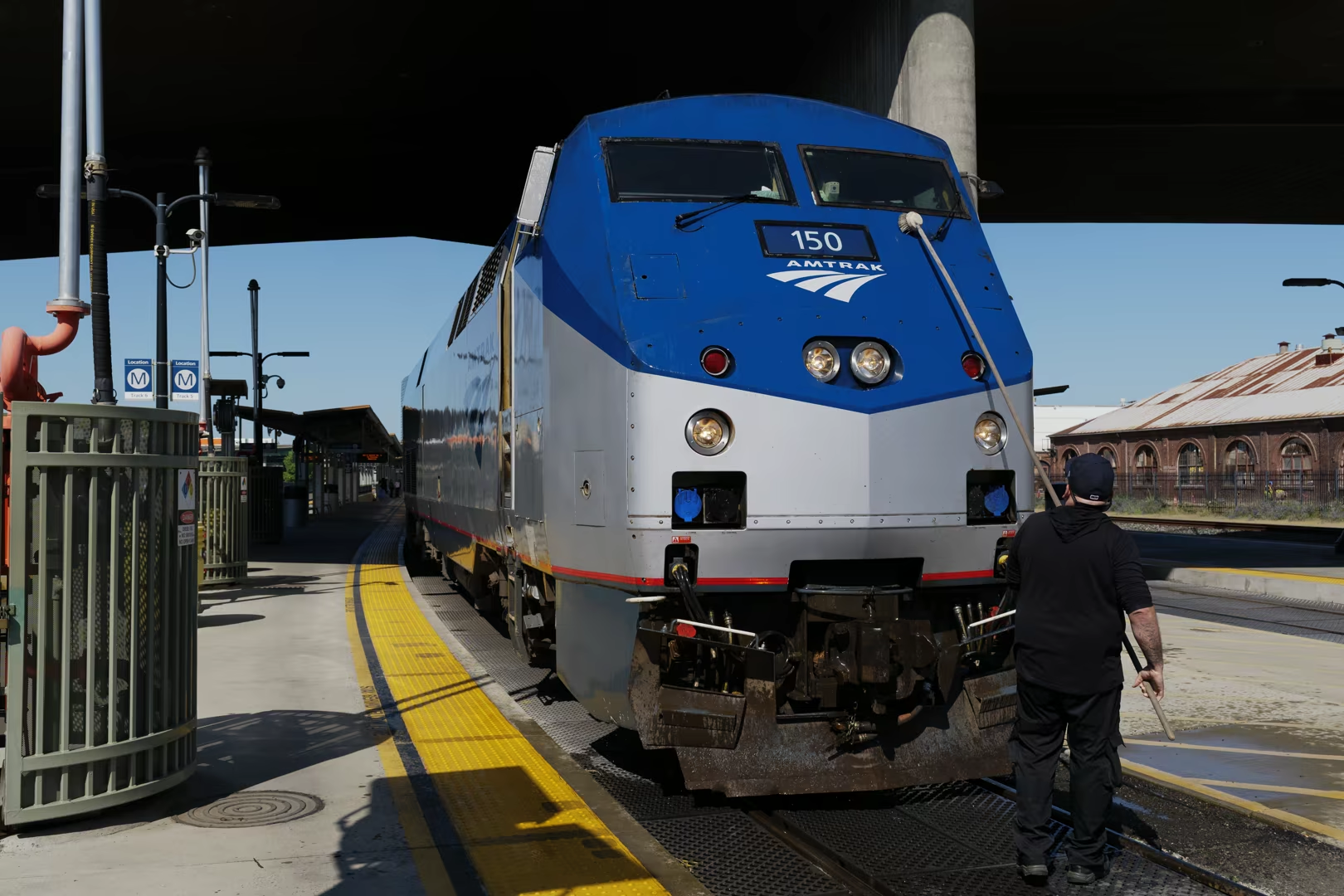
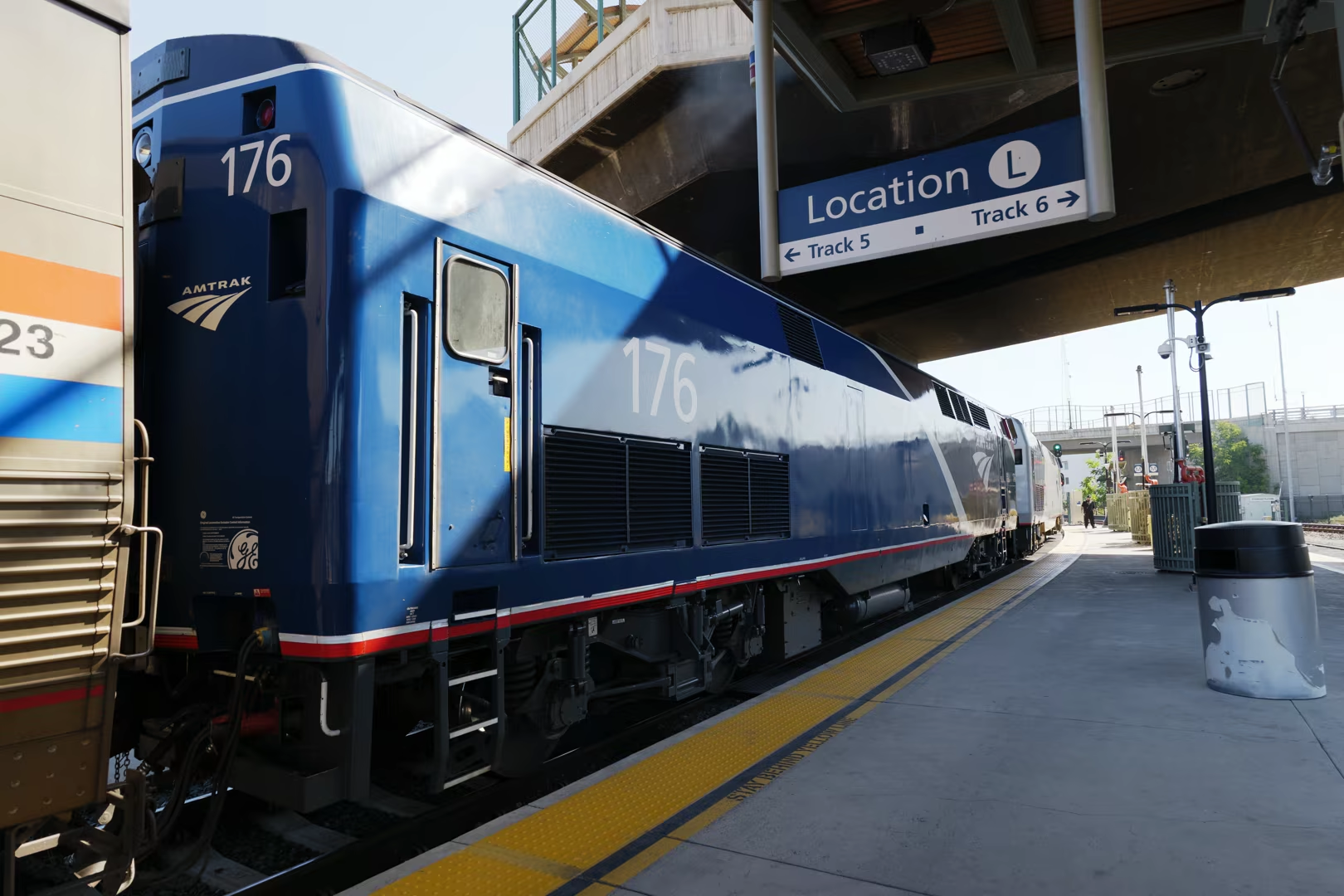
The diesel locomotive that looked after us for three days. Made by GE. It was getting a thorough wash. Right now?

The locomotives were double-headed. This one was humming even while stopped, so it might serve as the power car.
The logo looks great on the silver body. The passenger cars, by the way, are made by Bombardier.
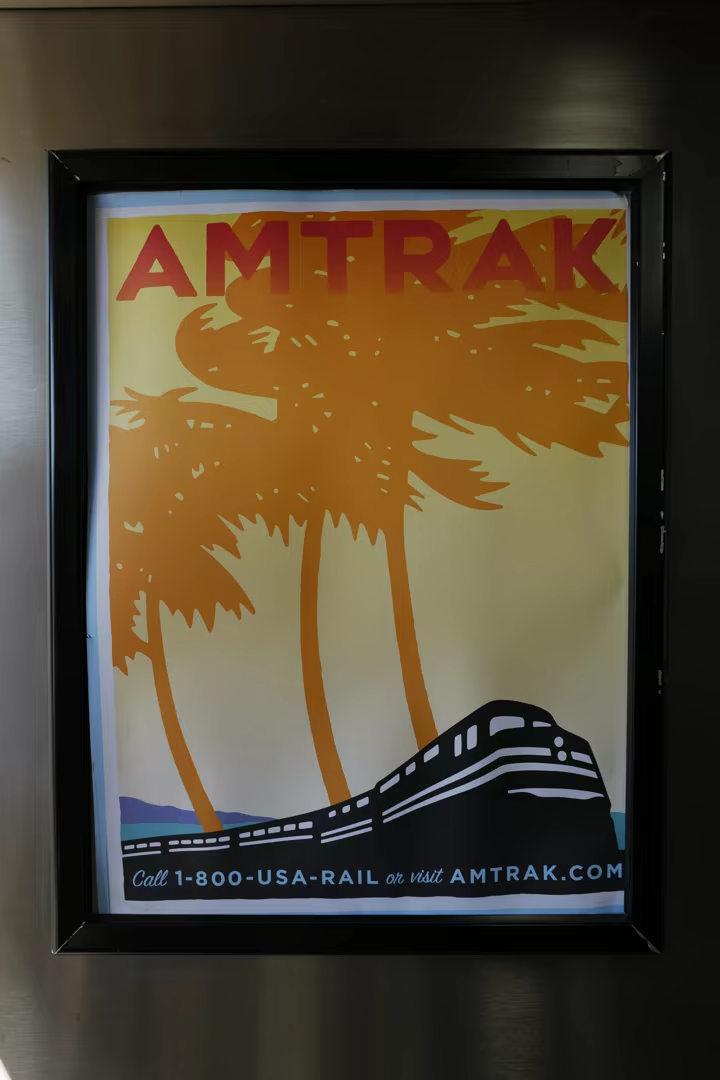
A poster inside the train. They put the poster up — but it’s crooked and wrinkled, which feels very American.
Lunch
While all this was going on, an announcement said lunch service had started, so off to the dining car. Breakfast and lunch aren’t reservation-based; it’s first come, first served. When there are plenty of free seats, an announcement goes out: “Come now!”
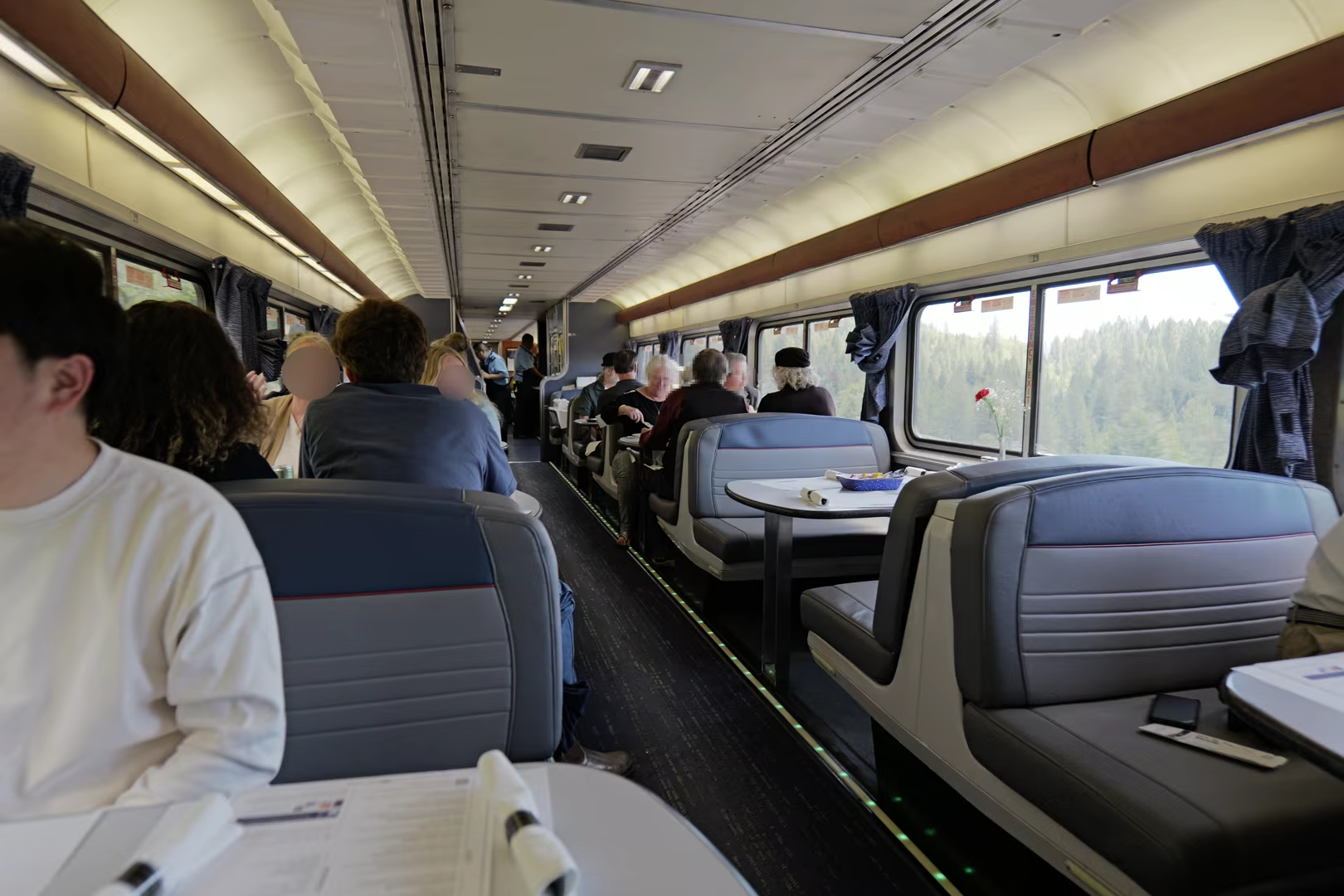
About this full. The five of us got two table islands to ourselves, no sharing. The two dining car guys remembered us, and we got the same seats every time.
Lunch Menu
Here’s a transcription of the lunch menu. You pick one dish from these.
The menu notes: “Ask your server for today’s lunch dessert selections.”
| Item | Description |
|---|---|
| GRILLED CHICKEN CAESAR SALAD | Romaine Lettuce, Grilled Chicken Breast, Parmesan Cheese, Croutons, Grape Tomatoes, Caesar Dressing |
| ARTISAN GRILLED CHEESE SANDWICH | Honey Cured Ham, Sourdough Bread, Swiss and Cheddar Cheeses, Kettle Chips |
| NATURAL ANGUS BURGER | Angus Beef, Cheddar Cheese or Swiss Cheese, Brioche Bun, Lettuce, Tomato, Red Onion, Kettle Chips |
| GRILLED PATTY MELT | Angus Beef, Swiss Cheese, Caramelized Onions, Sourdough Bread, Kettle Chips |
| PLANT BASED BEYOND BURGER | Beyond Burger, Cheddar Cheese or Swiss Cheese, Brioche Bun, Lettuce, Tomato, Red Onion, Kettle Chips |
| BAKED POTATO WITH CHILI | Baked Potato, Vegan Chili, Cheddar Cheese, Bacon, Sour Cream, Scallions |
| SAVORY CHILI BOWL | Vegan Chili, Cheddar Cheese, Bacon, Sour Cream, Scallions |
Drinks Menu
The top of the menu notes that complimentary beverages are available during all meal periods.
| Drink |
|---|
| COFFEE (regular & decaf) |
| HOT TEA |
| MILK |
| ORANGE JUICE |
| ICED TEA UNSWEETENED |
| BOTTLED SPRING WATER |
| SPARKLING WATER |
| SODAS (Coke, Diet Coke, Coca-Cola Zero, Sprite) |
| GINGER ALE |
What I Ordered
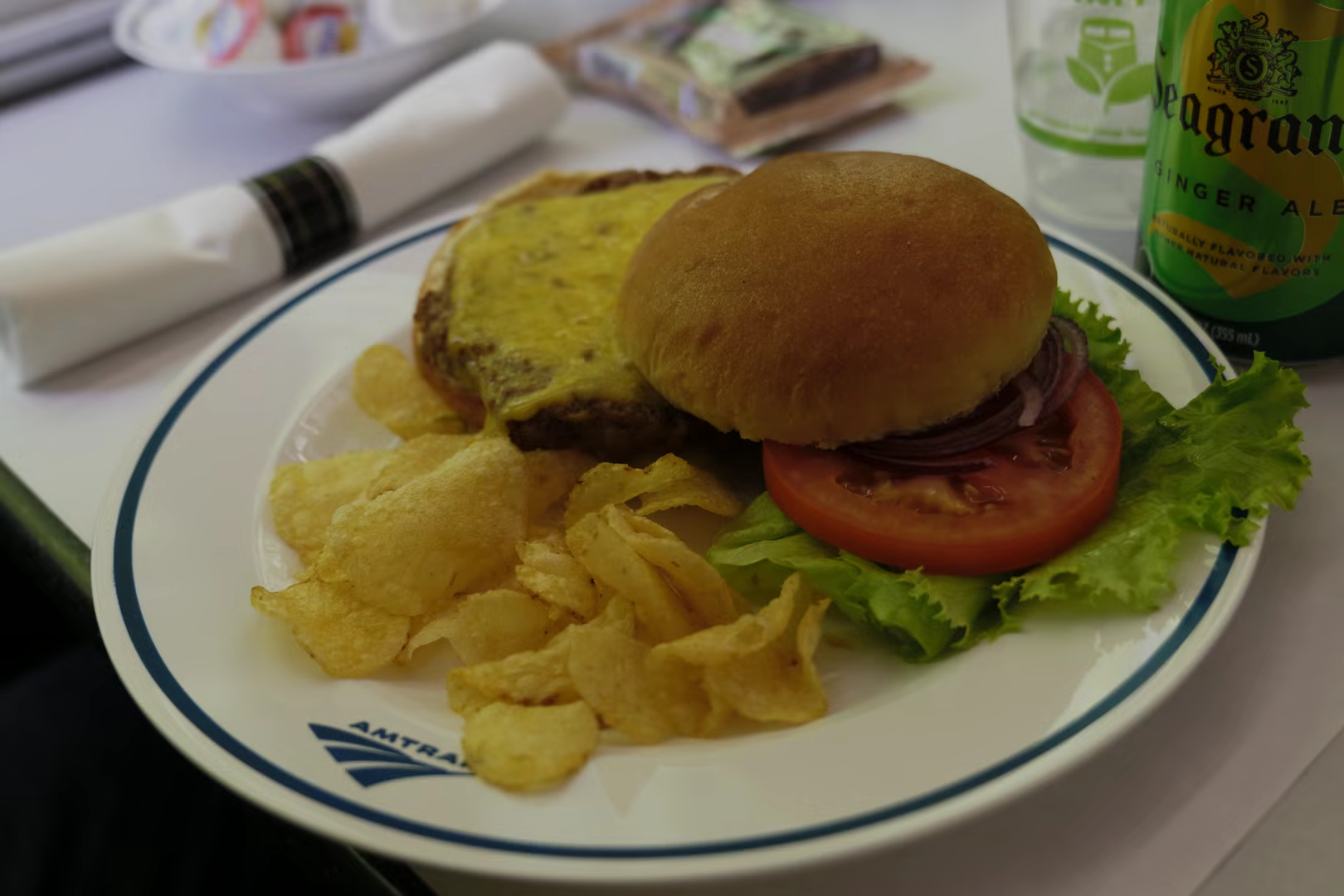
It was day one, so I went with the classic: the NATURAL ANGUS BURGER. It was like a hamburger you’d get at a diner, and reasonably tasty.
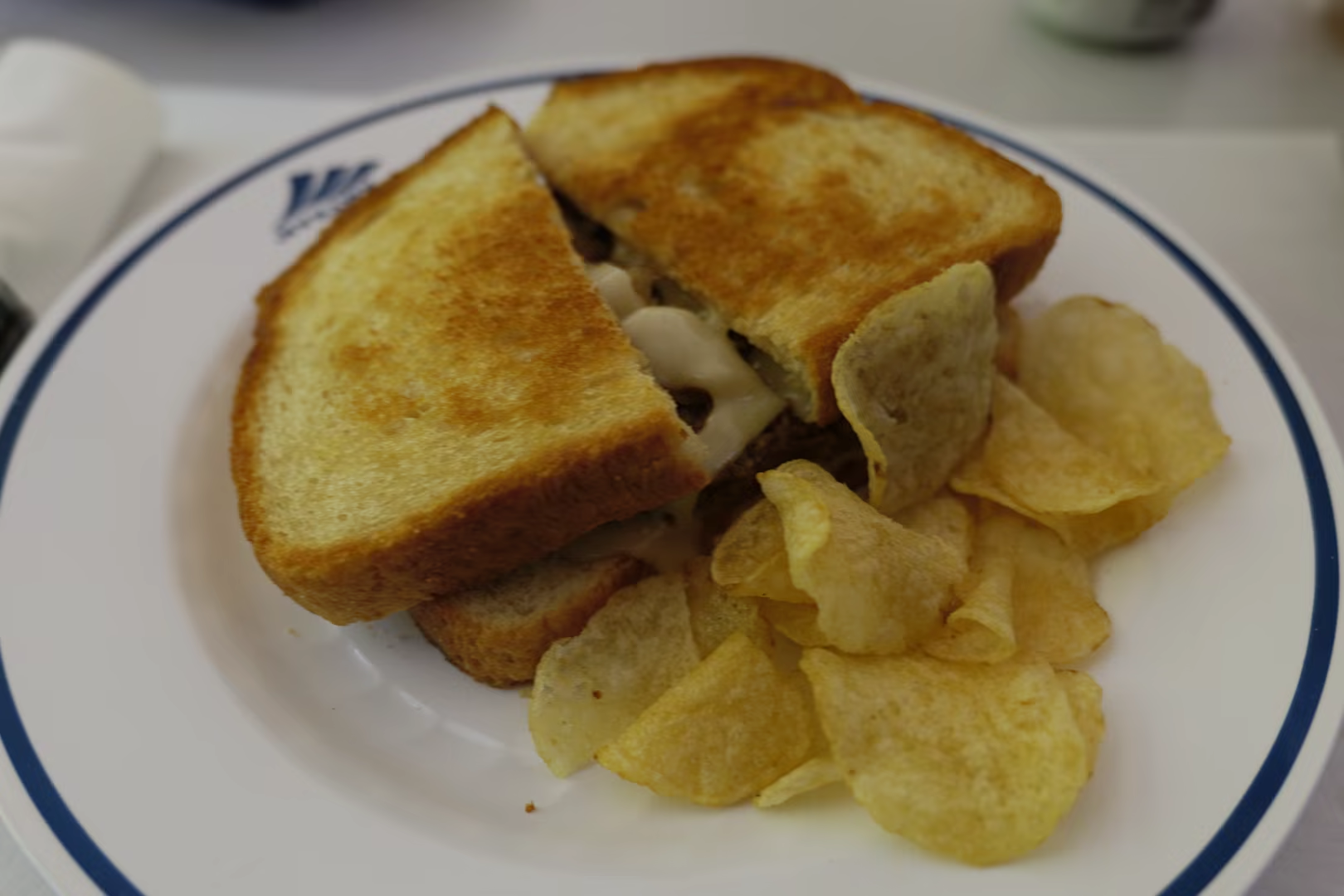
This is the ARTISAN GRILLED CHEESE SANDWICH. It looked good.
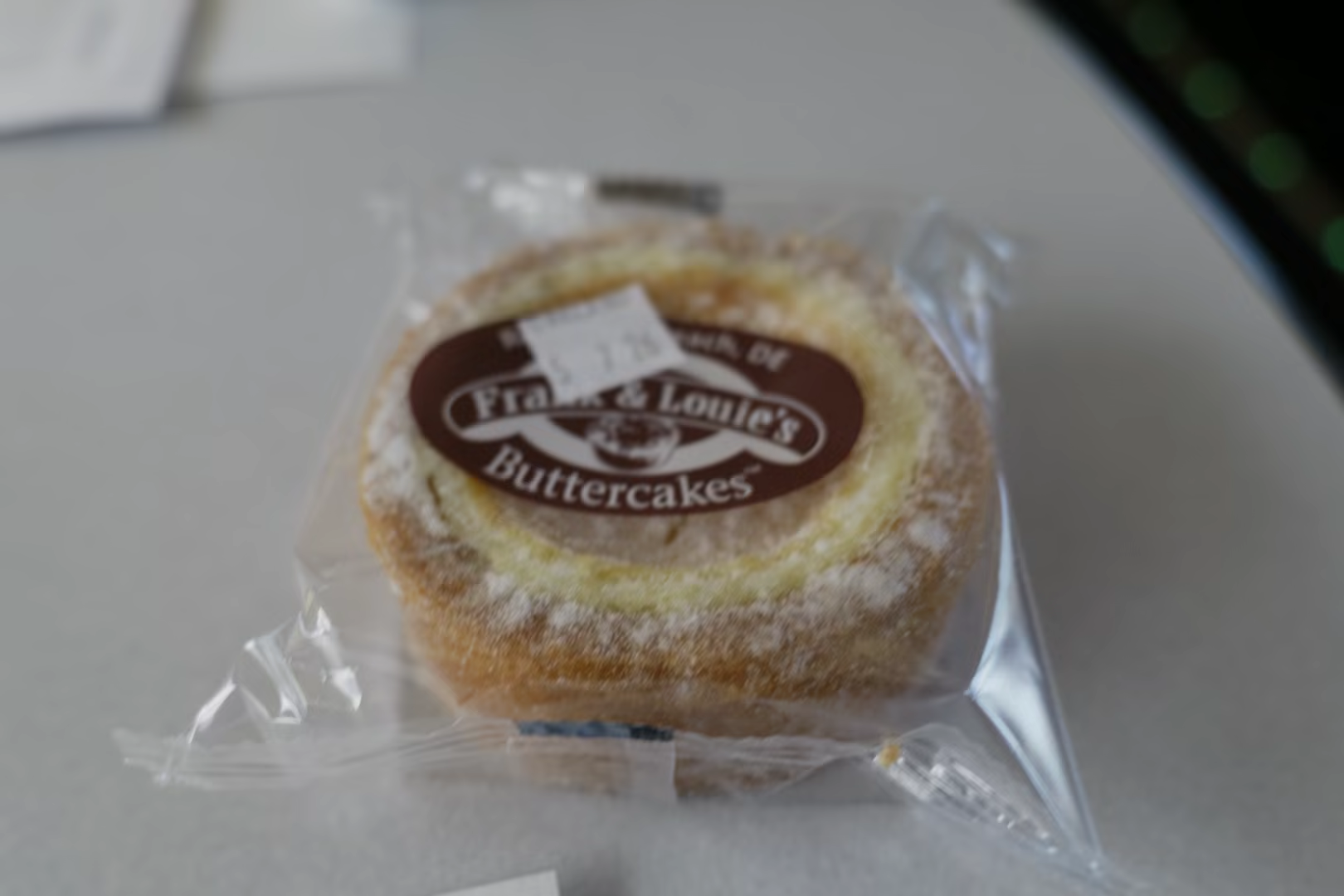
The dessert cake. Dessert is insanely sweet — sweeter than anything I’d ever eaten in Japan.
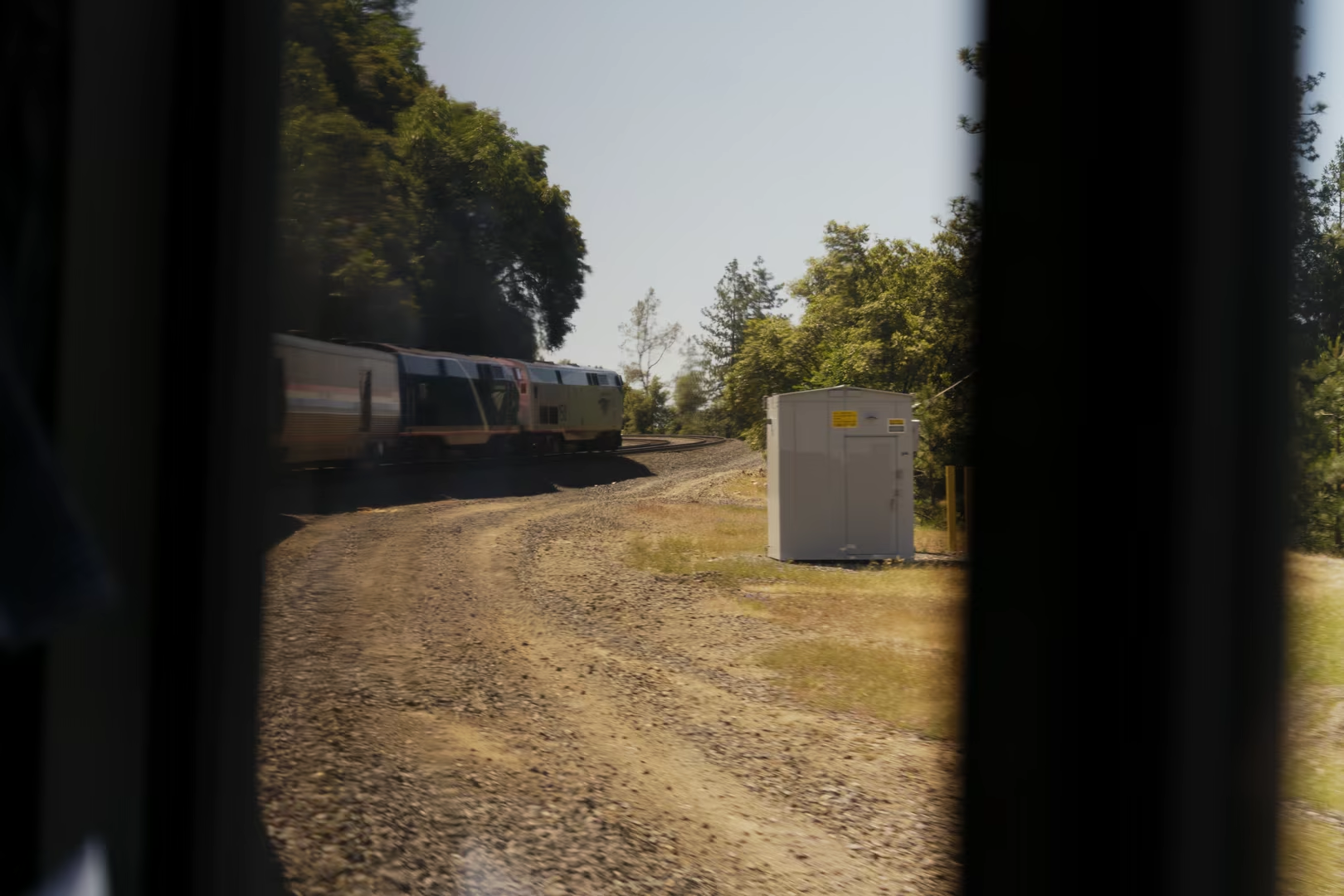
Even while we ate, the train kept going, curving enough that you could see the locomotive. And climbing steadily, up over the Sierra Nevada.
The Sierra Nevada to Nevada
Apart from eating, there’s no Wi-Fi and often no signal, so gazing blankly at the scenery is the main entertainment. It changes constantly, so there’s plenty to see.
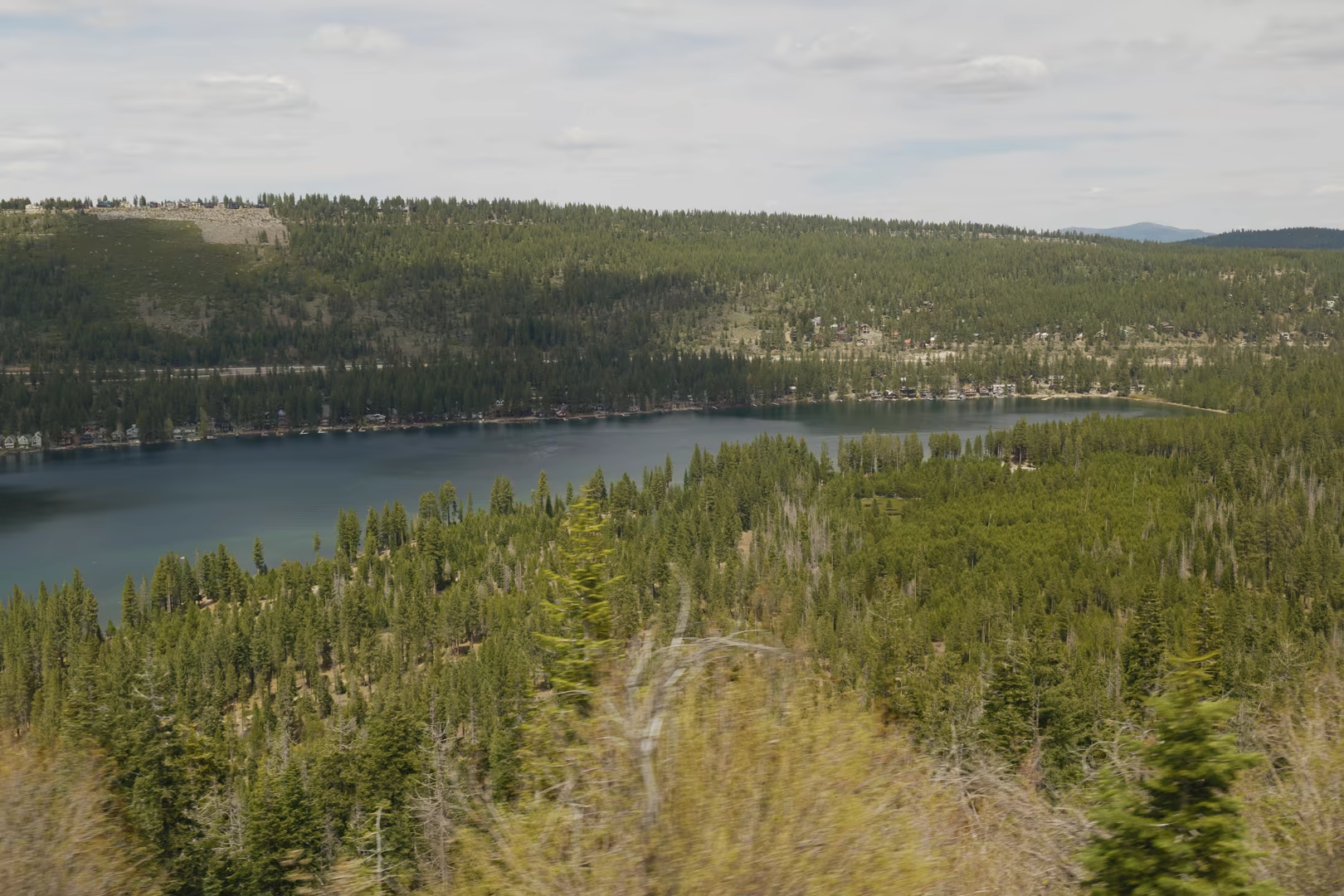
Donner Lake. You look down on the beautiful lake from quite a height; the day-one conductor said it was his favorite view. It really was beautiful — you could see little cottages along the shore.
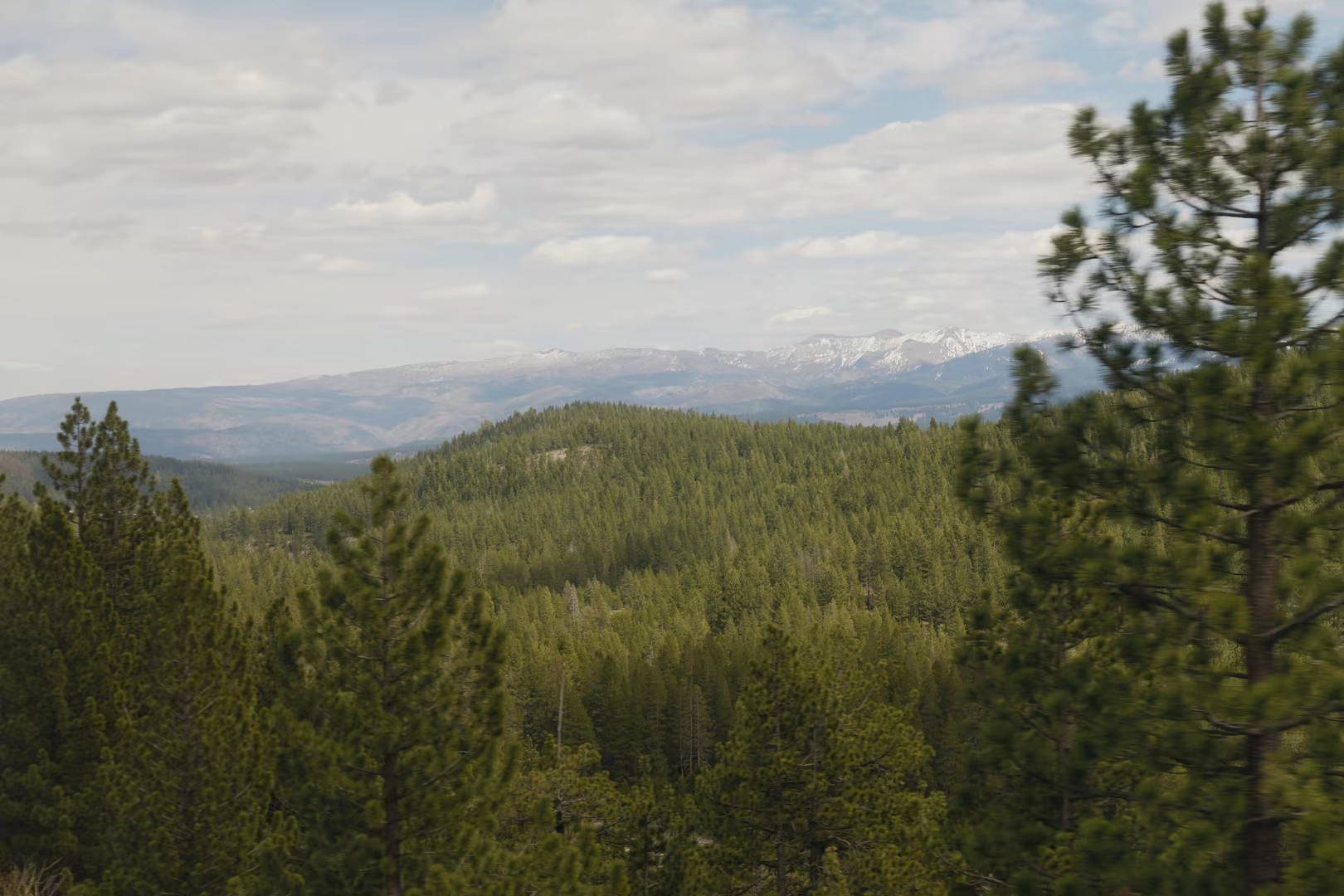
The gentle Sierra Nevada. Being Japanese, I’d never had the concept of a “gentle mountain range” before. Even at the point in this photo, we’d already climbed above 2,000 m.
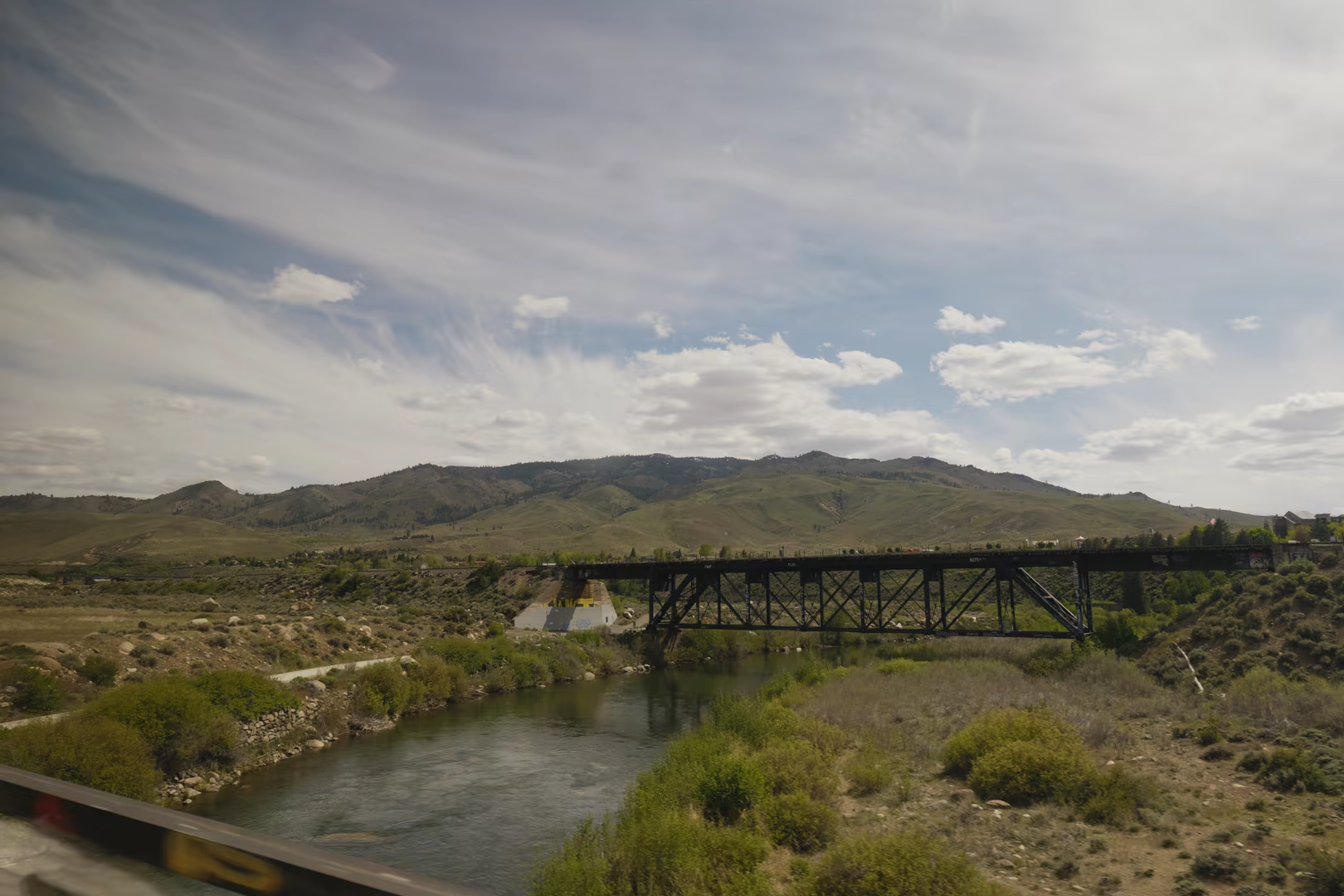
Around the far side of the Sierra Nevada. The ground was gradually getting drier.
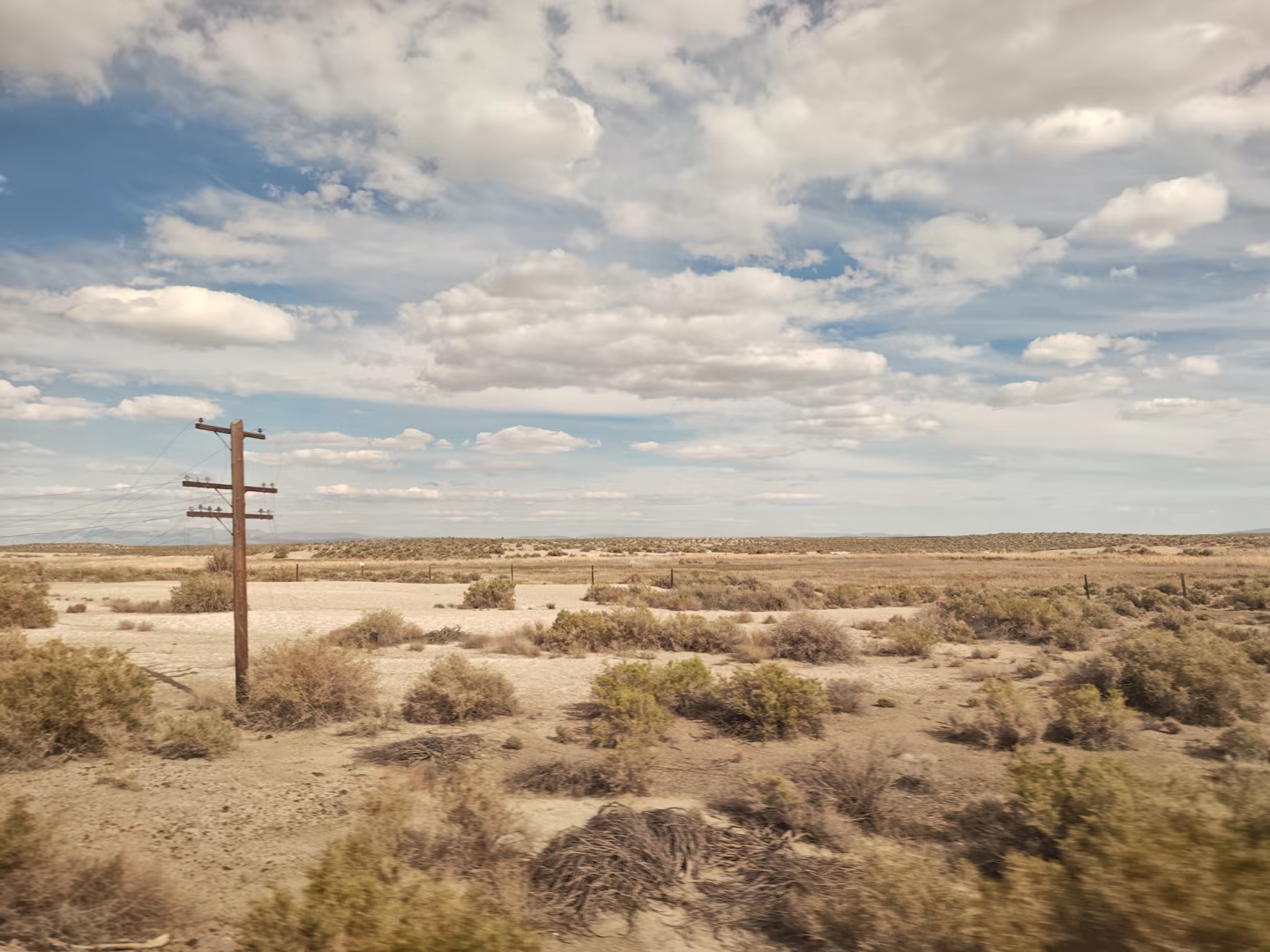
And then, in an instant, the scenery turned into “the West.” So utility poles really do stand out there all alone like that.
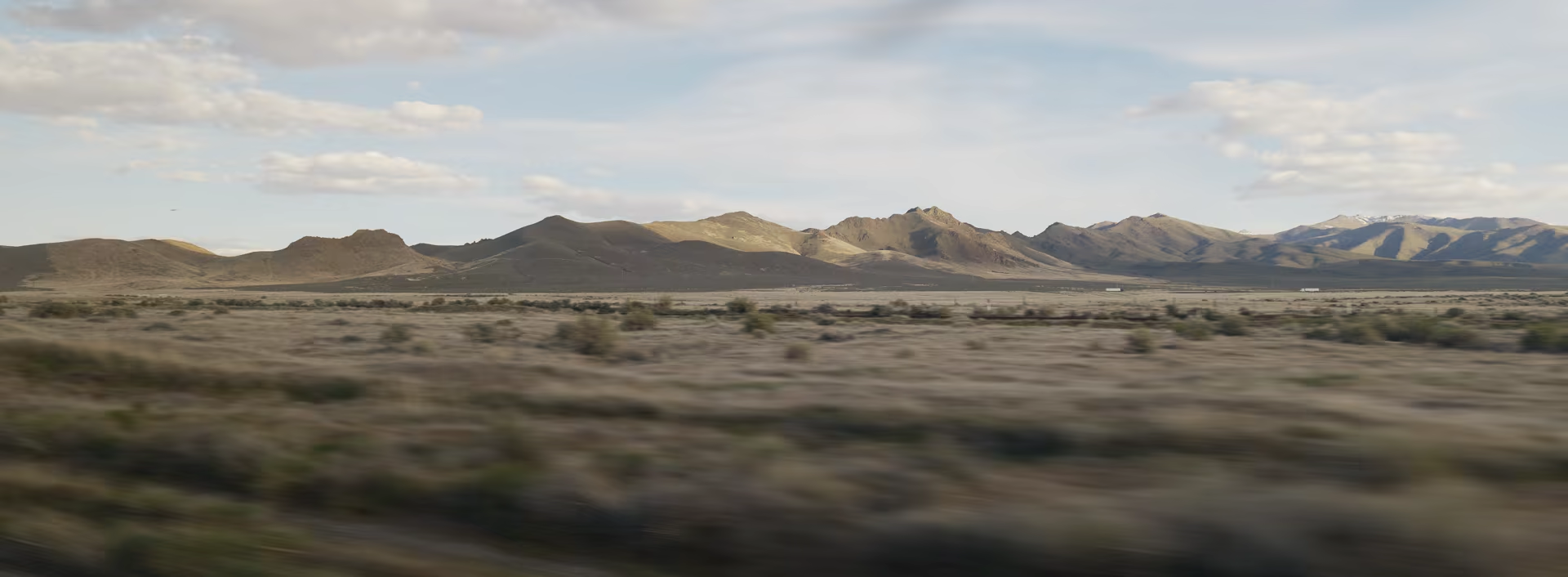
Nevada is arid country, but it’s not completely flat — it’s surrounded by mountains. Great scenery~~
Dinner
While dozing and watching the scenery, it was suddenly dinner time. Dinner is by reservation — one of the dining car guys comes to your room and asks, “What time would you like?” I think the choices were around 17:00, 18:00 and 19:00, but lunch had been so filling and we’d barely moved, so we picked 19:00.
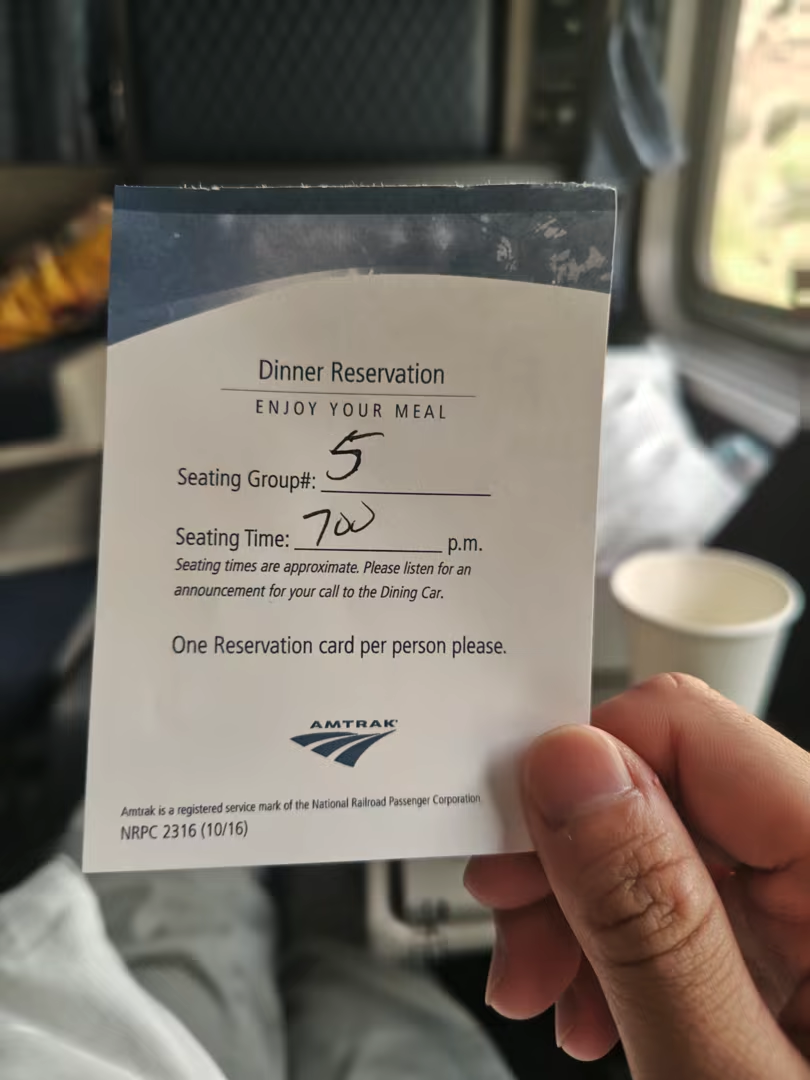
When you make a reservation, you get a slip like this.
Here’s the dinner menu, transcribed as well. Check Amtrak’s website for the latest version — though I suspect it hasn’t changed in years. As the menu itself says at the top, dinner includes one alcoholic drink.
Three Course Dinner Menu
Dinner includes one complimentary alcoholic beverage. Soft drinks are complimentary during all meal periods. Entrees come with a dinner roll.
| Course | Item | Description |
|---|---|---|
| Starter | COCONUT CRUSTED SHRIMP | Large Premium Shrimp, Crunchy Coconut Breading, Sweet Chili Sauce |
| Starter | MIXED GREEN SALAD WITH BABY BRIE | Arcadian Lettuce, Brie Cheese, Grape Tomatoes, Cucumber, Balsamic Vinaigrette |
| Entree | AMTRAK SIGNATURE FLAT IRON STEAK | Black Angus Flat Iron Steak, Rustic Mashed Potatoes or Baked Potato, Mixed Vegetables, Port Wine Sauce |
| Entree | PAN ROASTED CHICKEN BREAST | Thyme-marinated Chicken Breast, Rustic Mashed Potatoes or Baked Potato, Mixed Vegetables, Morel Mushroom Sauce |
| Entree | ATLANTIC SALMON | Oven Roasted Salmon, Brown Rice, Red Quinoa, Edamame, Carrots, Bell Pepper, Lobster Sauce |
| Entree | PASTA PRIMAVERA | Fusilli Pasta, Tomatoes, Carrots, Red Bell Pepper, Leeks, Zucchini, Vegan Primavera Sauce |
| Dessert | CHOCOLATE SPOON CAKE | Chocolate Cake, Chocolate Ganache Pudding |
| Dessert | WHITE CHOCOLATE BLUEBERRY COBBLER CHEESECAKE | White Chocolate Cheesecake, Vanilla Bean Cream Cake, Swirled Blueberry Compote |
Bar Selection
| Category | Price | Brands |
|---|---|---|
| Beer | $8.00 each | Coors Light, Corona Extra |
| Beer | $8.00 each | Stella Artois, Heineken, Stone IPA |
| Wine (glass) | $7.50 each | Kendall-Jackson – Chardonnay |
| Wine (glass) | $7.50 each | Scheid – Sauvignon Blanc |
| Wine (glass) | $7.50 each | Ryder Estate – Cabernet Sauvignon |
| Spirits | $9.00 each | Tanqueray Gin, Tito’s Handmade Vodka |
| Spirits | $9.00 each | Bacardi Rum, Maker’s Mark Bourbon Whiskey |
What I Ordered
It was day one and my stomach was still in good shape, so I chose the salad as a starter, the steak as the main, and the cheesecake for dessert. As the menu’s “THREE COURSE DINNER” says, it’s a course of starter, main and dessert.
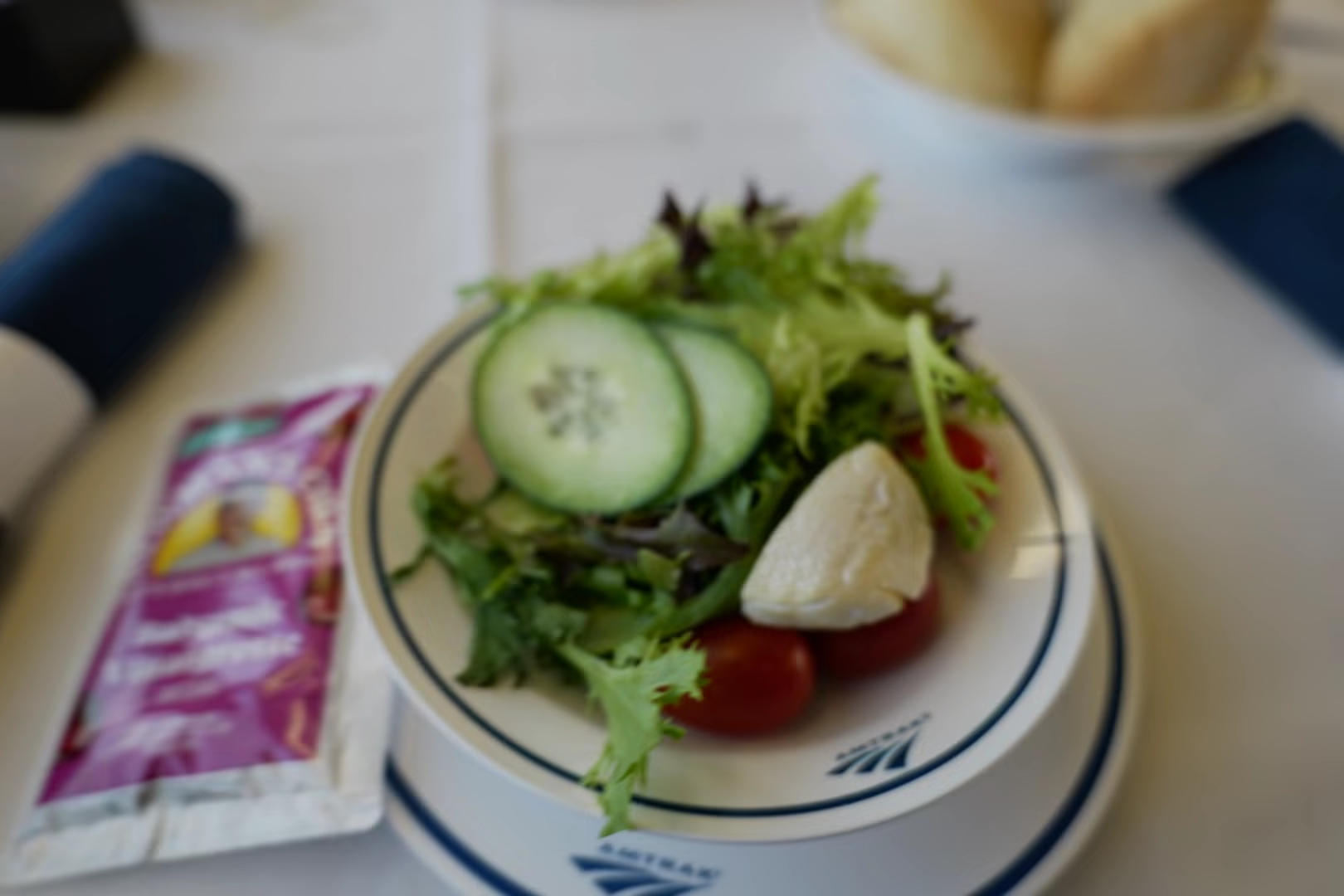
The salad. The vegetables looked a bit tired, but this is America — that’s how it goes. The dinner roll just visible at the top right is the staple here. It felt like I could have asked for another one.
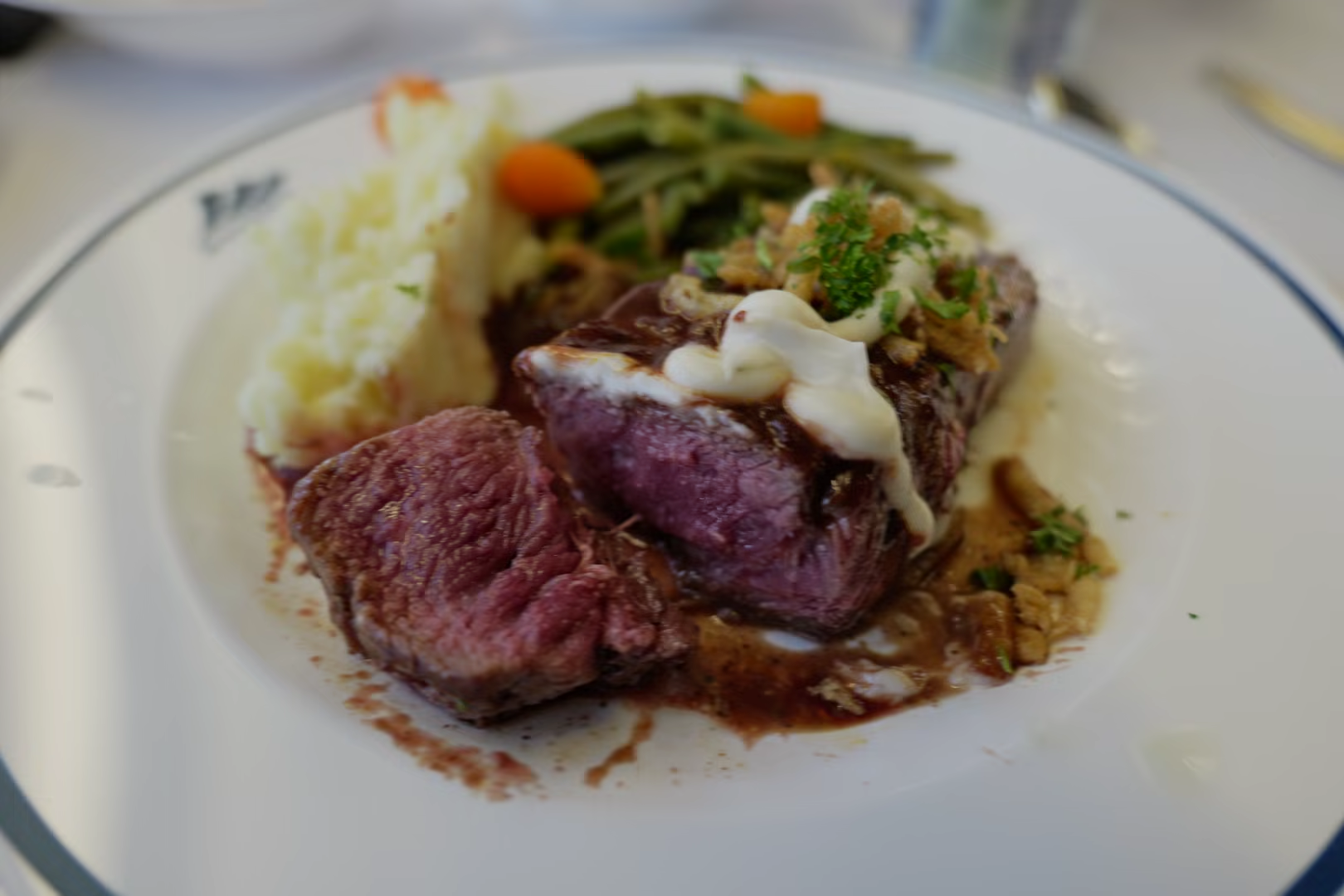
The main: AMTRAK SIGNATURE FLAT IRON STEAK, cooked rare. Tender red meat, and far too delicious. I learned while writing this article that “flat iron” is the name of the cut — but this was in a different league from the flat iron steaks at Japanese family restaurants.
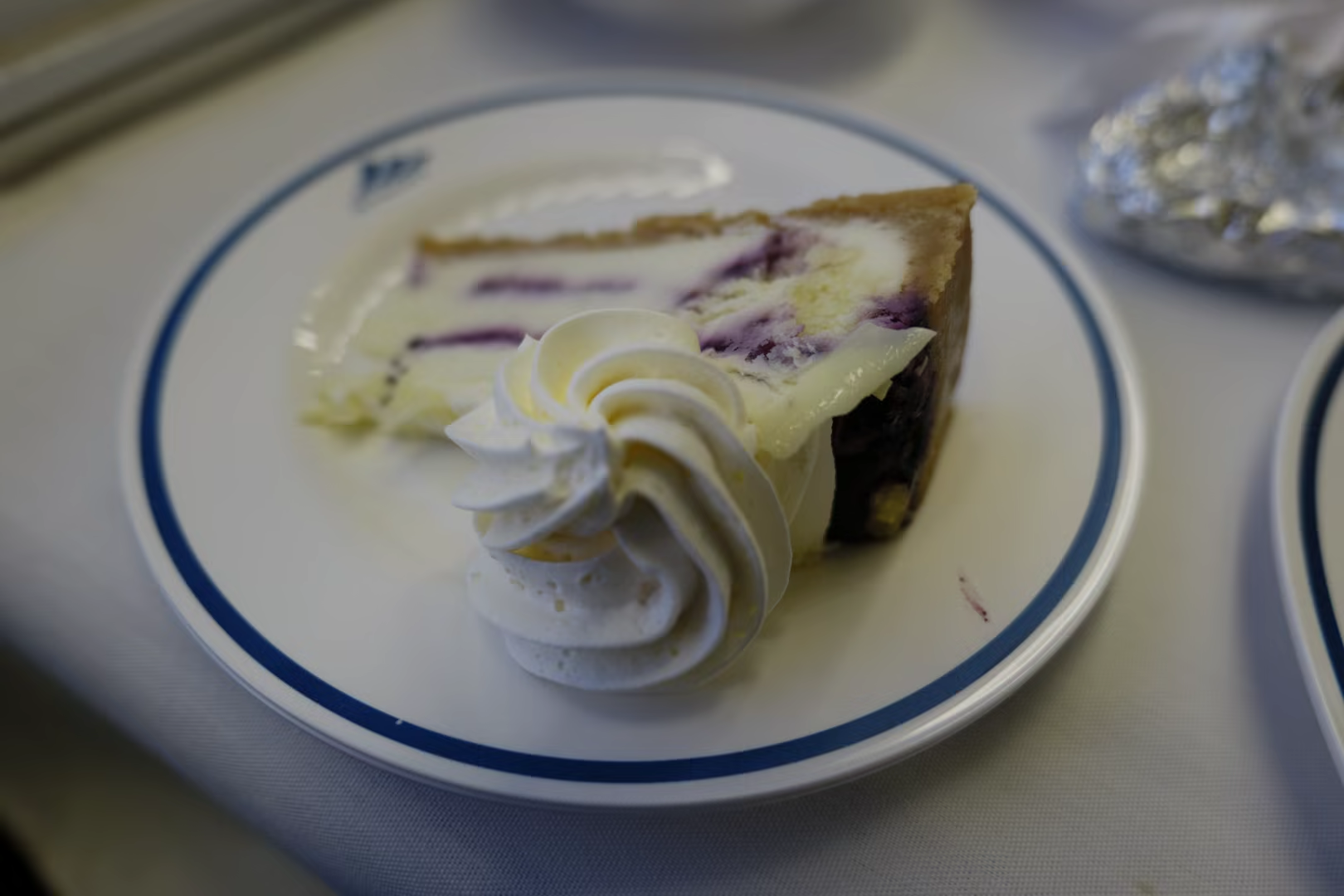
The cheesecake. I’d hoped that even in this land of insanely sweet cakes, a cheesecake might be safer. It was insanely sweet. Washed down with coffee, it’s great!
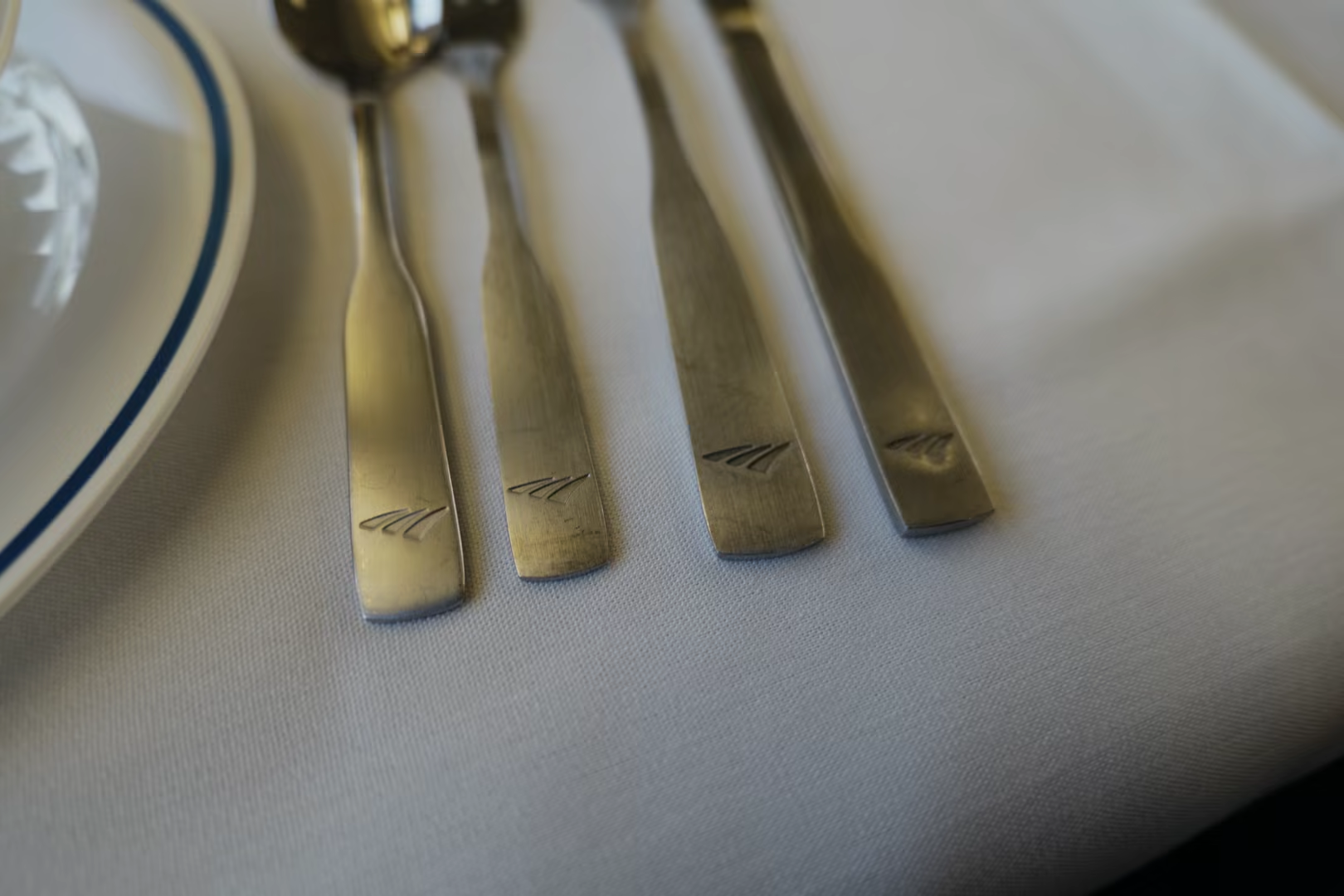
The dining car tableware is basically all disposable, plates included, but the dinner cutlery was metal with the Amtrak logo. I wanted a set if they were sold anywhere, but neither the on-board shop nor Chicago station had them…
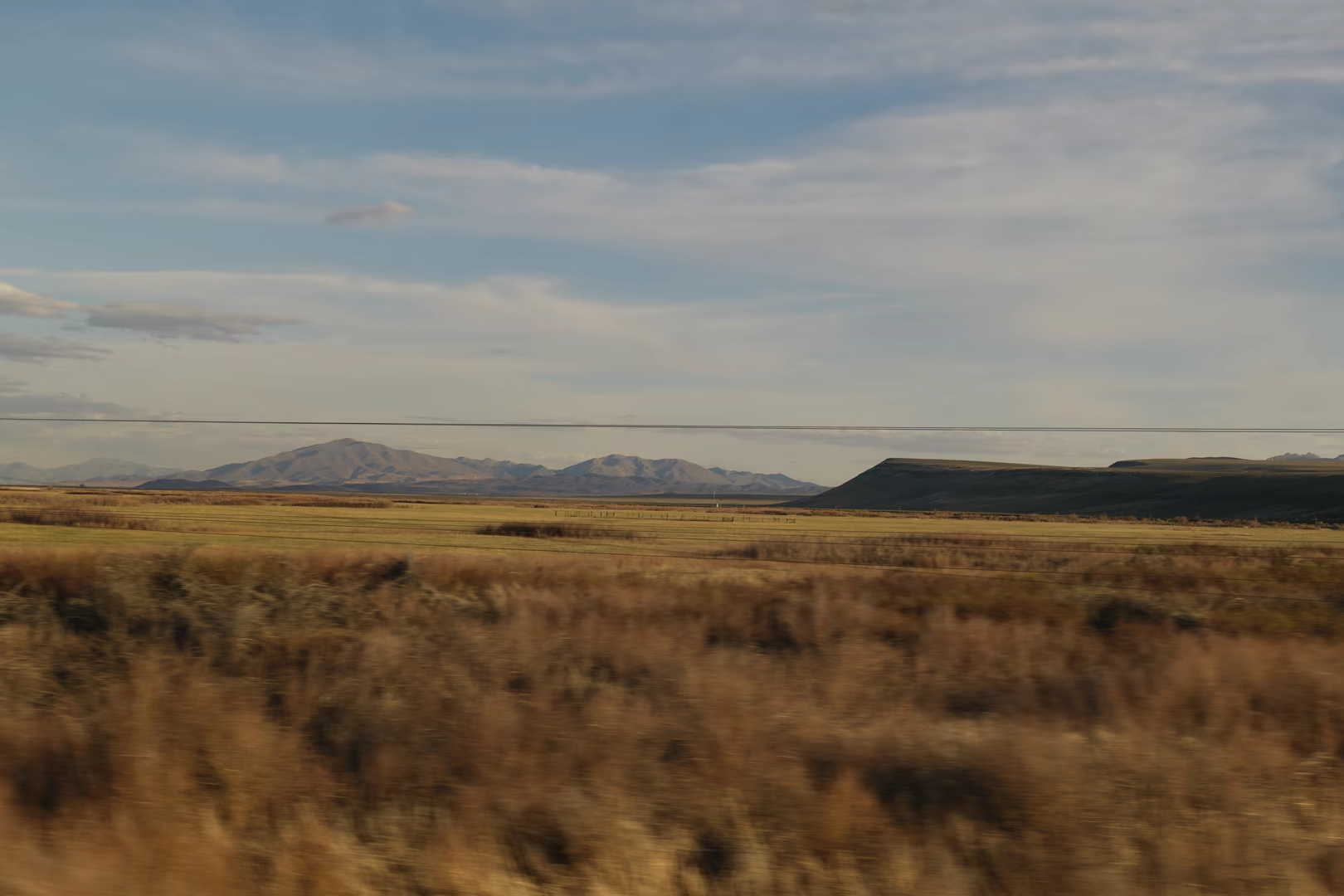
Dinner with a view like this. When you think of it that way, it’s a luxurious trip. We’re hurtling along at over 100 km/h, so it does shake a fair amount.
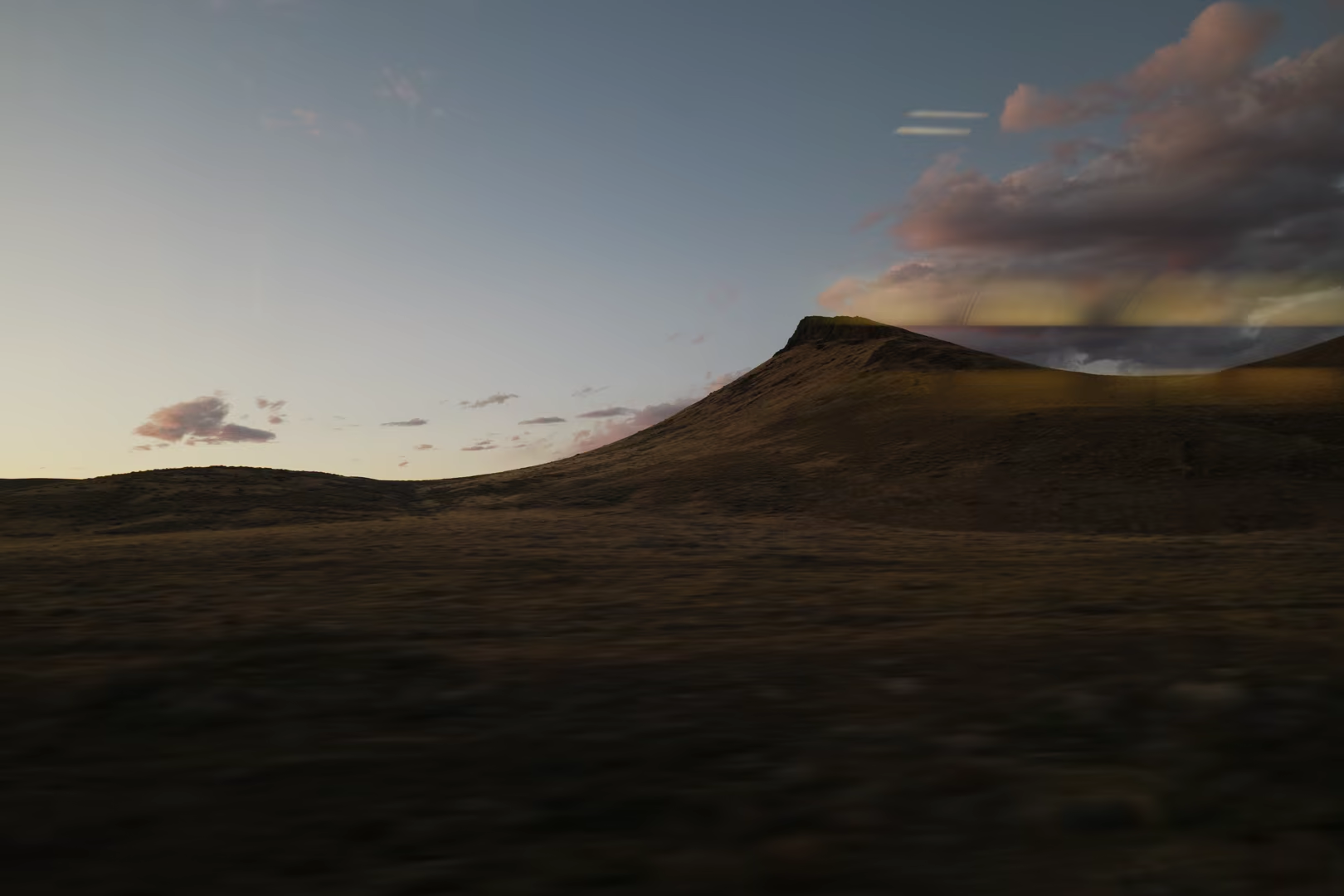
By the time we’d finished eating, the sun had set and it was getting dark. In summer it’s still light at 20:00 — the perfect season for a rail trip.
Nevada to Salt Lake City
After dinner it’s back to dozing and watching the scenery — except at night you can see almost nothing. If there’s a town nearby you might get a nightscape, but we were in the middle of arid country: look outside and there’s the moon above and the ground below, and that’s all you can tell. Let’s just sleep.
Each sleeping car has a shower booth you can use any time. There’s only one per car, though, so if it’s busy you’ll have to wait your turn. Bath towels are stacked in the booth and free to use, but there clearly aren’t enough for everyone, so if they’ve run out, make do with the face towel from your room. For toiletries there’s only a small bar of soap, so bring your own shampoo set. The hot water came out better than I expected — perfectly normal. If a hotel in Southeast Asia had that water pressure, you’d think “oh, this place is a winner.” There is a changing space, but the floor isn’t exactly clean, so flip-flops or Crocs make it more comfortable.
That night I slept in the lower bunk. There’s some swaying, but at a pleasant level. Surprisingly, you can’t hear much clattering, though the whistle at level crossings occasionally drifts in from far away. The room’s air conditioning is also noisy, so earplugs might be a good idea if that bothers you. The air conditioning at night is a little chilly, so long-sleeved pajamas are a good idea even in summer. There’s an adjustment dial for the air conditioning in the room, but I never figured out what it actually changed.
At some point I fell asleep, and woke to the feeling of the train stopping: we’d arrived at Salt Lake City station. An announcement before I slept had said we’d stop for about twenty minutes, but it was the middle of the night (2 a.m.), so there was no announcement on arrival. Through the window I caught a glimpse of some amazing-looking train, so I jumped up and got off to look.
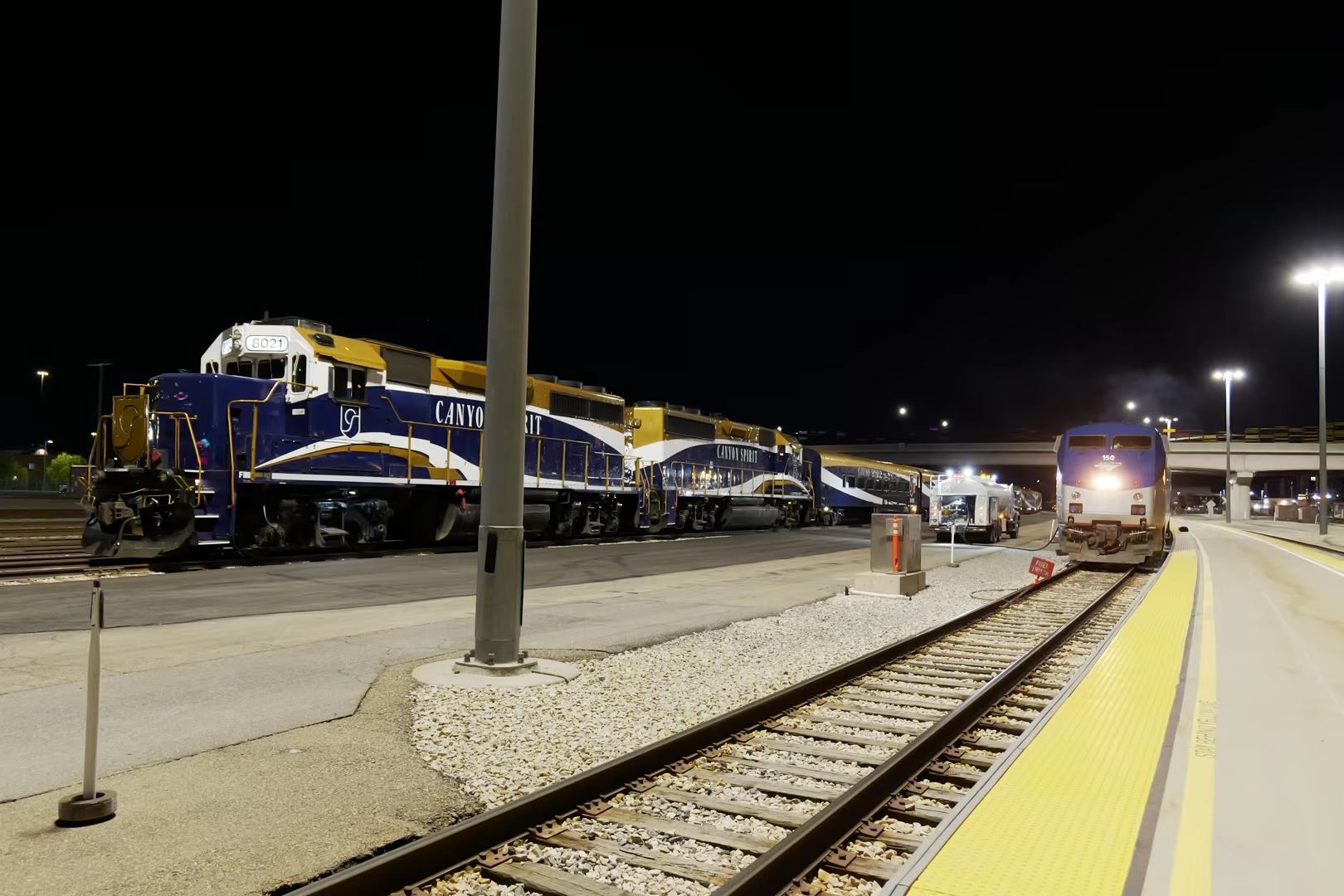
What is this! On the right is the locomotive that’s been looking after us.
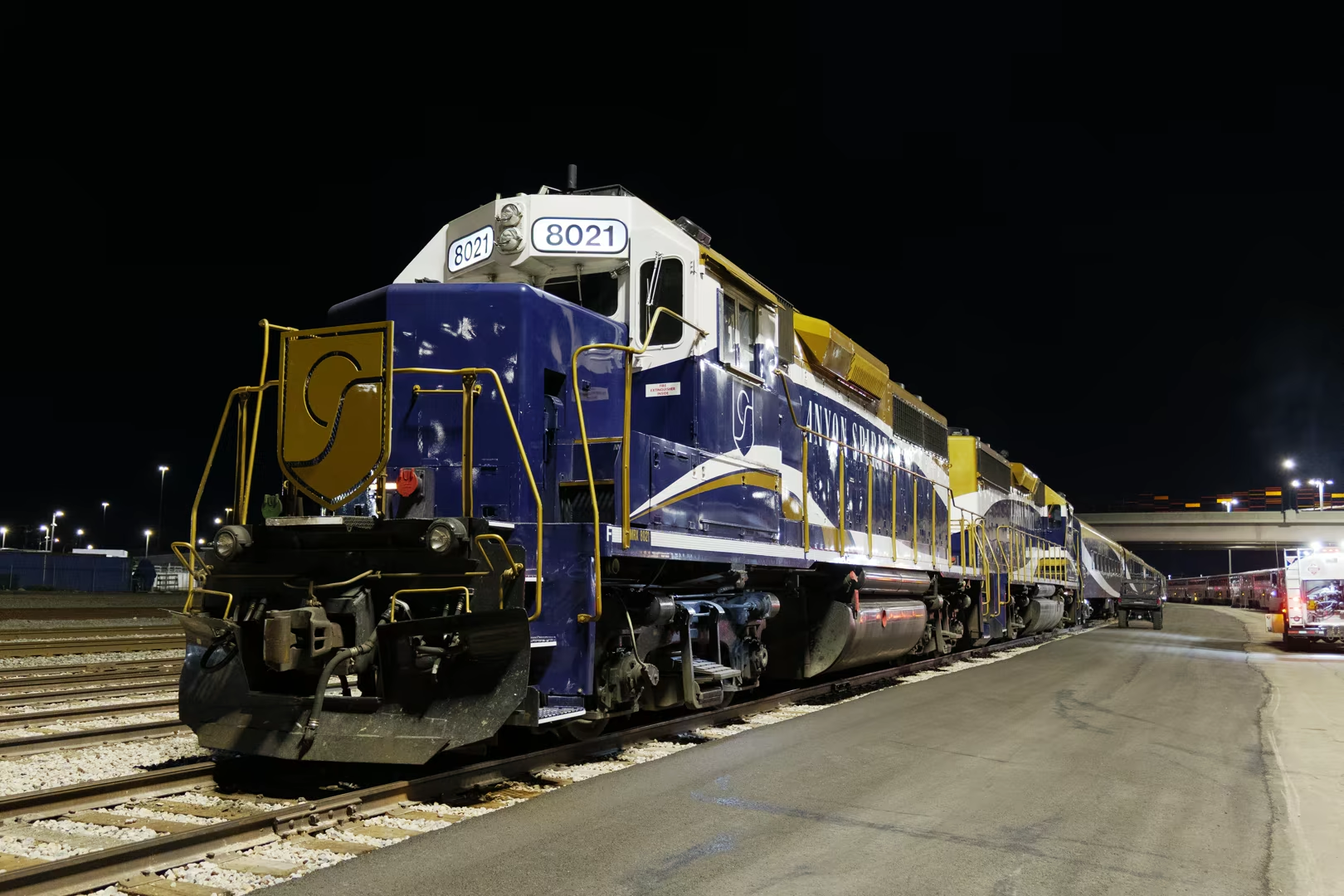
The luxury excursion train “CANYON SPIRIT.” Even its locomotive was polished to a shine — far too cool. Two-day trips start at 1,250 USD, apparently. I’d like to ride something like this someday~
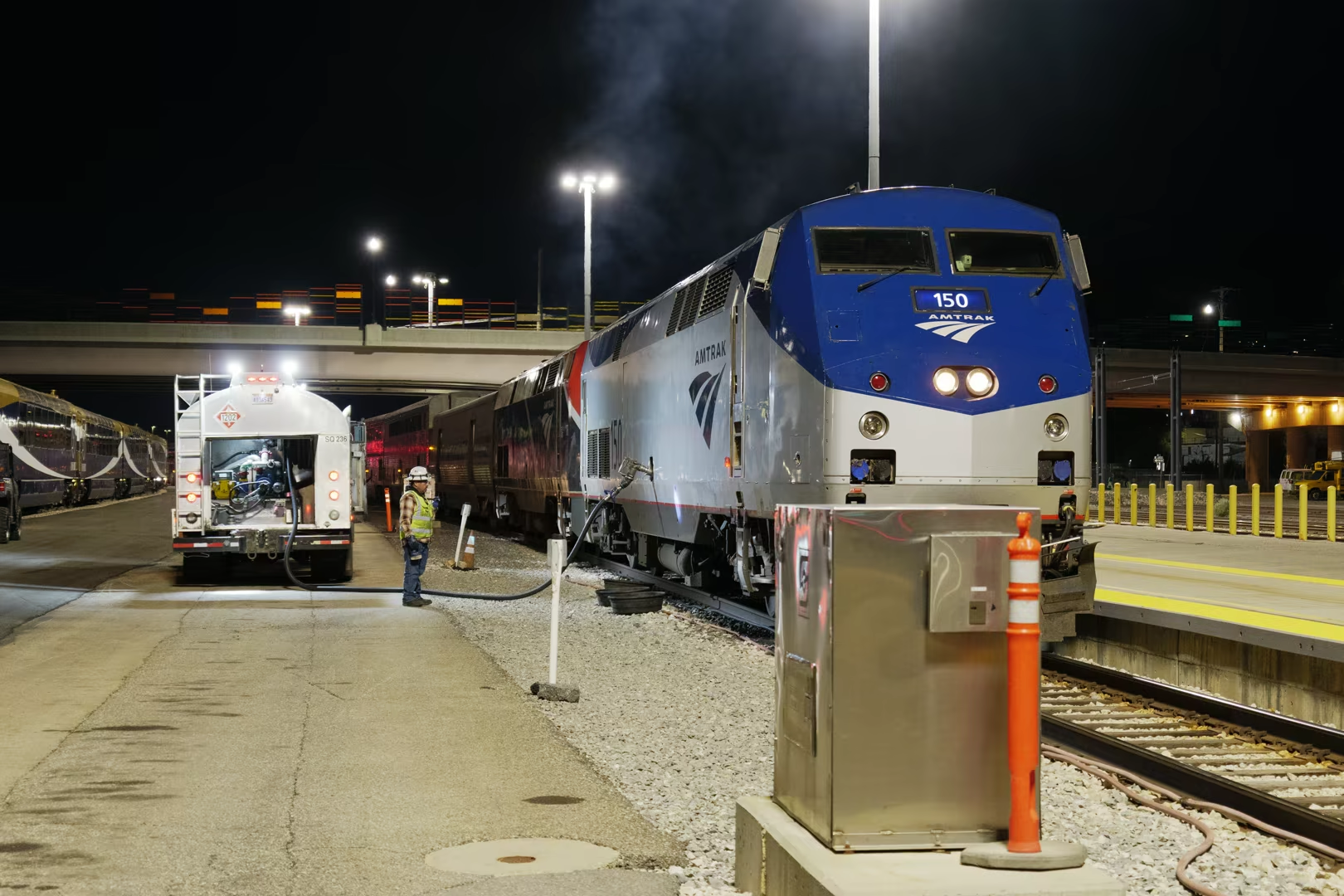
I was too sleepy to take a decent photo, but our locomotive was being refueled. Well, over 3,000 km, I suppose fuel stops are needed.
During night stops the attendant isn’t outside, and when the time comes the train will simply leave you behind, so get back early. Though if you did get left in Salt Lake City, you could just fly to Denver and get there ahead of the train.
DAY 2
Utah to Colorado
On day two, the train makes its unhurried way between Salt Lake City and Denver, a distance of just under 1,000 km. Along the way is the highlight of this route, the crossing of the Rocky Mountains — the day the locomotives work hardest. Go for it!
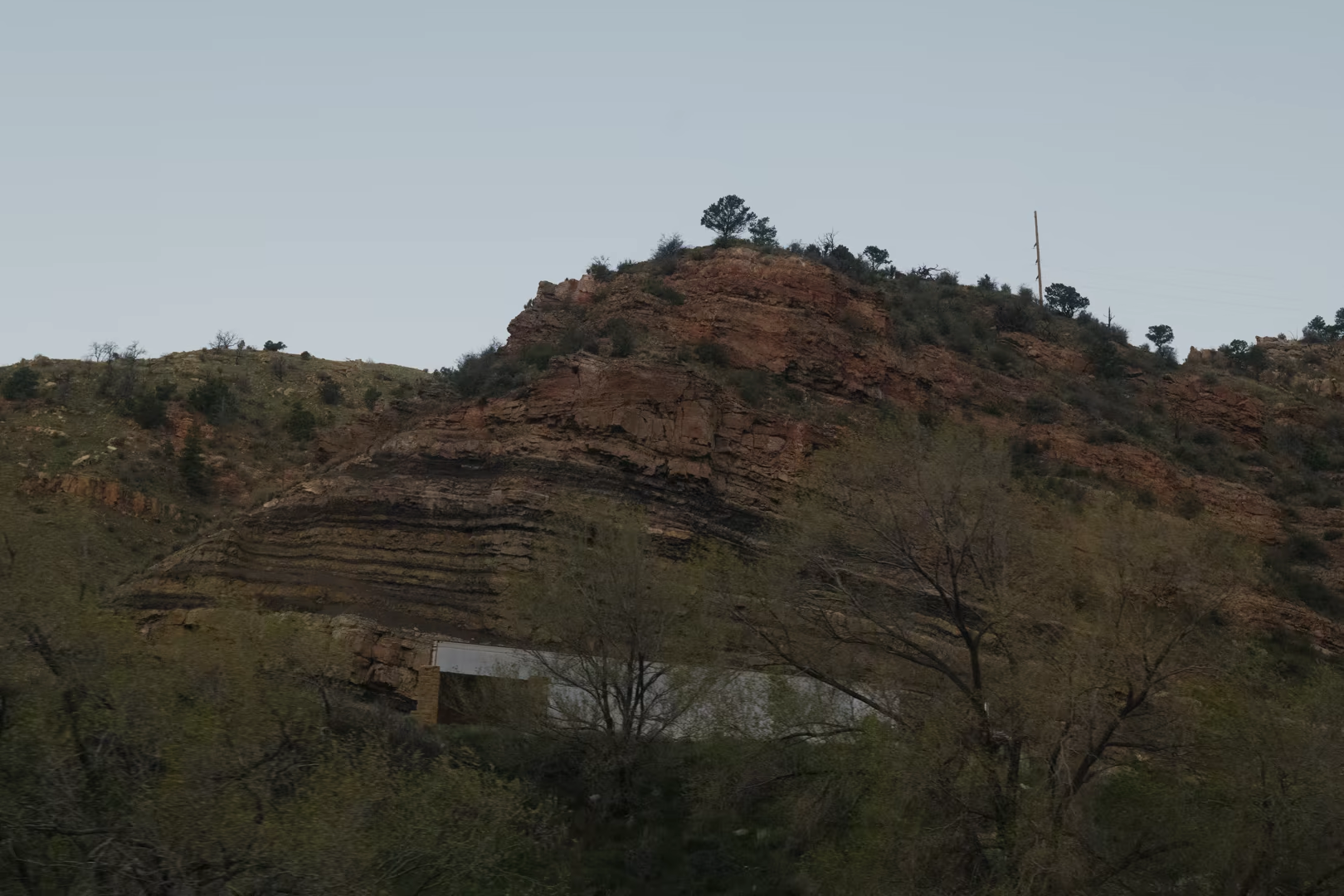
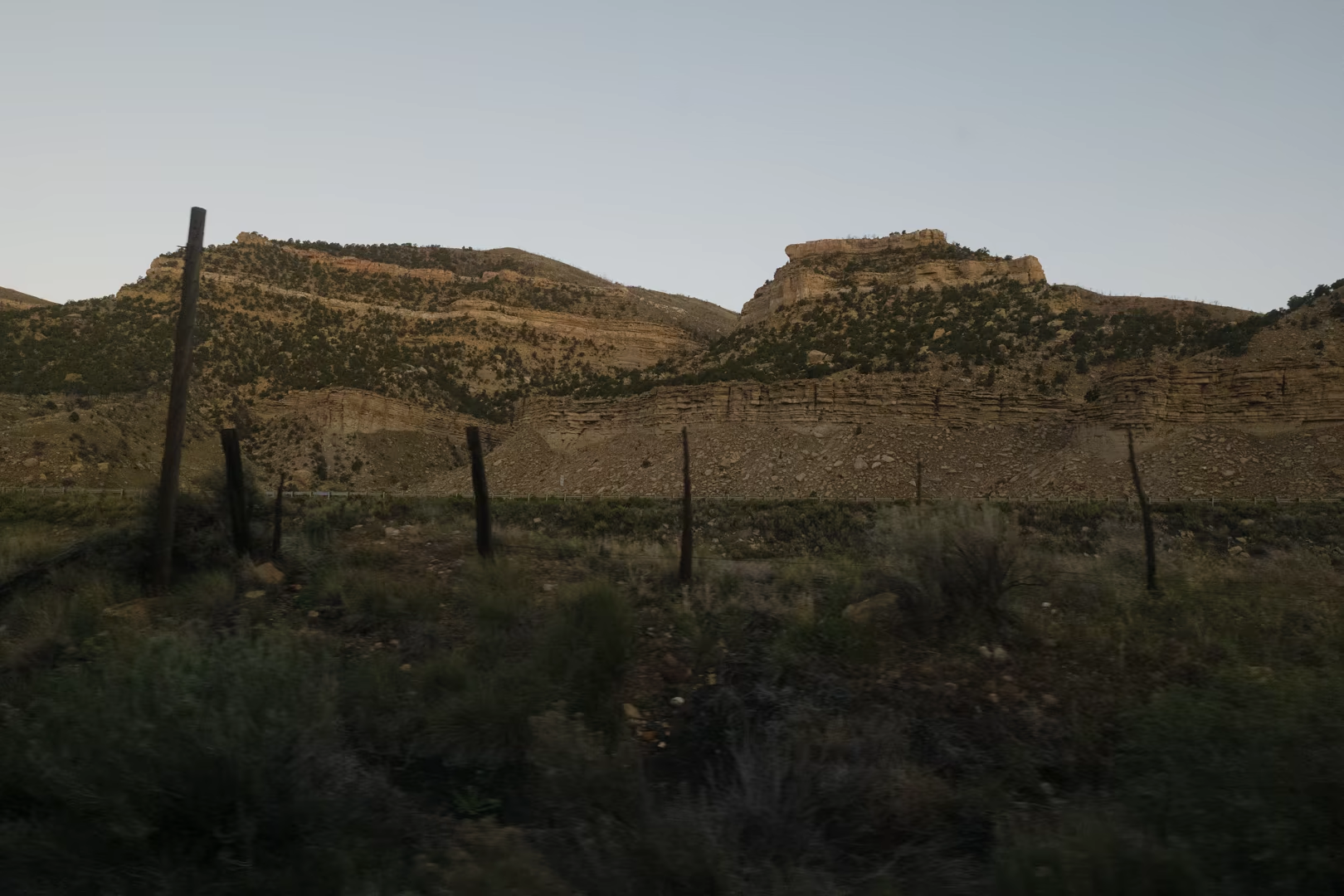
The view on waking (6:30). The dining car guy had said yesterday that breakfast starts at 6:30, so I was standing by. We’d already plunged from the wide-open arid country into canyon country.
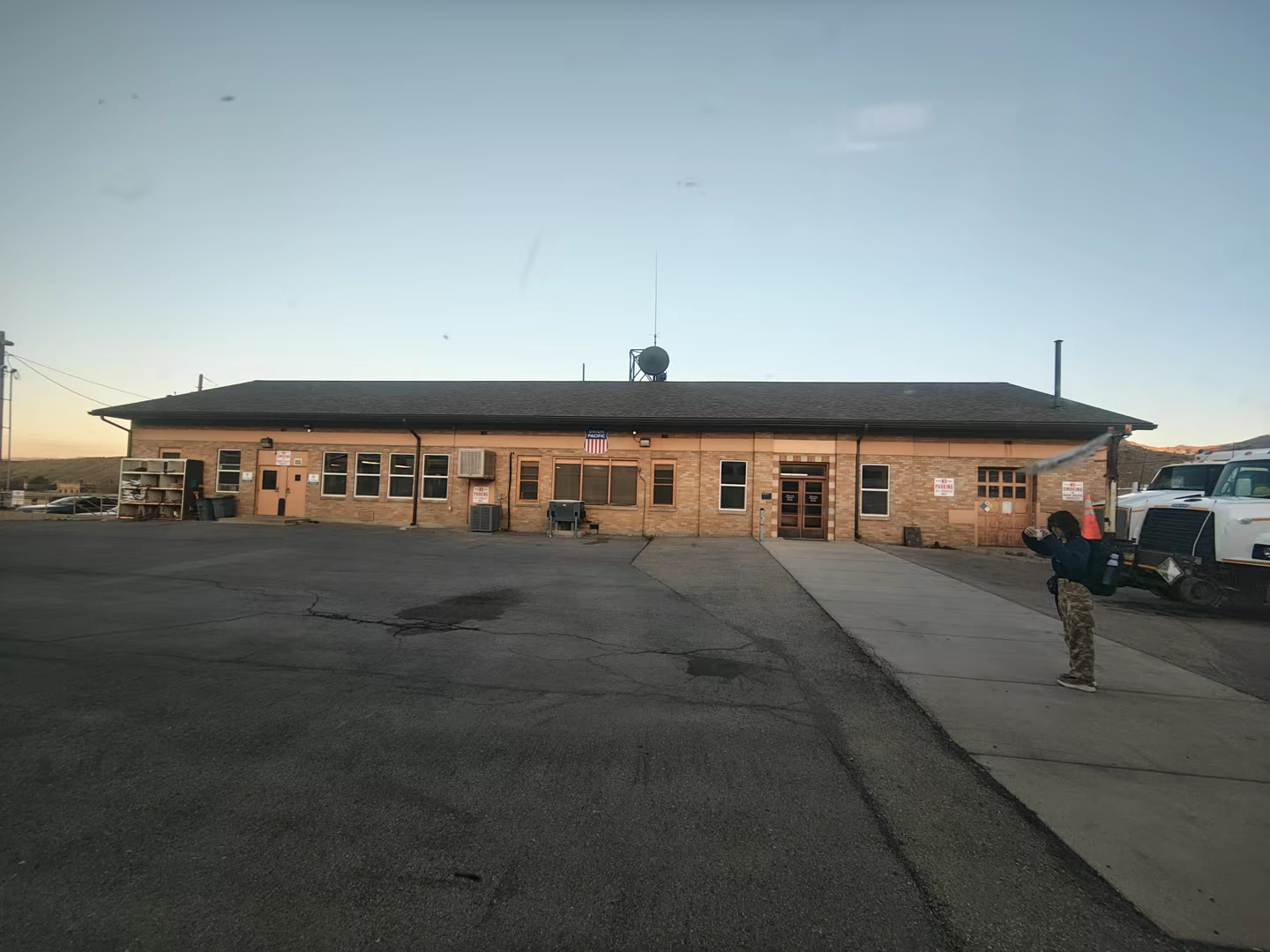
Stopping at a tiny station. At little stations like this, the attendant tells you not to get off even if you want to. The train leaves in two or three minutes.
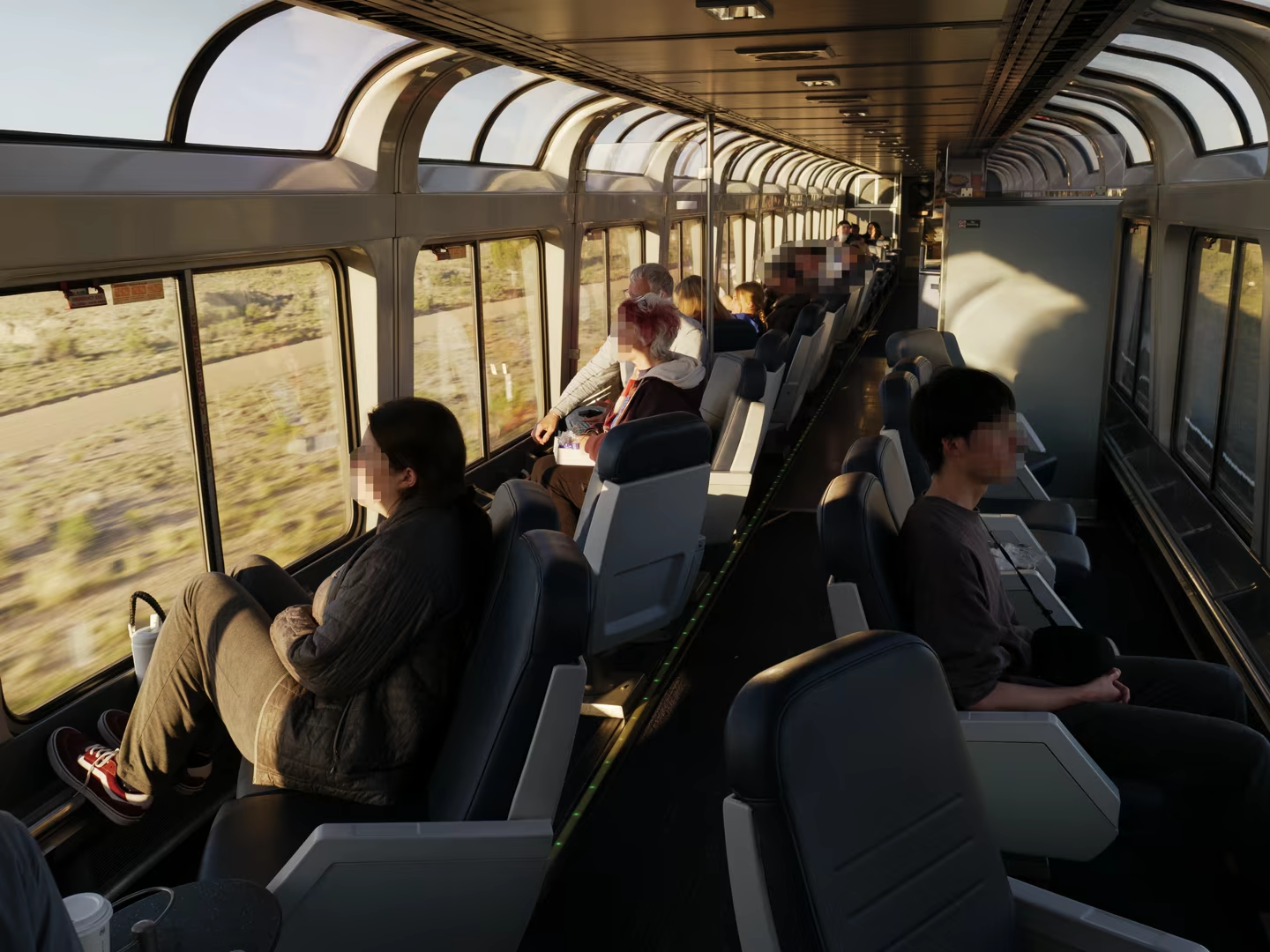
I waited in the lounge car until breakfast began. The lounge car looks like this: outward-facing seats, and four-person diner-style booths at the back. You can come and go freely. It has a skylight and feels wonderfully open.
Breakfast
As an aside: I have no resistance to calling lunch “lunch” and dinner “dinner,” but calling breakfast “breakfast” (in English) makes me feel oddly fidgety. Is it just me? Probably just that I’m not used to saying it.
Here’s the breakfast menu, transcribed too. You choose a main from three options, and a side from four.
Breakfast Menu
| Category | Item | Description |
|---|---|---|
| Main | CONTINENTAL BREAKFAST | Assorted Pastries, Oatmeal, Cold Cereal, Fresh Fruit, Yogurt |
| Main | AMERICAN BREAKFAST | Scrambled Eggs, Breakfast Potatoes, Applewood Smoked Bacon, Pork Sausage Links, Assorted Pastries, Oatmeal, Cold Cereal, Fresh Fruit, Yogurt |
| Main | PANCAKES OR FRENCH TOAST | Applewood Smoked Bacon, Pork Sausage Links |
| Side | Hardwood Smoked Bacon | Bacon smoked with hardwood |
| Side | Premium Skinless Pork Sausage Links | - |
| Side | Three-Pepper Natural Chicken Sausage Links | - |
| Side | Salsa | - |
What I Chose
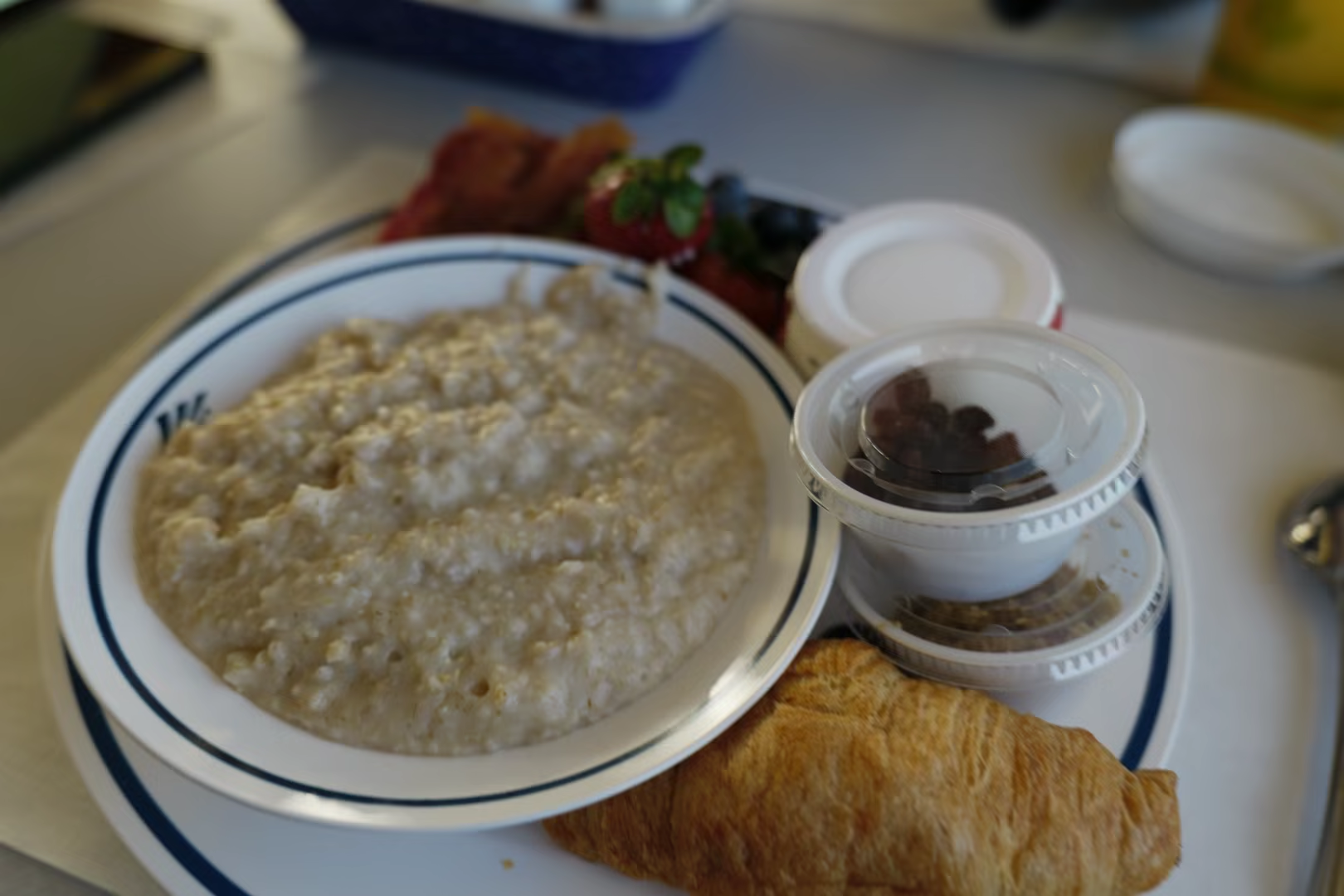
The CONTINENTAL BREAKFAST with crispy bacon. I’ve personally been into oatmeal and other porridge-like foods lately. Warm and tasty. The croissant tasted like it was baked yesterday, but it was full of butter — so close.
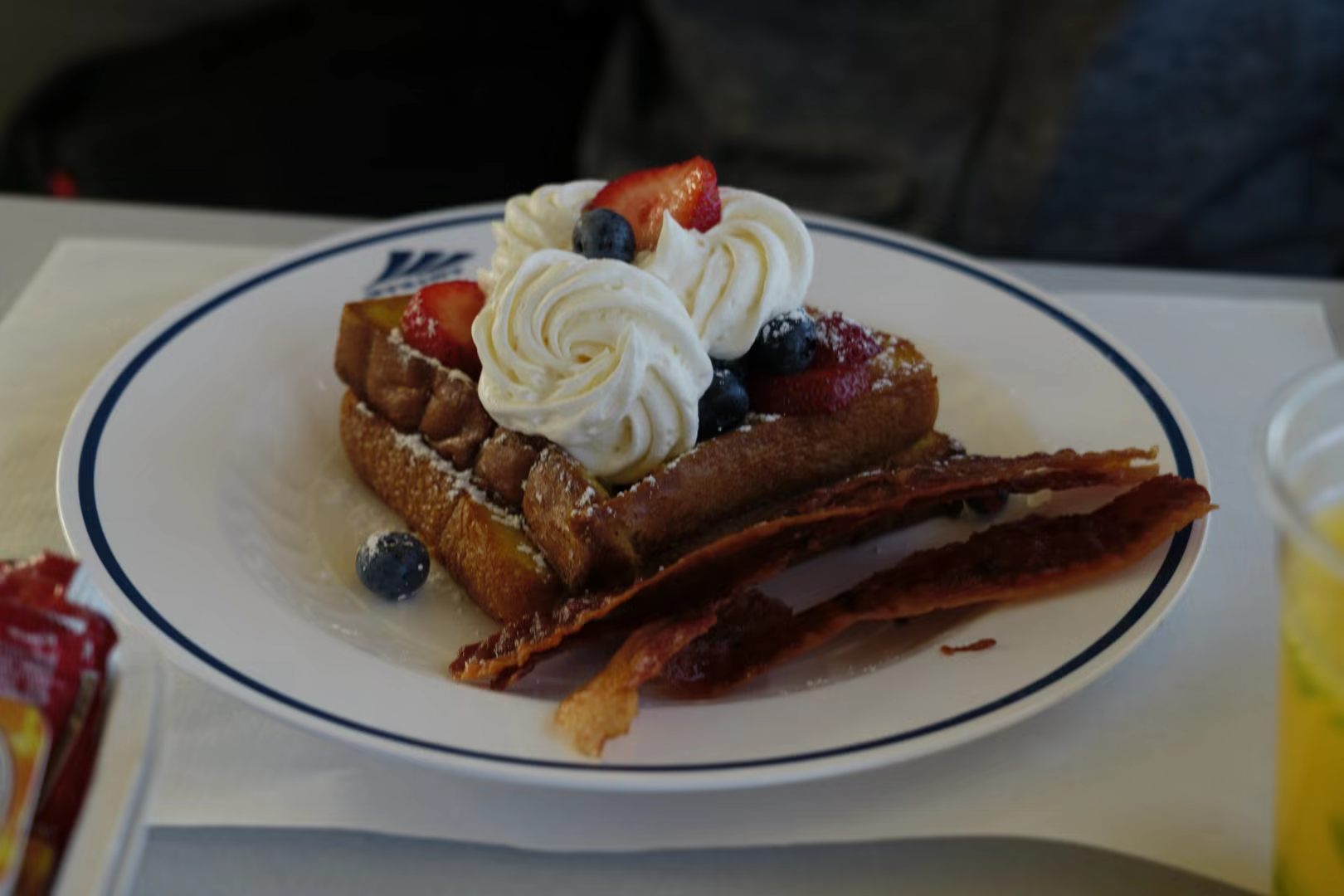
This is the French toast. I should have gone with this one~
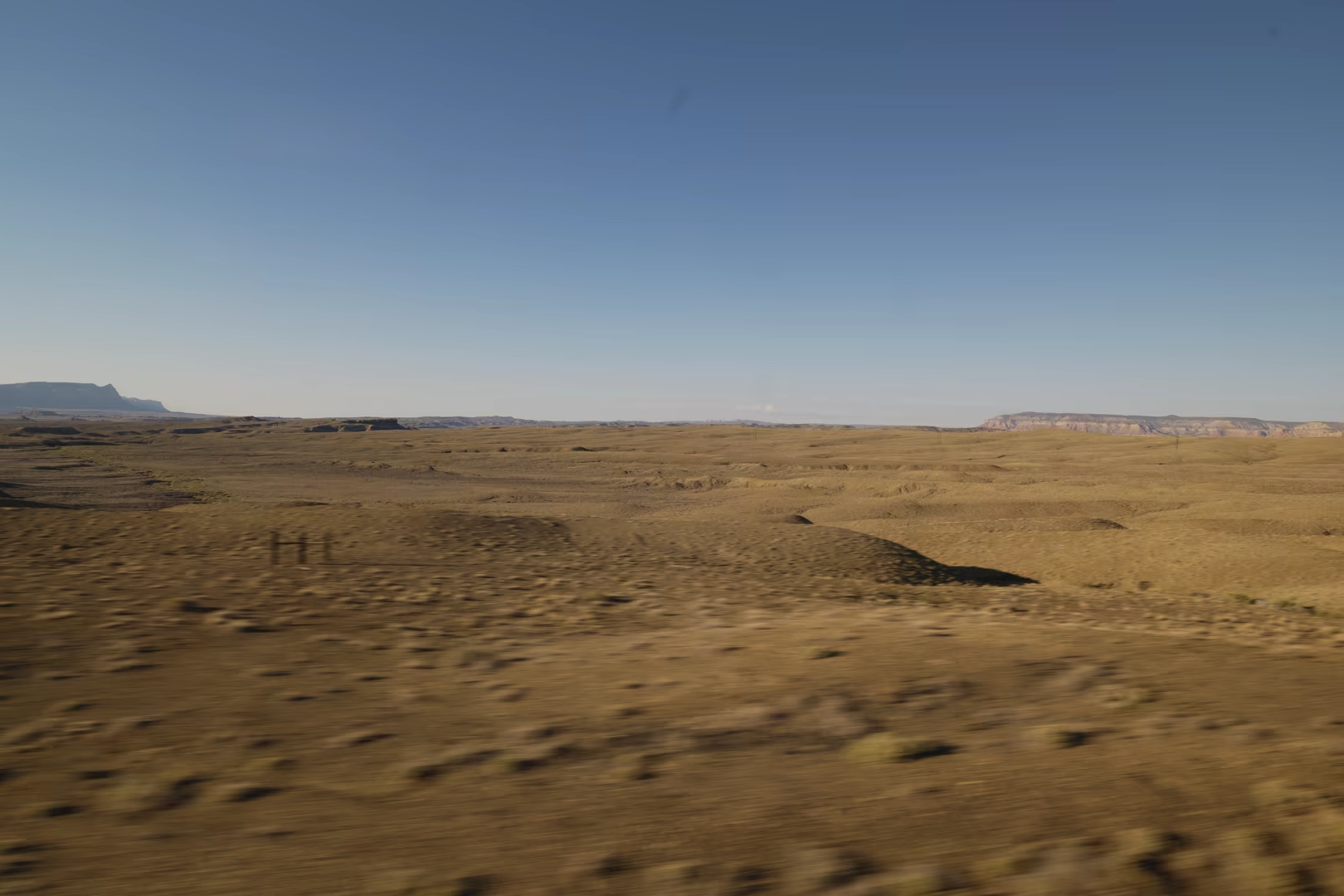
By the time breakfast was over, we were in flat country. Faintly visible on the left is the edge of the Rocky Mountains, which we’d climb later.
Into the Rockies at Last!
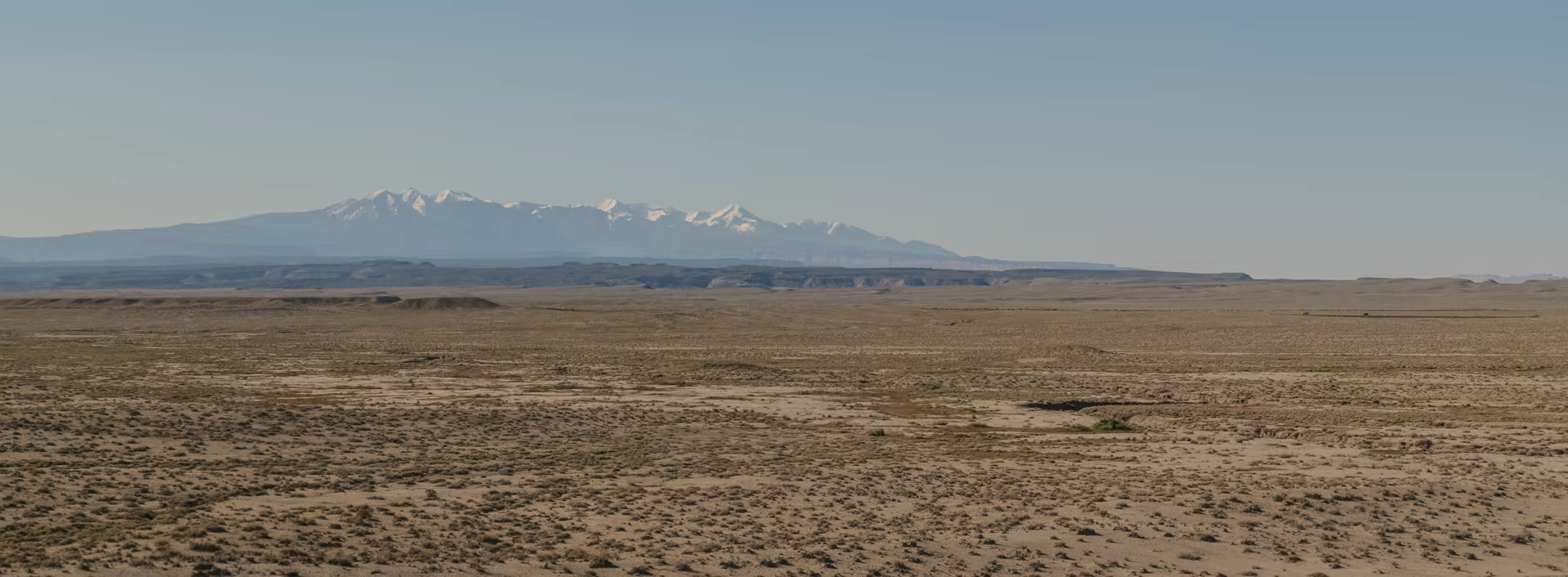
The La Sal Mountains (according to Gemini).
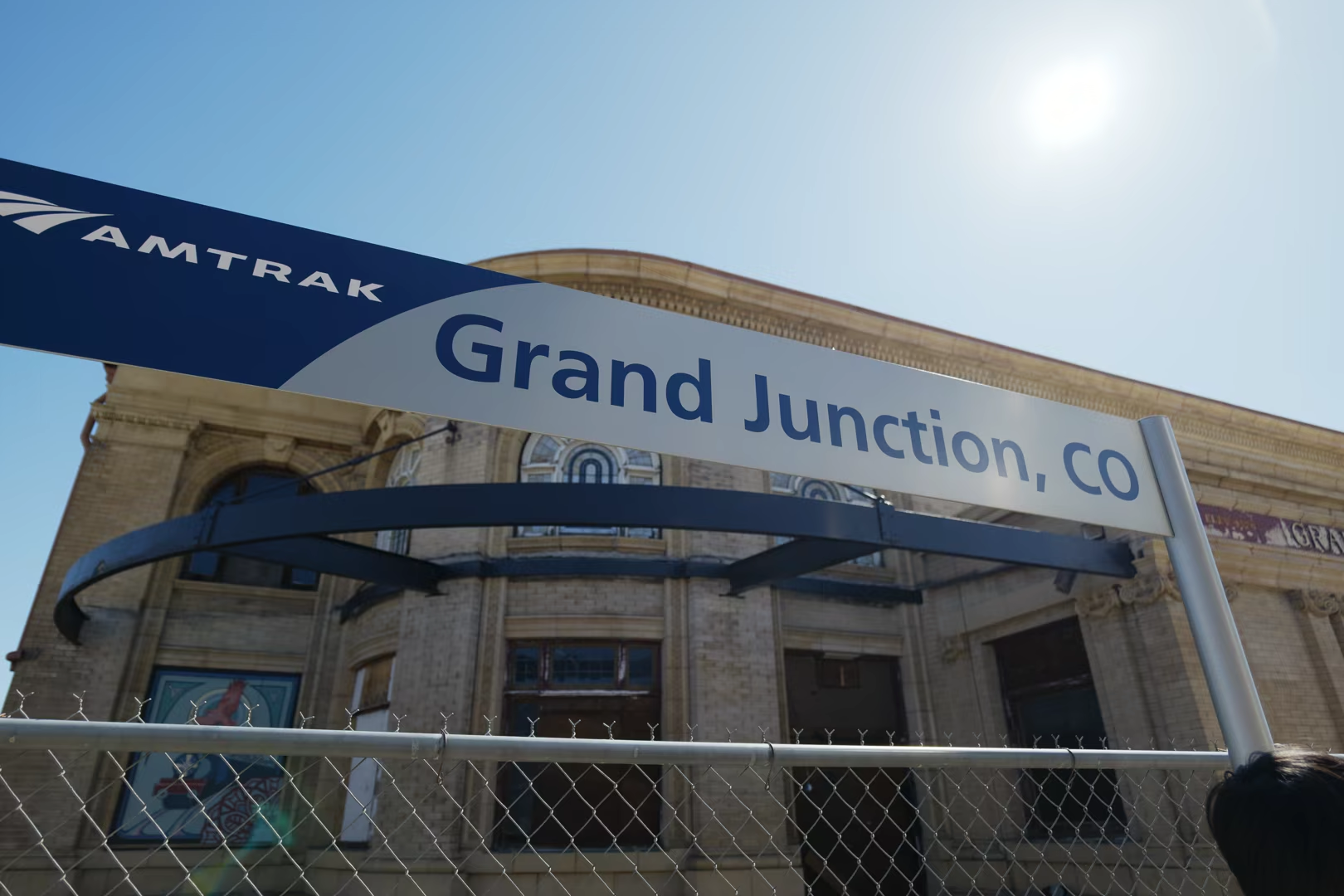
A smoke stop at Grand Junction station. I think we were able to visit the station shop, but there wasn’t much time, so no photos. You might be able to buy things like toothbrushes at the shop here.
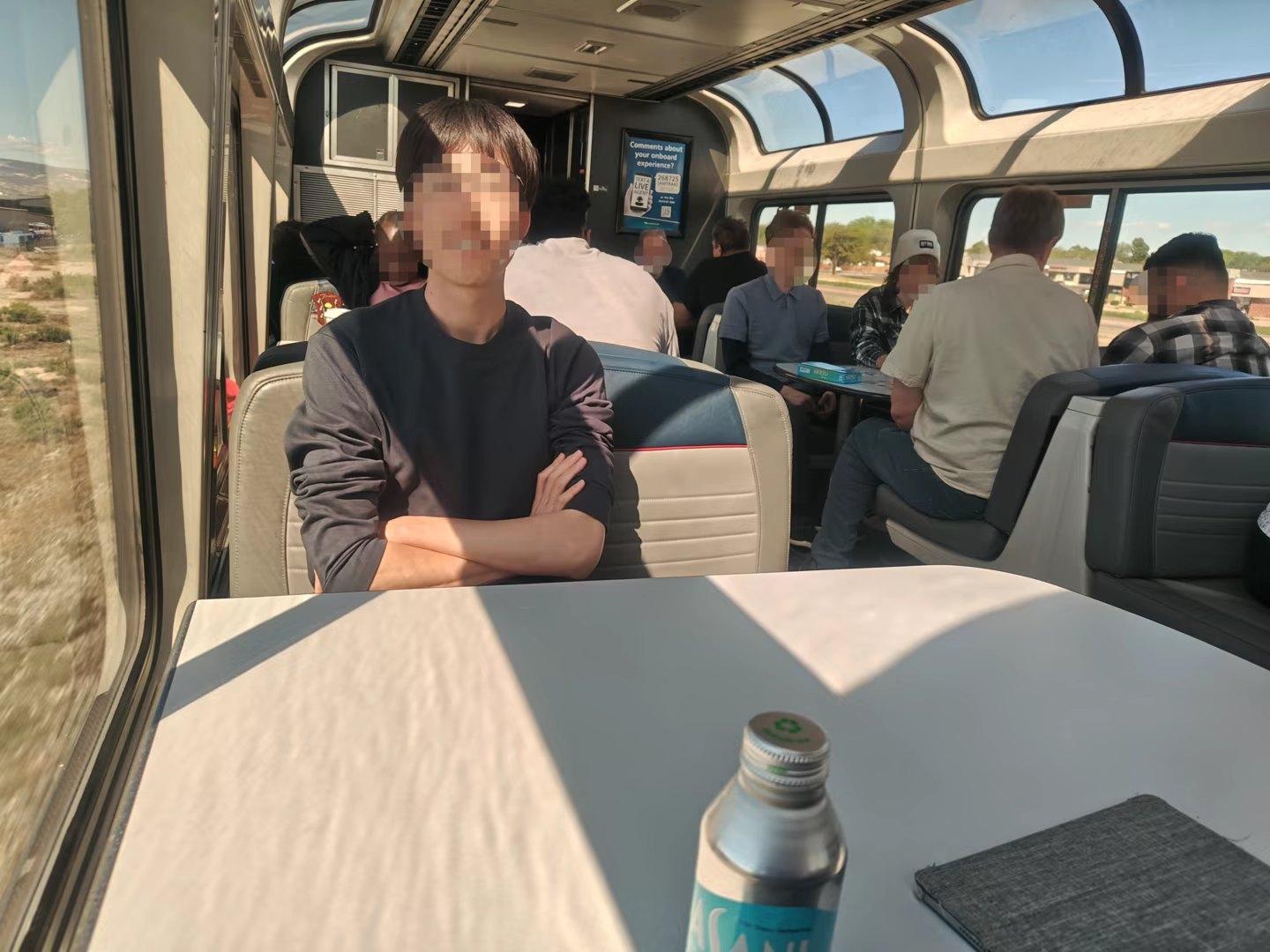
We secured a diner-style booth in the lounge car in preparation for crossing the Rockies!
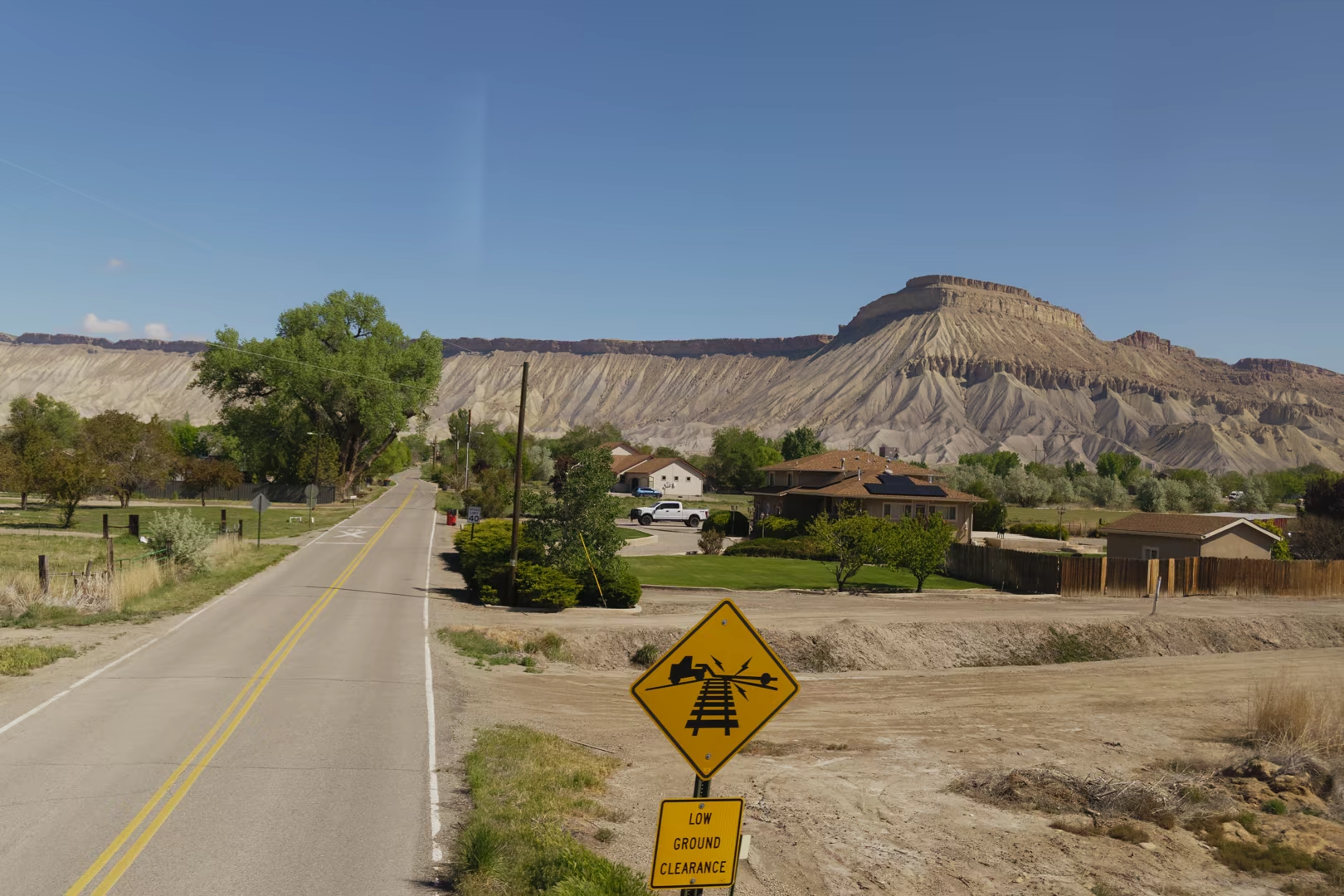
The Book Cliffs. Scenery that’s just so American. The Colorado River is nearby here, so there’s plenty of water — it’s arid country, yet rich in green.
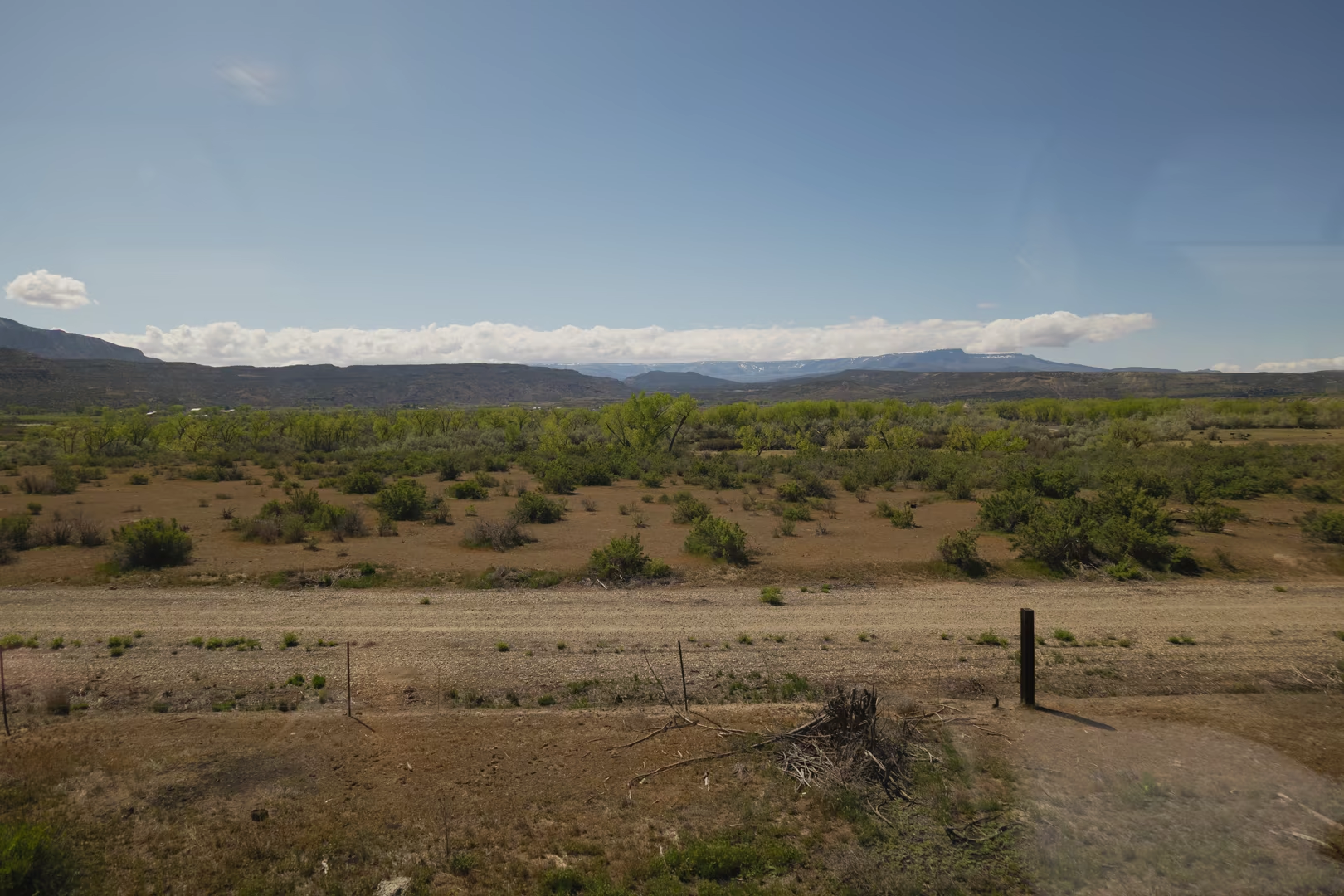
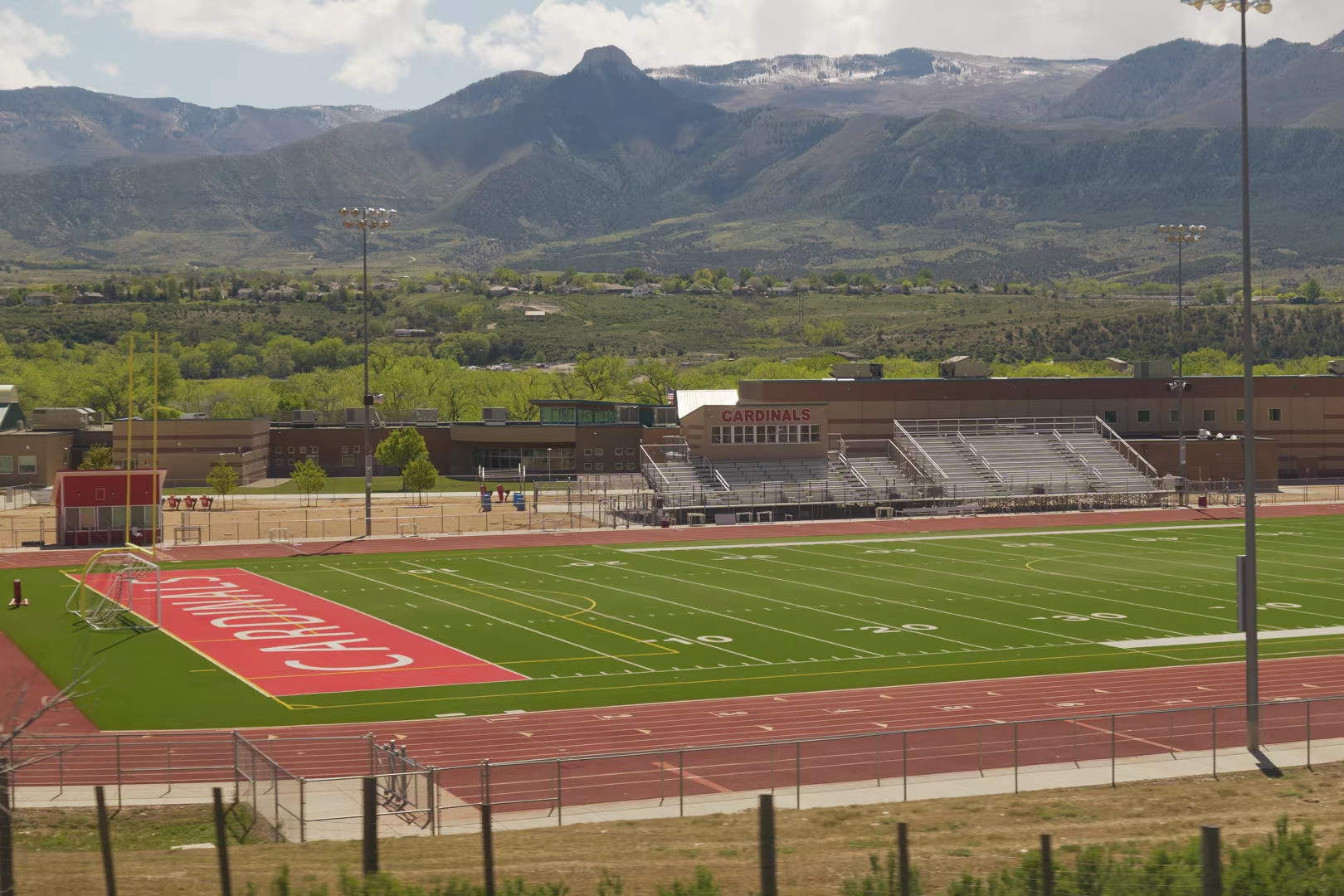
The scenery around us is too good, and the high school too grand. This is America, all right~
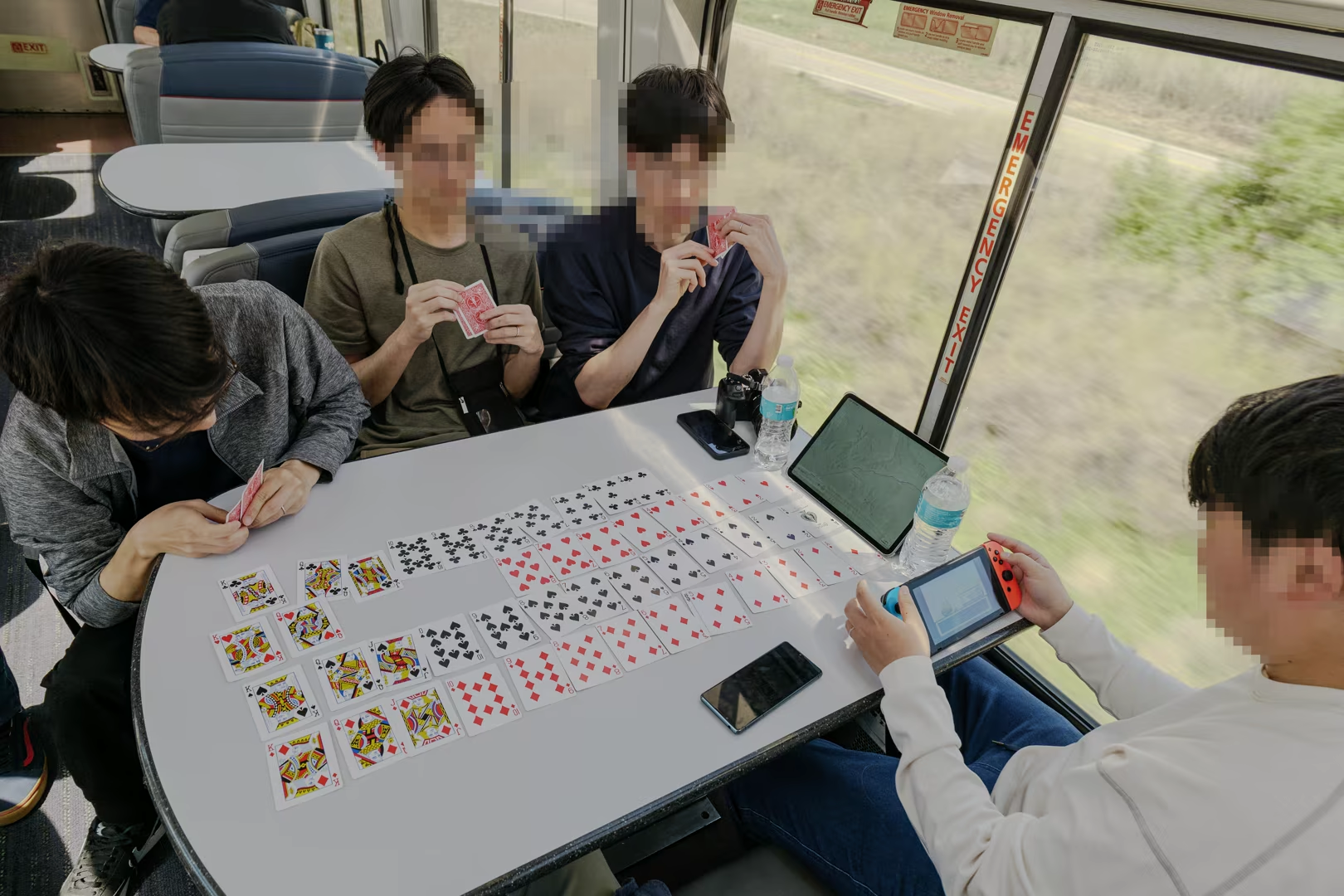
The diner-booth tables are so big you could play a game of Sevens (the card game) and still have room. The guy sitting next to us — who for some reason had JR East’s train-approach announcement as his phone’s notification sound — took our photo, saying he’d send it to his Japan-loving brother. Not a single part of this made sense.
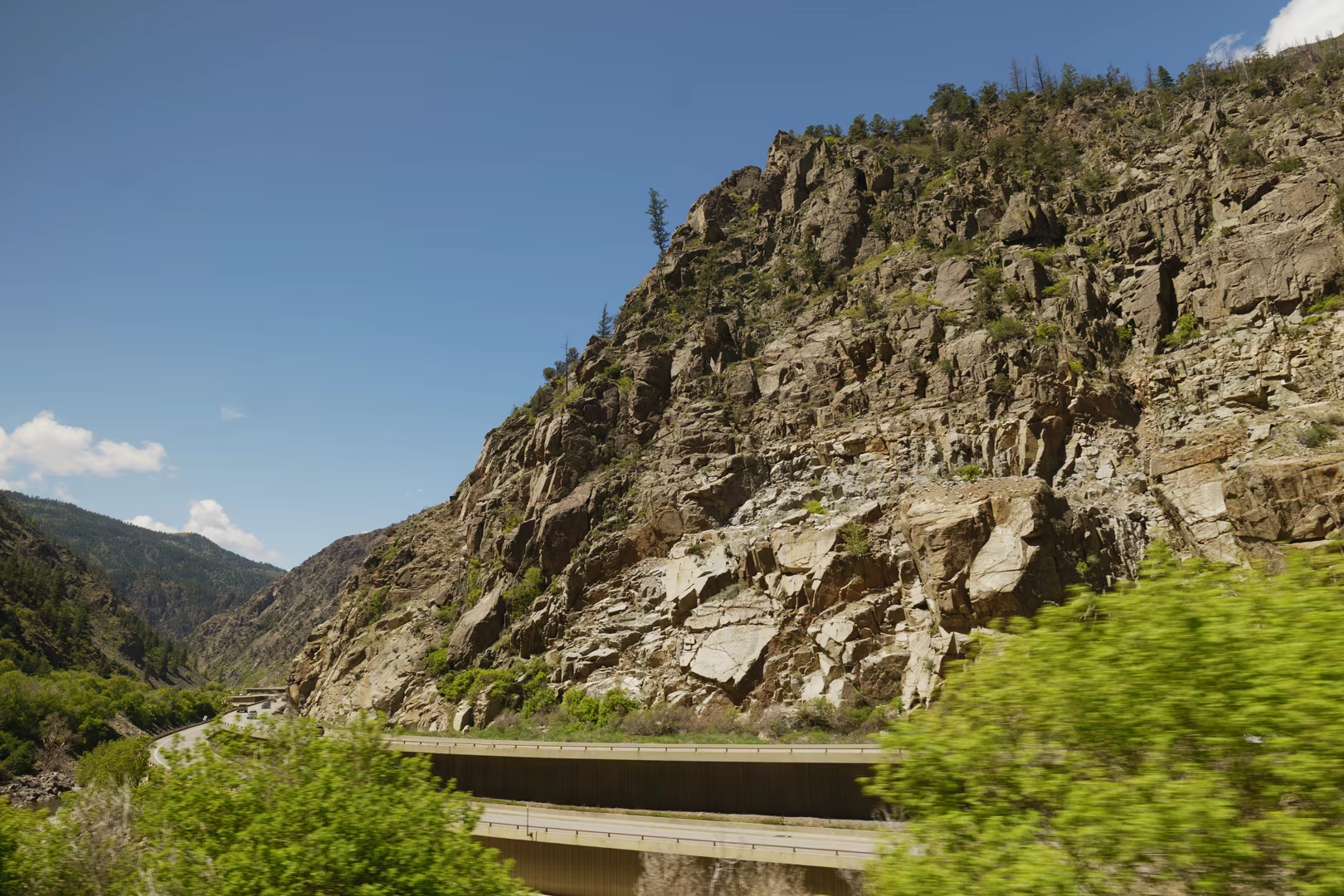
The Rocky Mountains! Unlike Japanese mountain ranges, there are hardly any trees. The line threads its way along the river, climbing together with the highway.
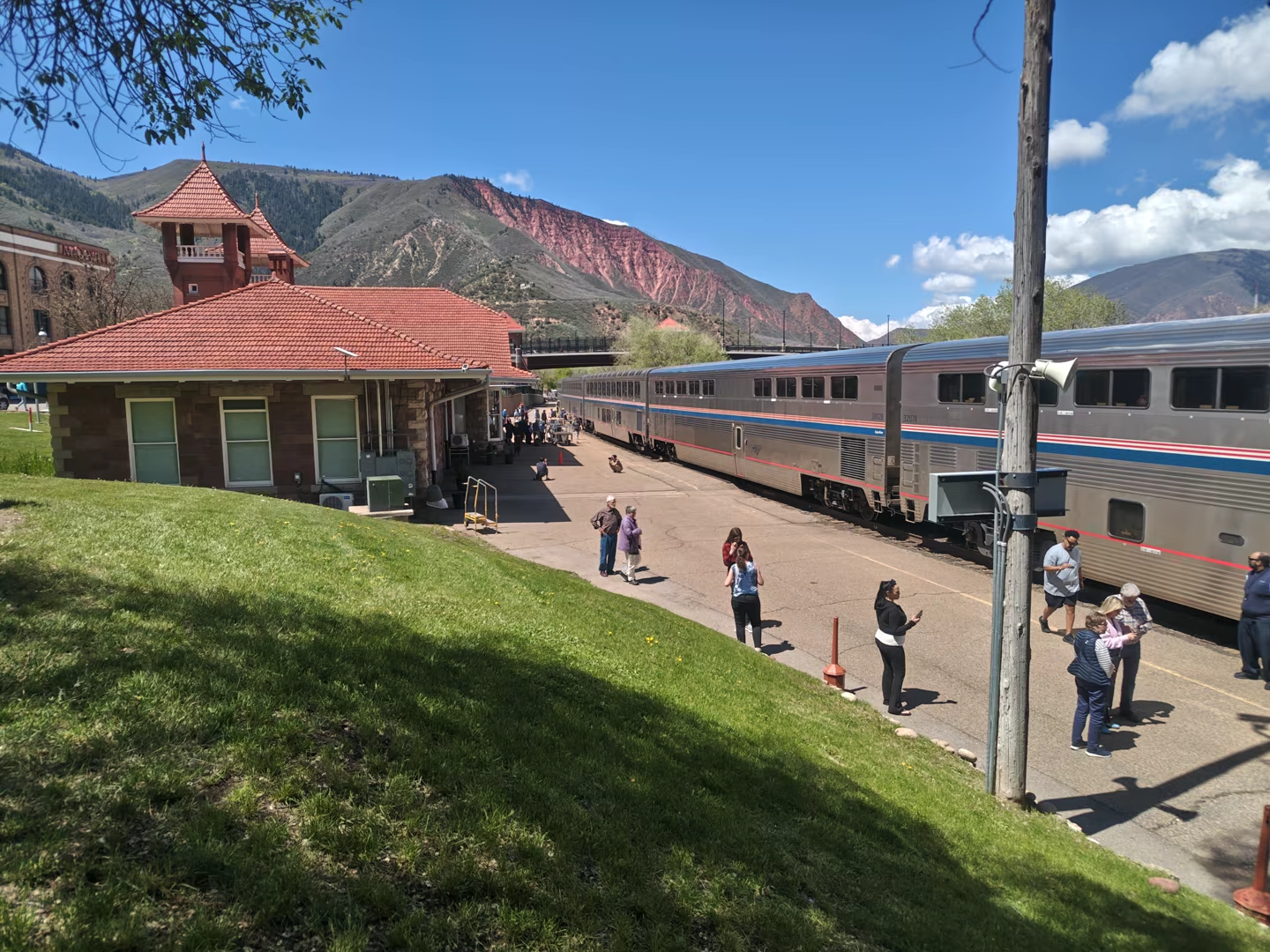
Glenwood Springs station, an intermediate stop. It had the air of a summer resort. The silver train body looks great against the fresh blue sky, the green lawns and the red mountains. Lots of people were strolling on the platform at this station.
Lunch
The menu is the same as on DAY 1. You pick from the same choices, so you can eat the same thing again, or challenge something new.
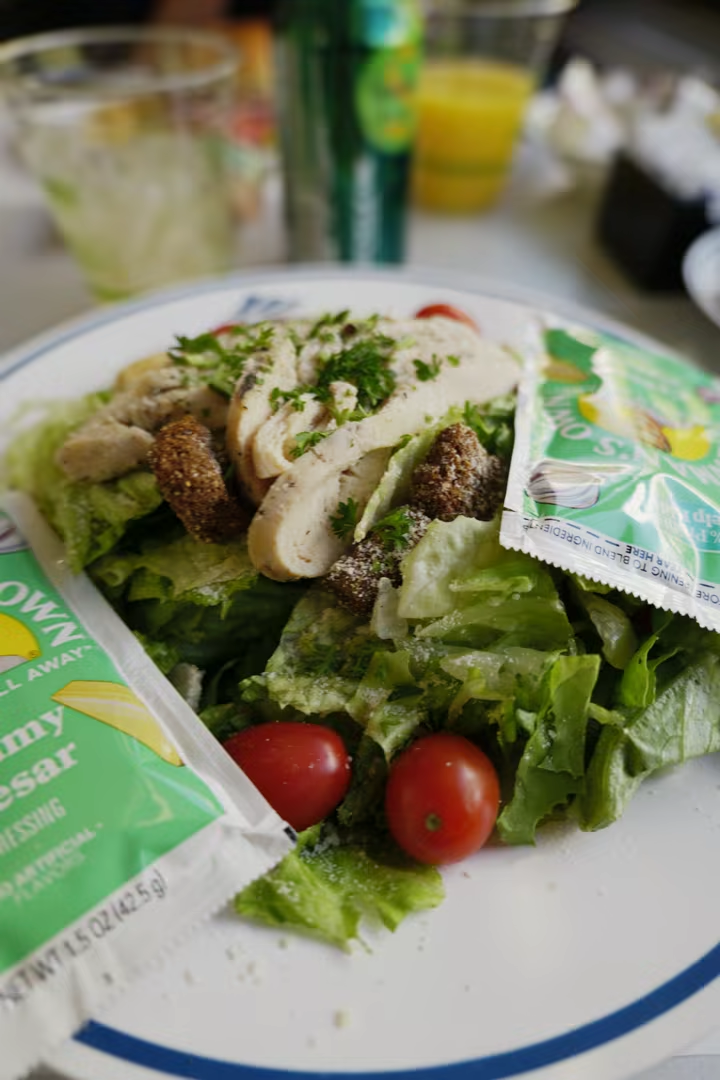
I wasn’t very hungry, so I had the Caesar salad. I like that salads on American lunch menus come in quantities that actually fill you up.
On to Denver
From Glenwood Springs, the train climbs the mountains in earnest, crosses the Continental Divide, and heads for Denver. The conductor broadcasts commentary about the sights and stories along the line, and this section was packed with events: great scenery, tunnels that were feats of engineering, an eagle’s nest, and passing the westbound California Zephyr going the other way.
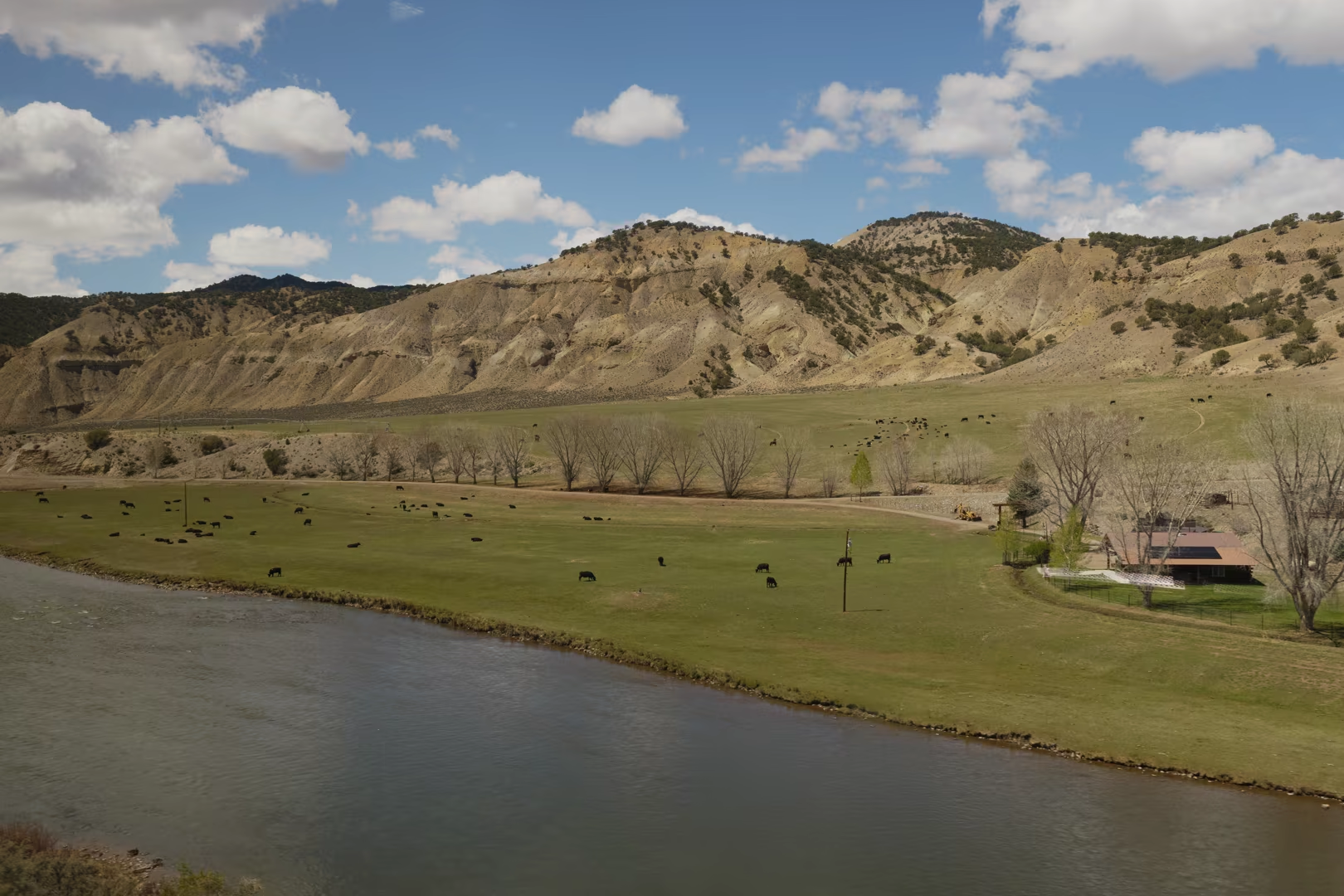
Cattle left to graze along the river, with no embankment or anything. The black dots in the back are cattle too.
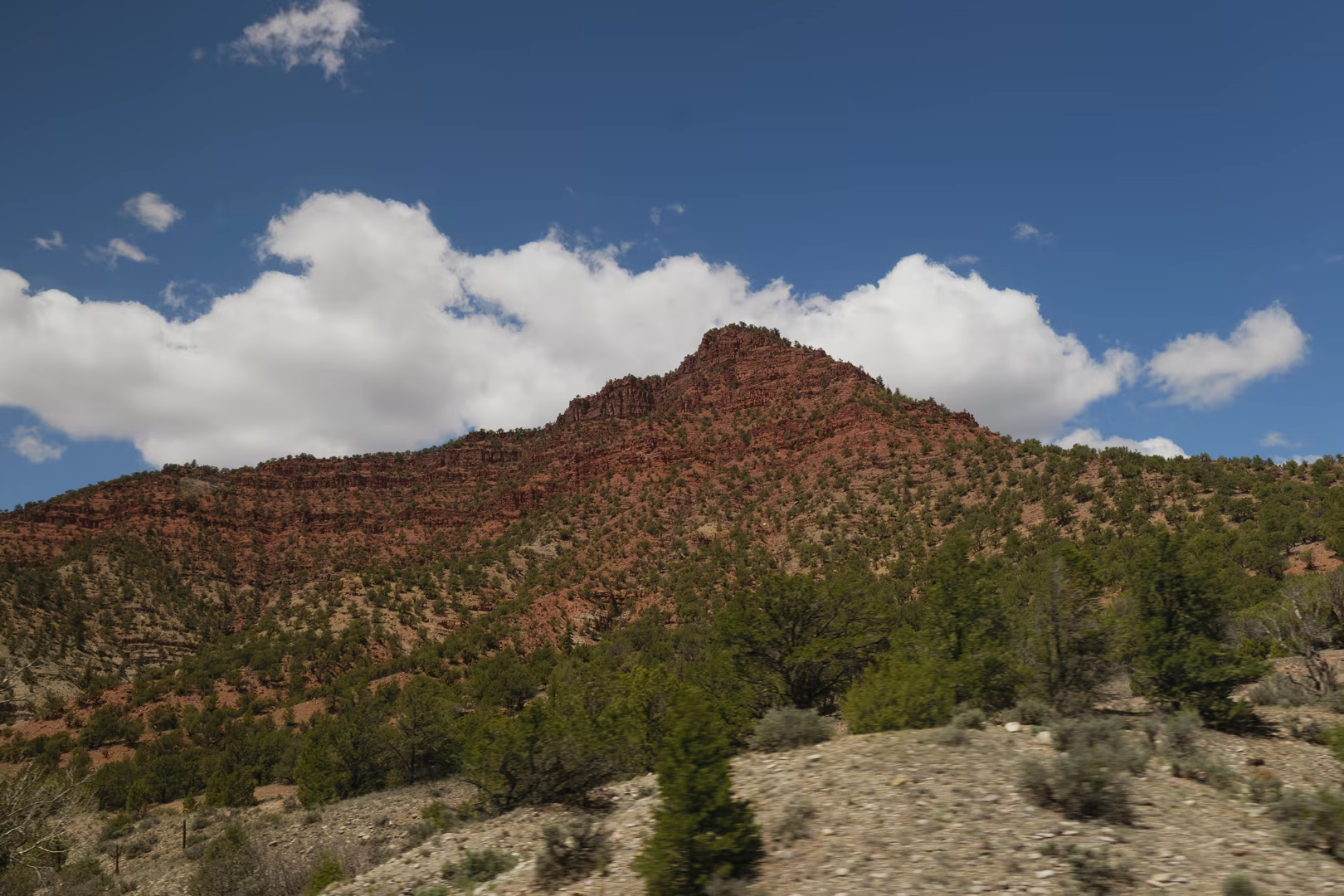
Red mountains. They really exist.
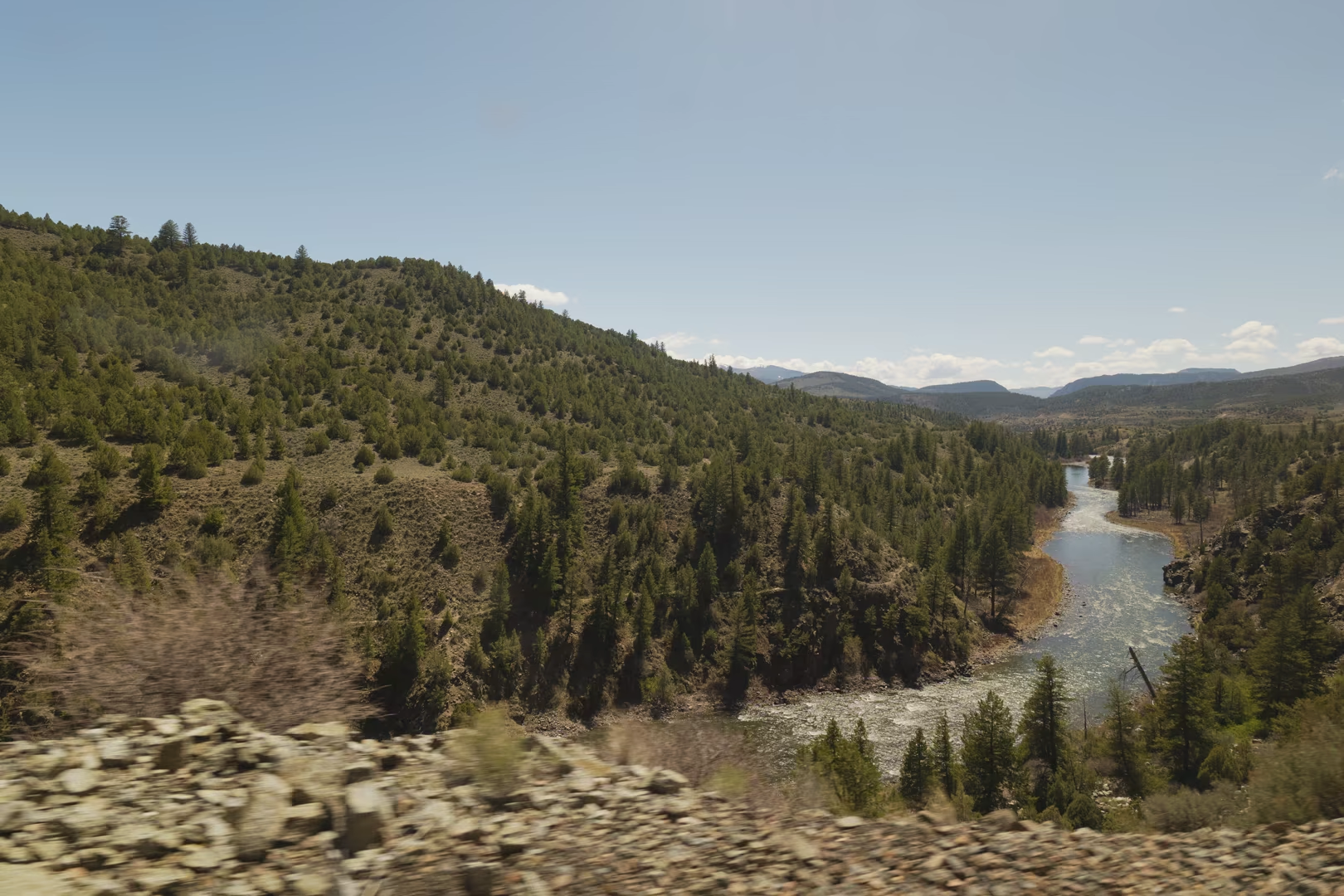
They’re a mountain range, but much flatter than Japan’s ranges. And the river, despite being this far upstream, is wide with plenty of water.
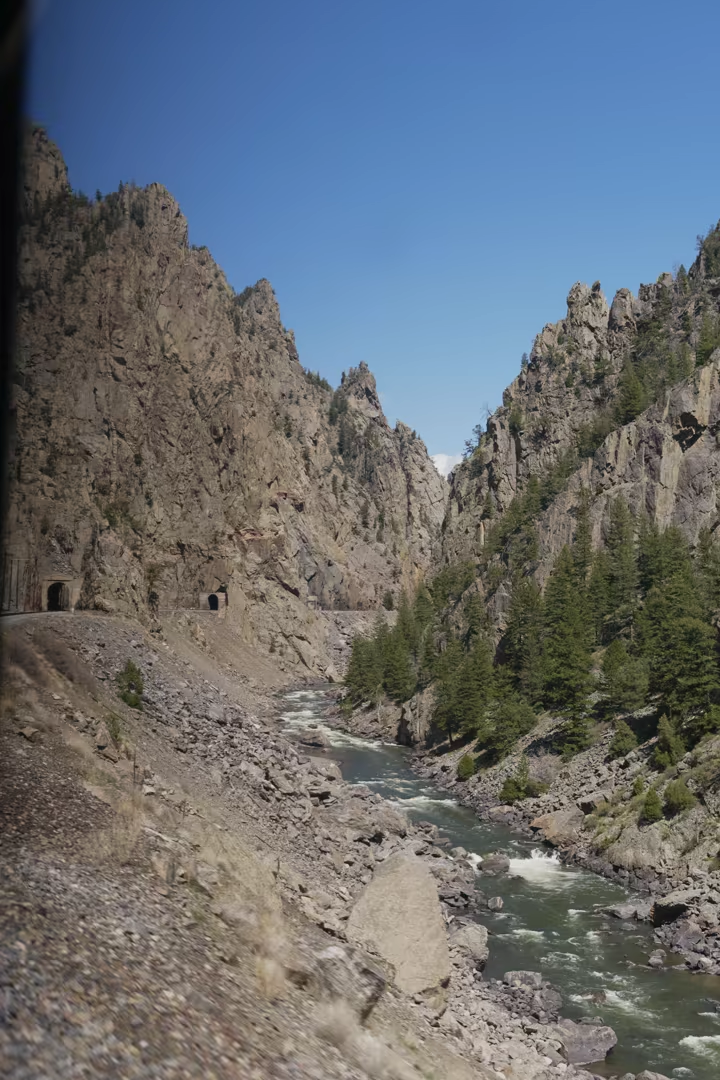
The line climbing along the river, and a tunnel. It makes you marvel that anyone built a railway through a place like this. This section was apparently built a hundred years ago, in the gold rush era.
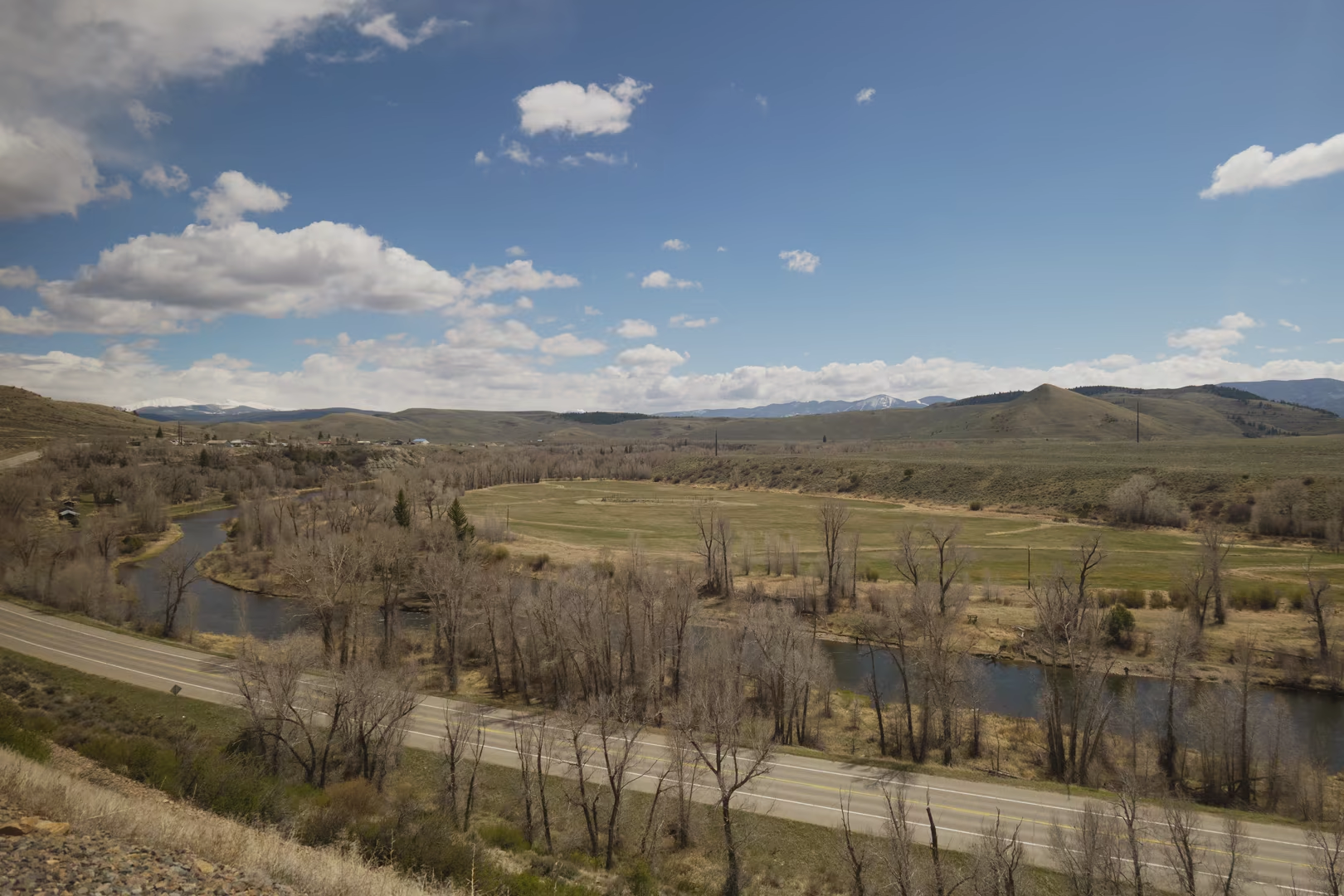
Between one canyon and the next, fields and ranches appear.
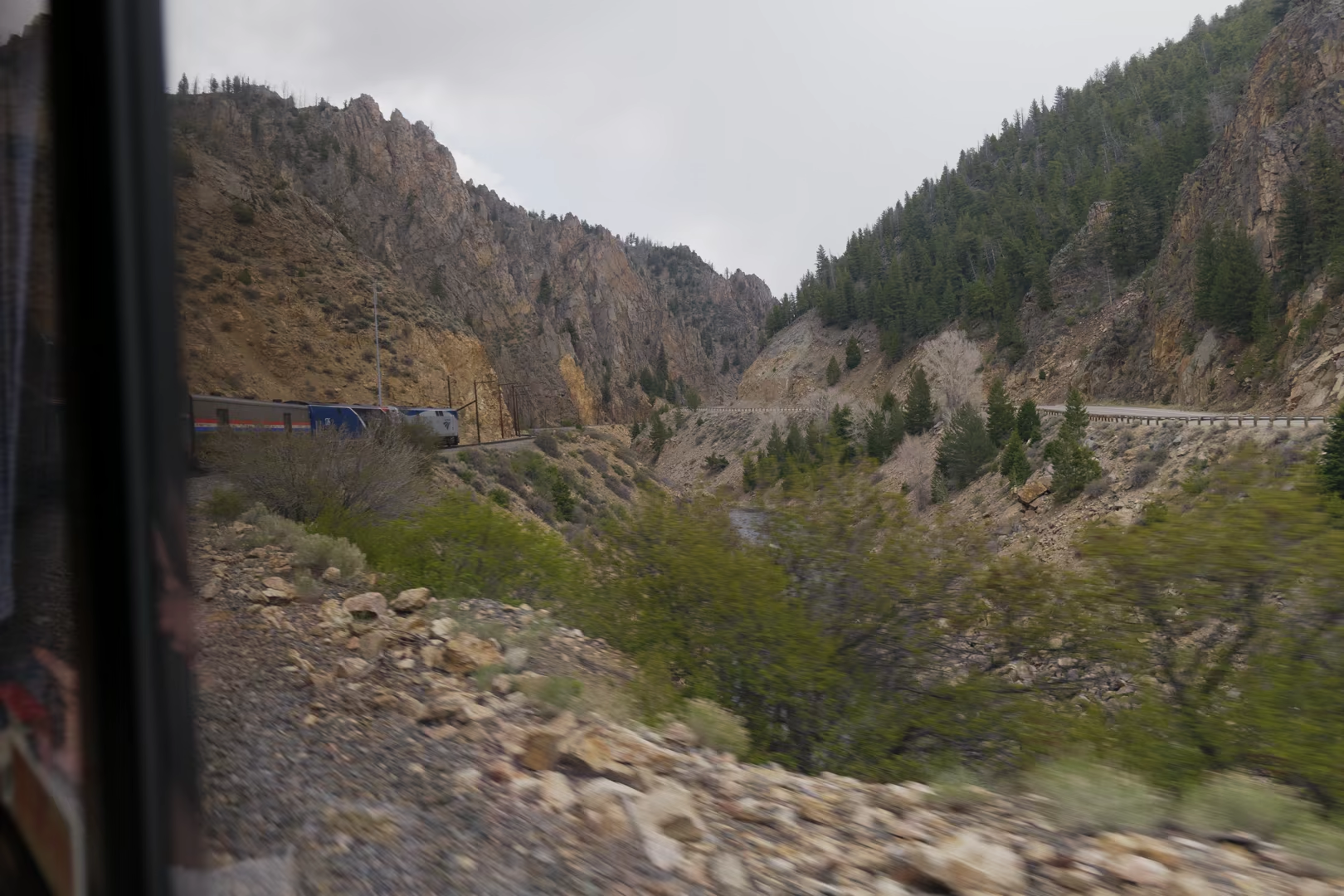
On the tight curves, you can see the locomotives up front pouring out exhaust and working hard, which makes me a little happy.
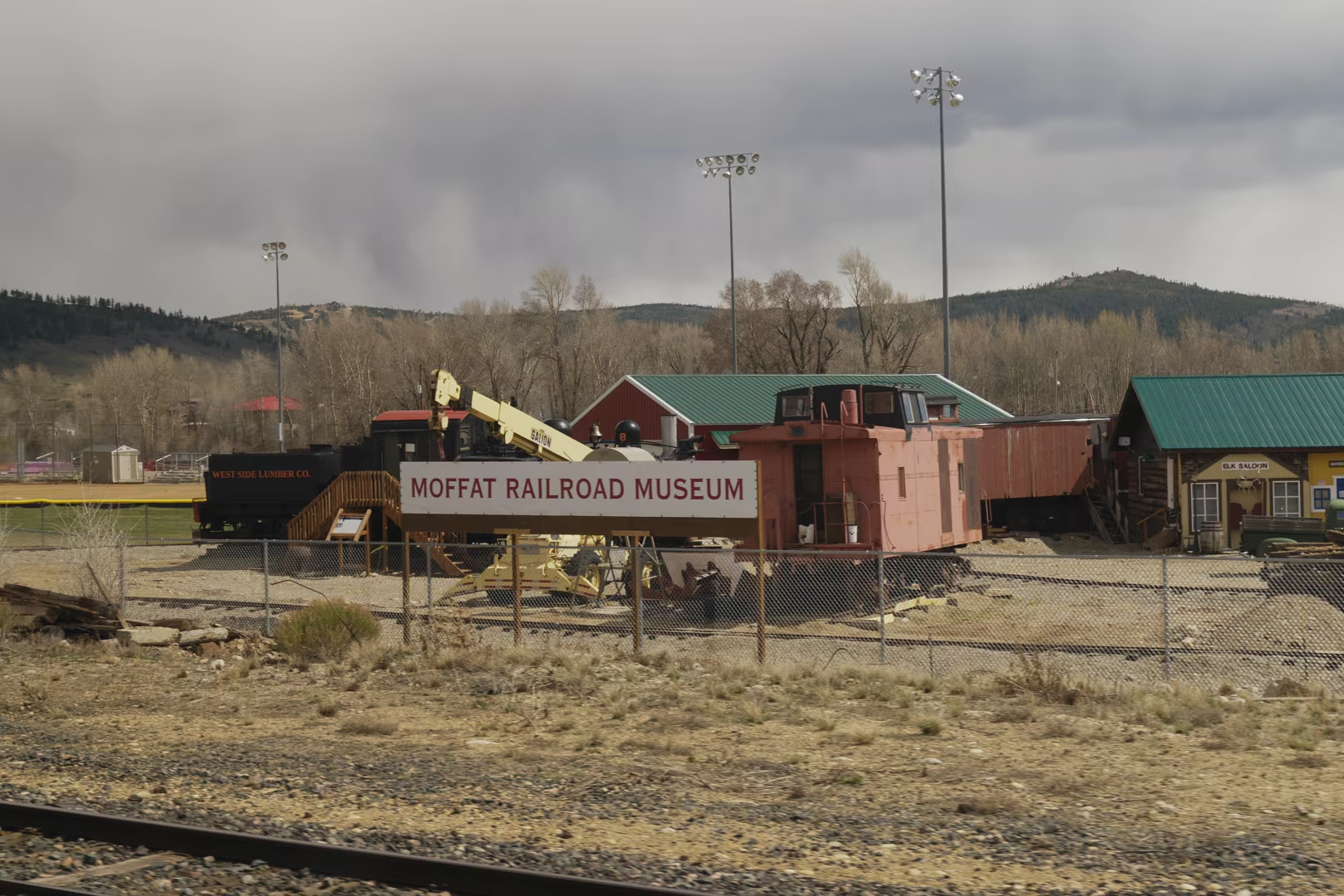
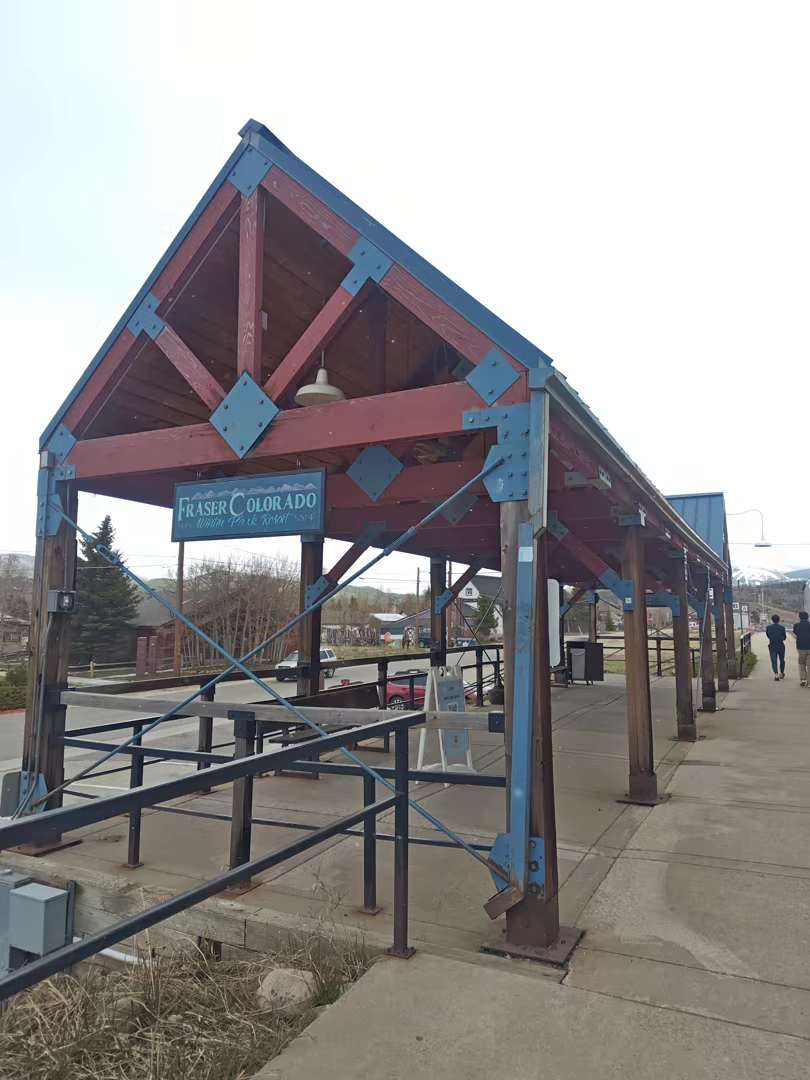
A smoke stop at Fraser–Winter Park station. As the name suggests, there’s a ski resort nearby and it’s a snowy area. Even though it was Golden Week, snow was fluttering down. The altitude is about 2,600 m.
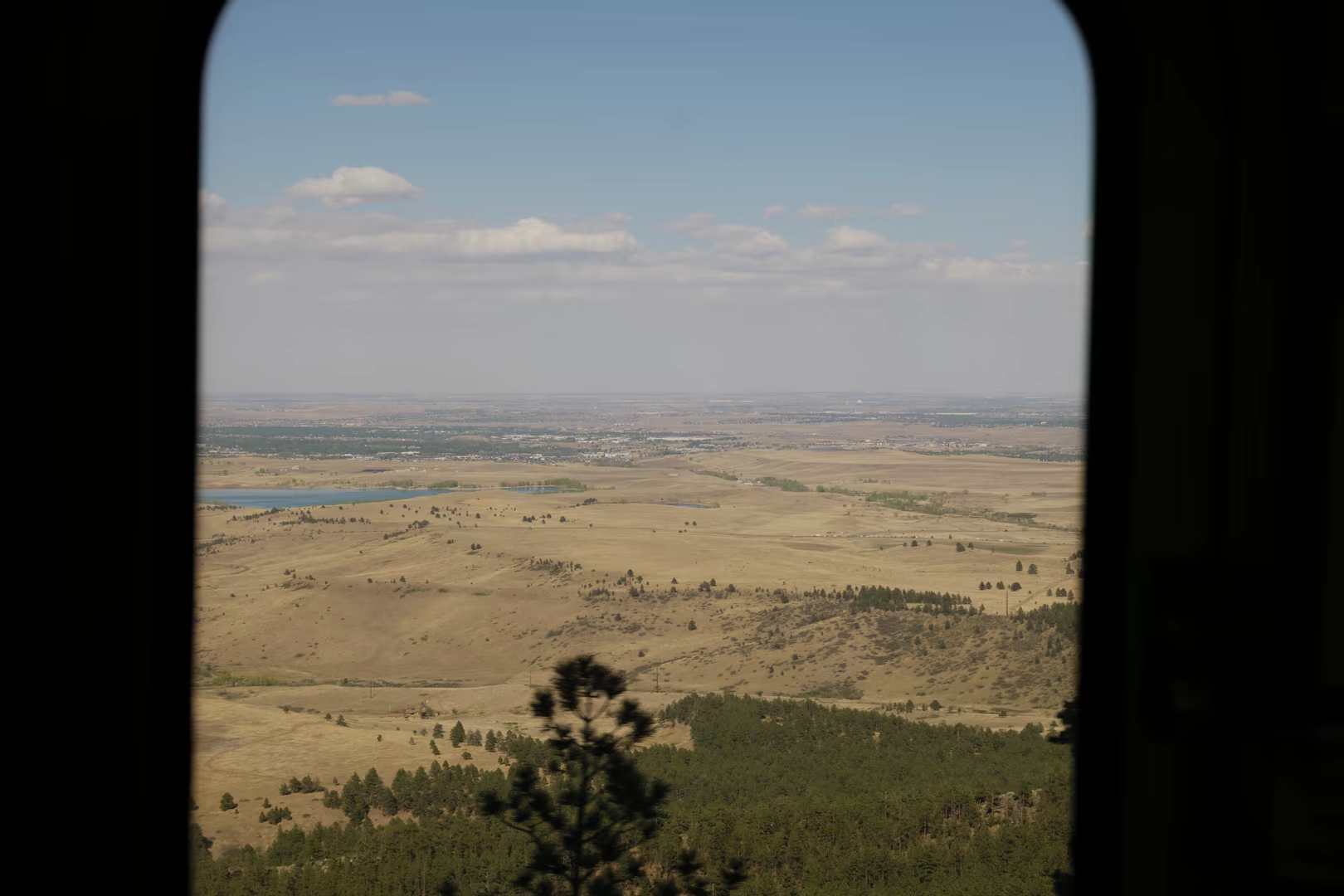
Out of the long tunnel (the Moffat Tunnel), and there’s the city of Denver! We’re still at altitude here, so the train descends gradually, curving as it goes.
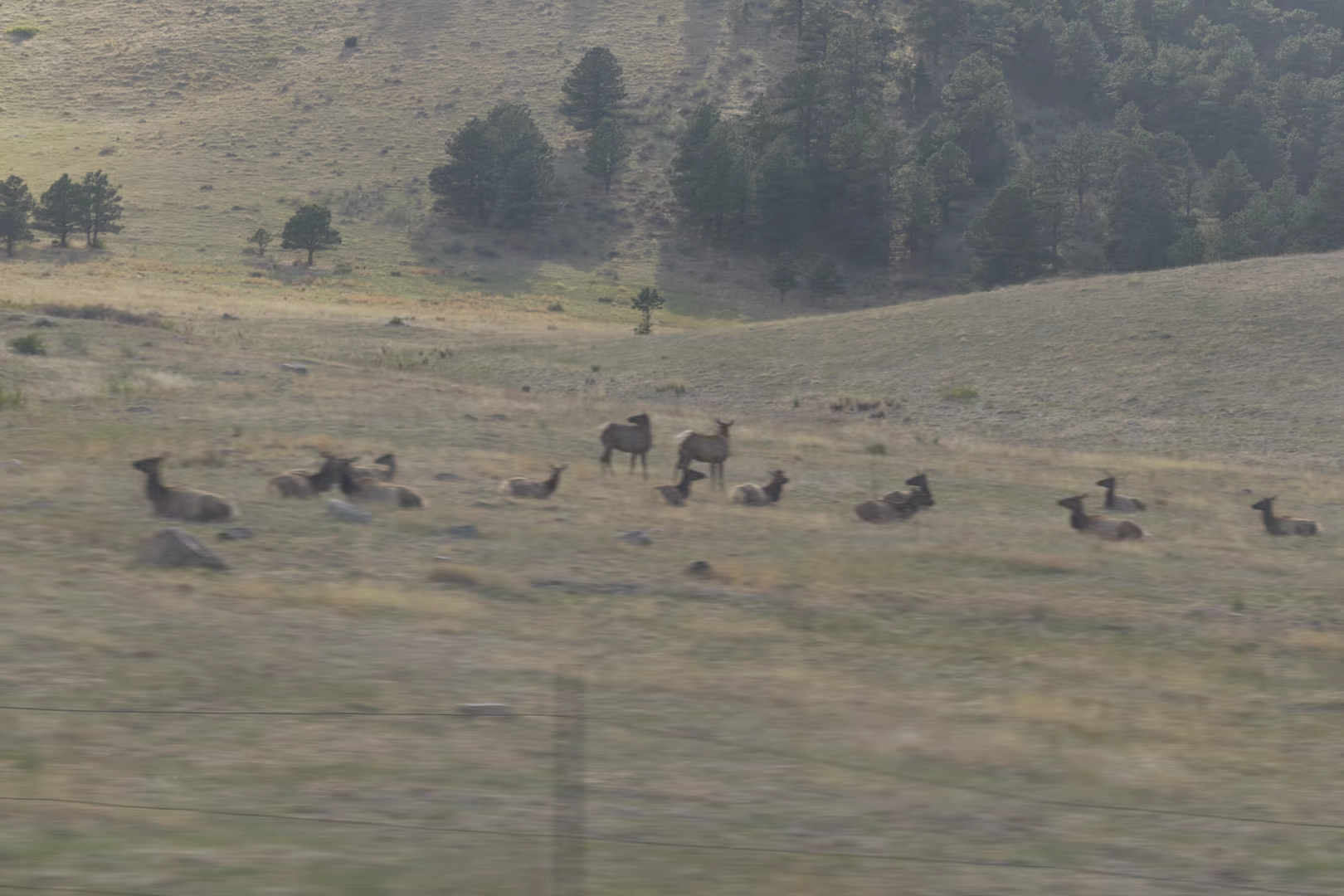
A herd of wild elk. Elk are deer, but they looked about the size of horses.
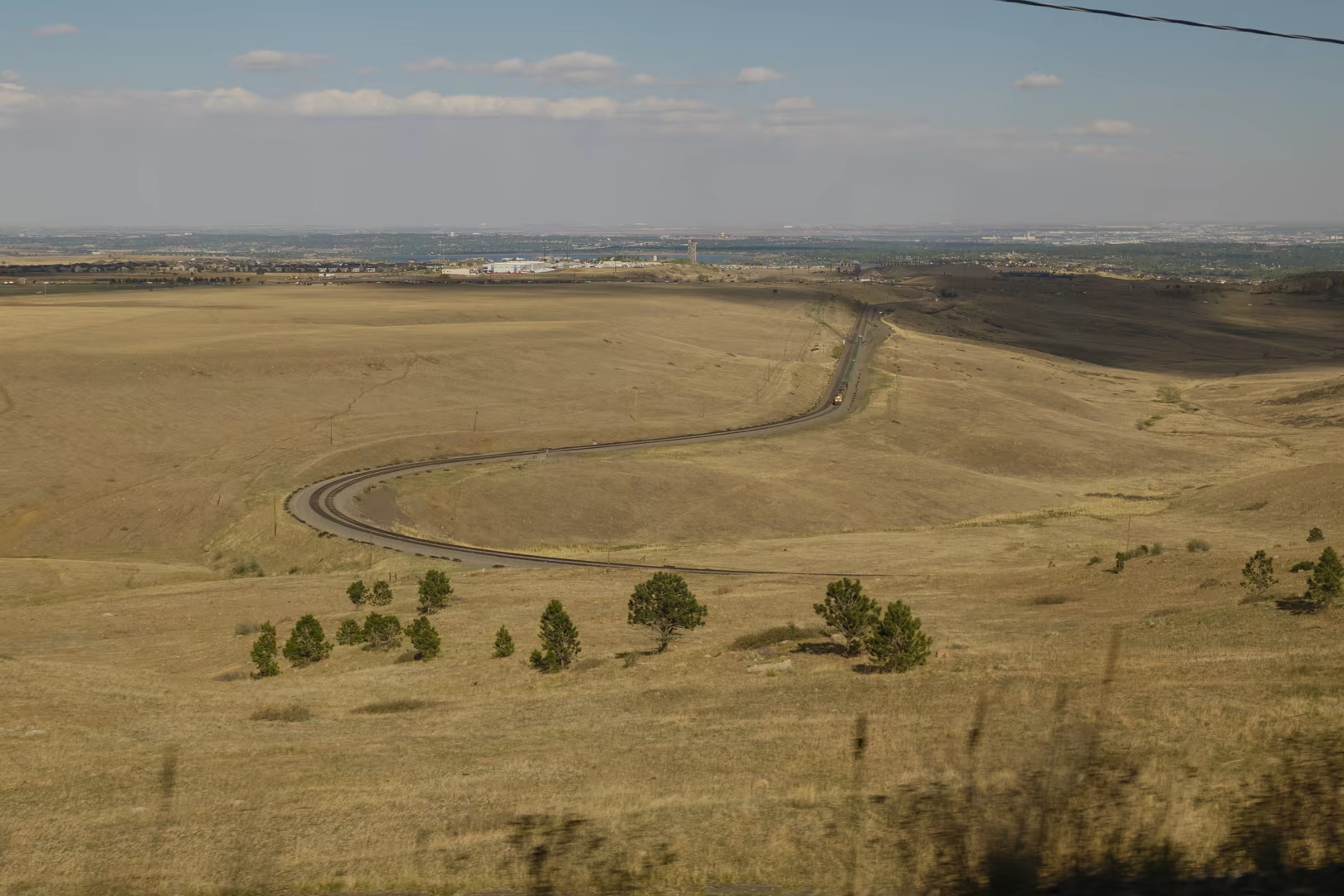
Big Ten Curve — a loop line, so to speak. The trees are so sparse you lose your sense of distance, but it’s actually quite far.
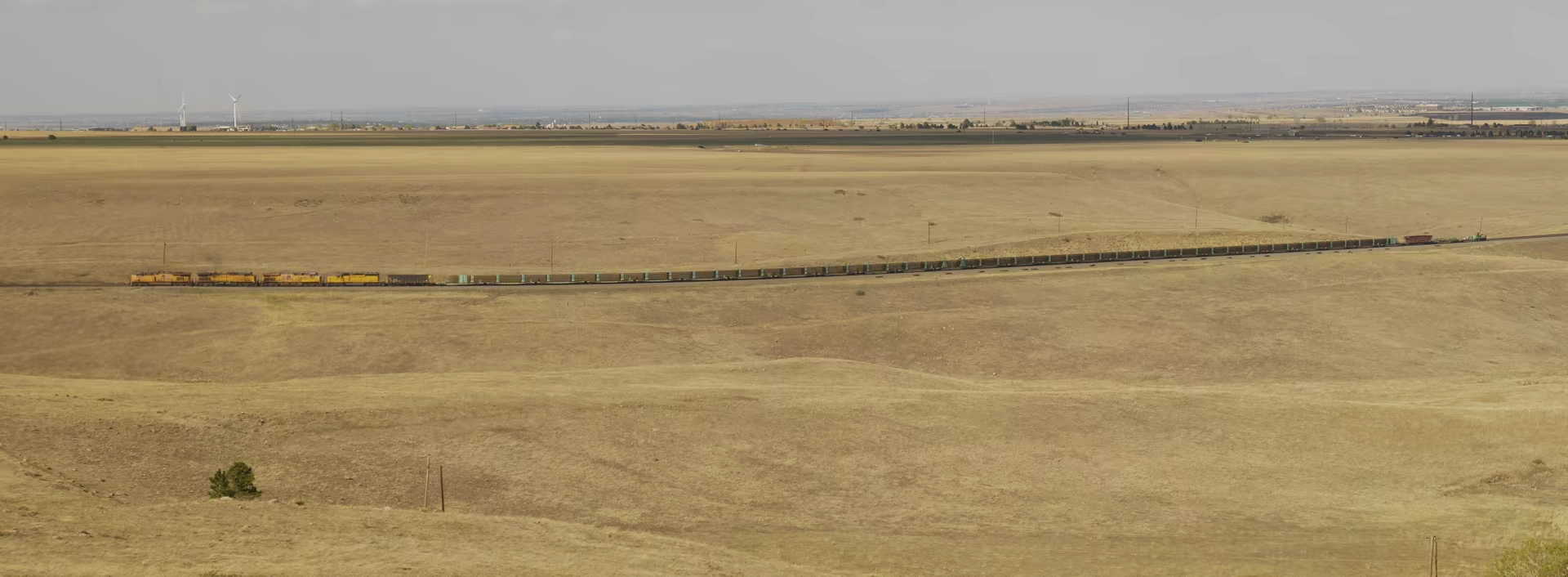
A freight train waiting for us to pass. This mountain seems to be tough even for America’s giant locomotives — its formation was on the short side. And it was quadruple-headed!
Over the Rockies, the train arrives in Denver — the biggest city on this journey. Denver has a longer stop of about an hour, so you can walk into the city. If there’s anything you need, this is your only chance to buy it. Denver station was stylish and impressive. The streets around it have both stately brick buildings and relatively recent glass towers — plenty to look at. The sidewalks were incomparably cleaner than San Francisco’s or Chicago’s, without a single piece of trash. It felt like a safe area, too.
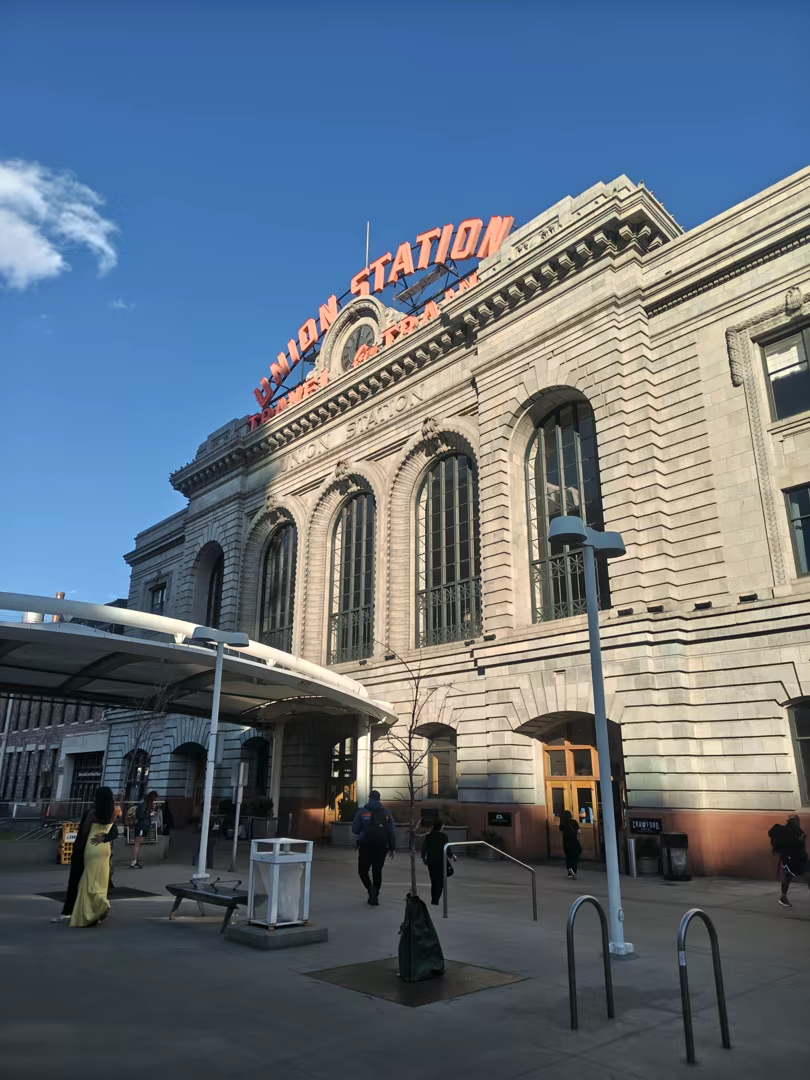
Denver Union Station.
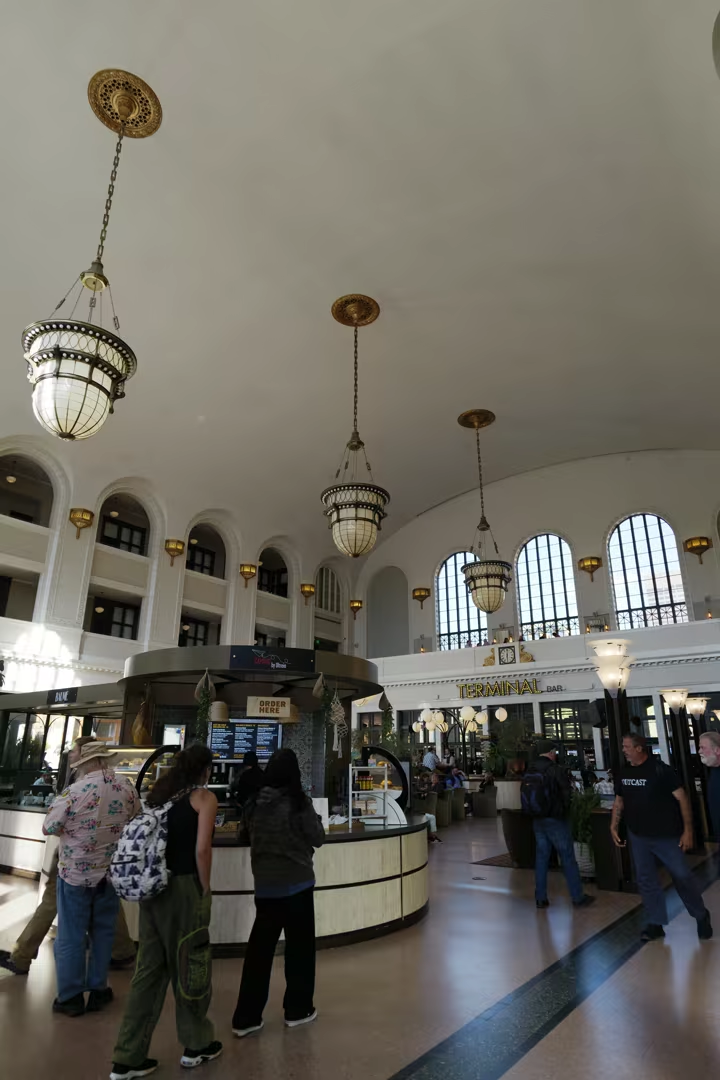
Inside the station. There was a café. I don’t recall seeing a convenience-store-like shop at a glance.
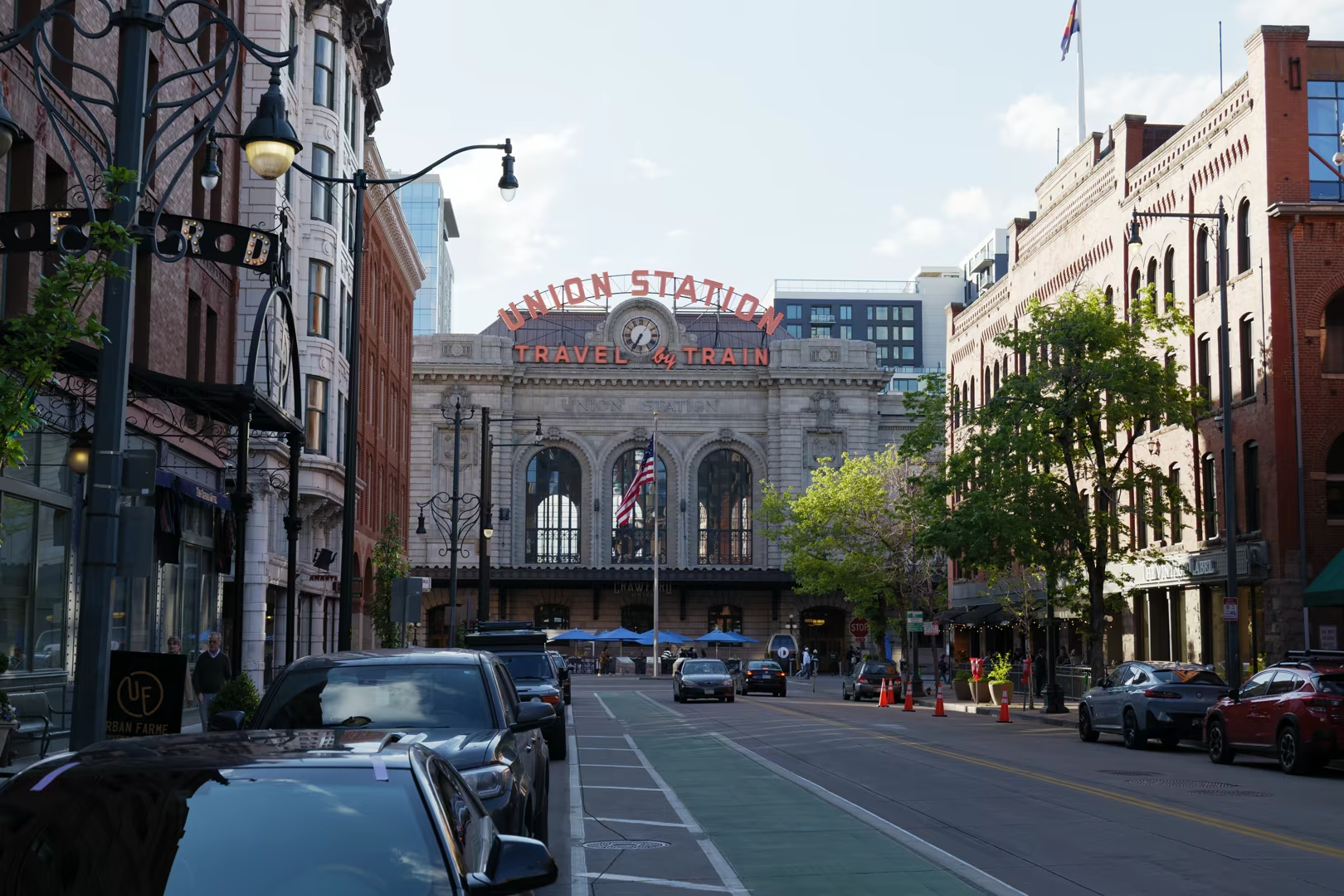
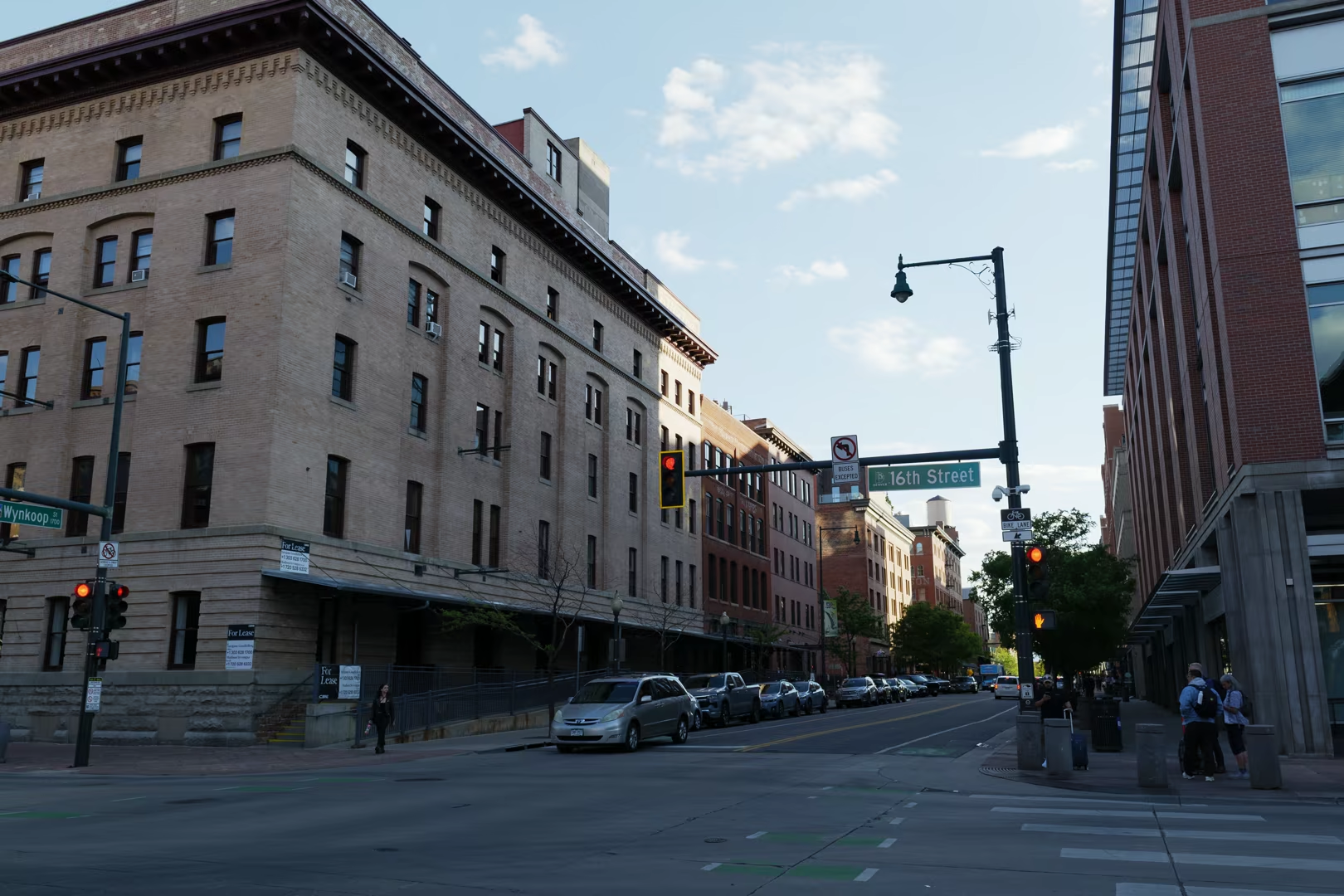
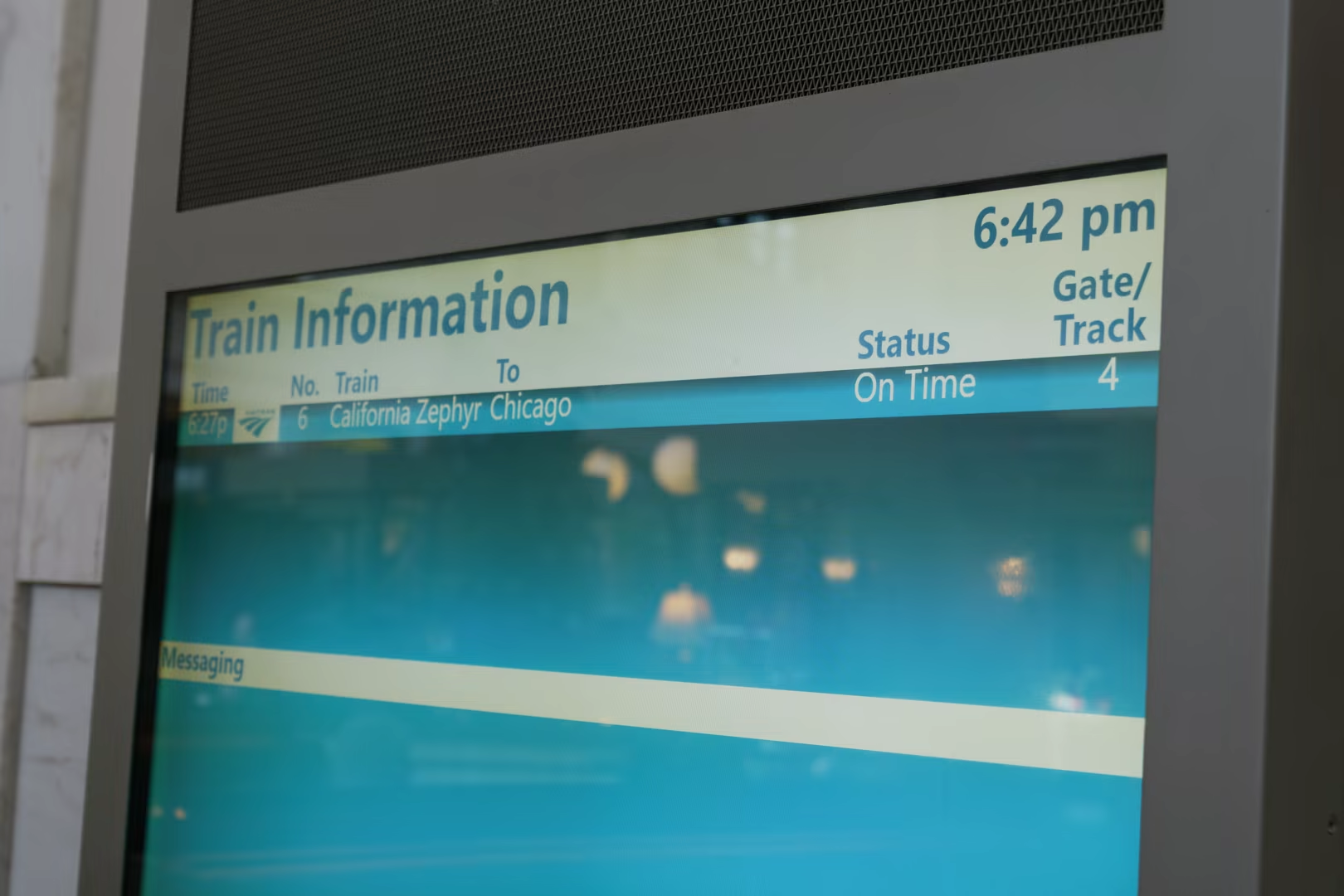
At this point we were still On Time. It wasn’t even 19:00 yet, but for Amtrak this was the last train of the day. Well, the Chicago-bound train runs only once a day.
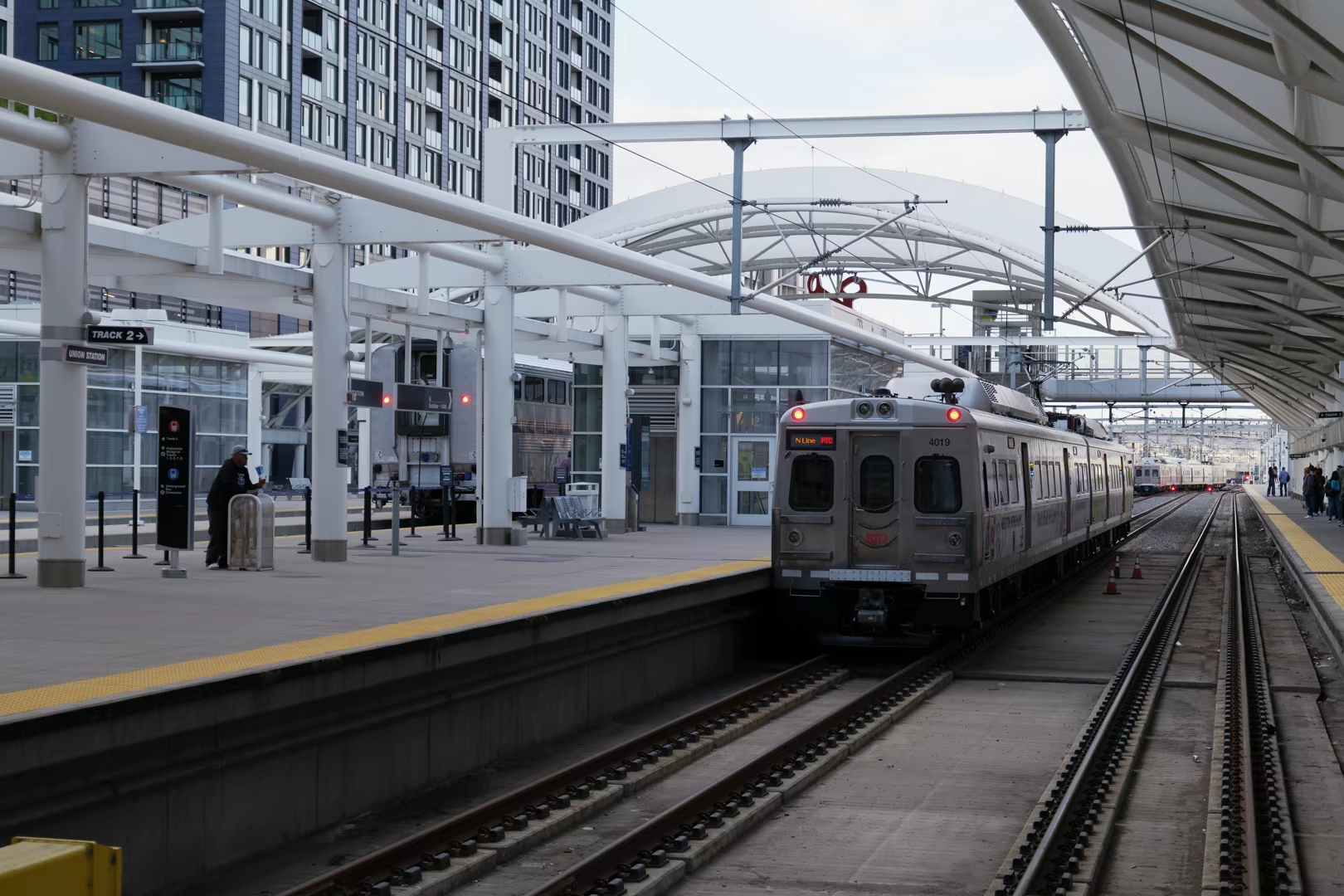
A commuter train, with the California Zephyr behind it. Trams also serve this station, and it seemed to have plenty of users.
Dinner
The menu choices are the same as on DAY 1. Honestly, I was tempted to have the steak again, but since I had the chance, I decided to try something different: the salmon.
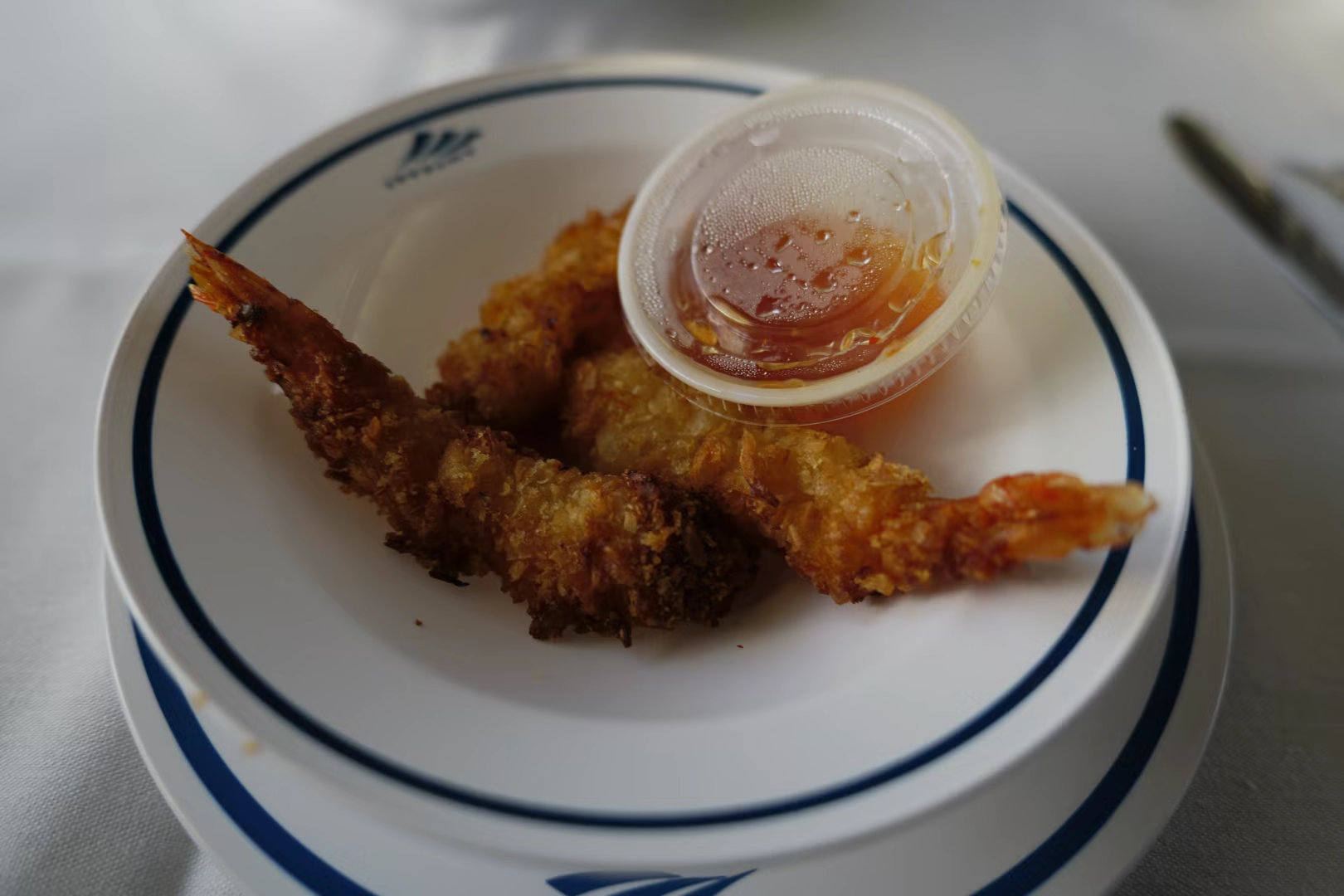
For the starter I also chose differently from DAY 1: the fried shrimp. It was like ebi fry (Japanese fried shrimp) with a coconut coating, but the moistness of the coconut made the texture like soggy ebi fry. The salad might be better.
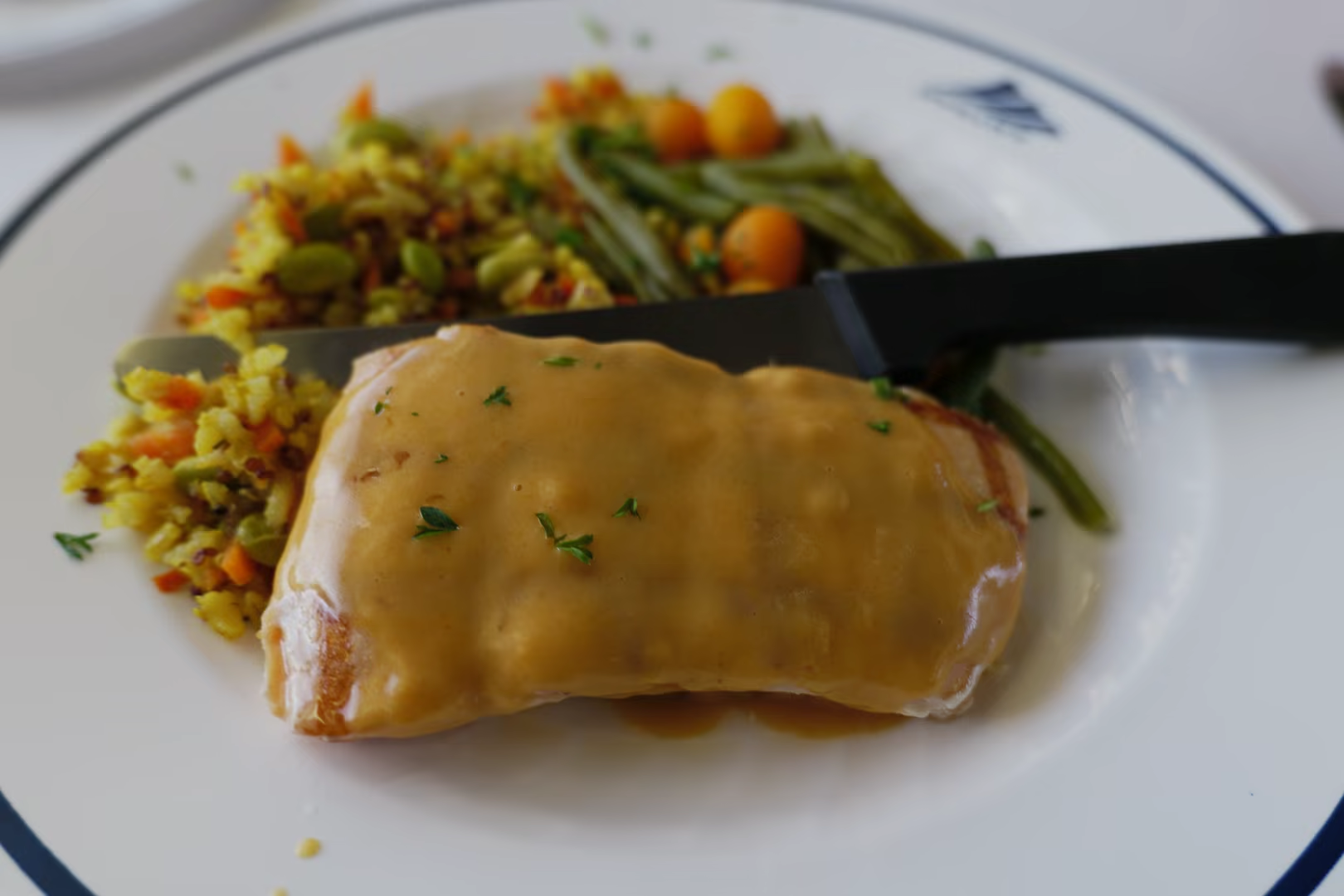
The salmon. I’d imagined the salmon fillet you get at IKEA restaurants, but it was much closer to salted salmon, Japanese-style. A flavor that makes you want rice — and Americans apparently feel the same, because there was a rice-like side spread underneath it.
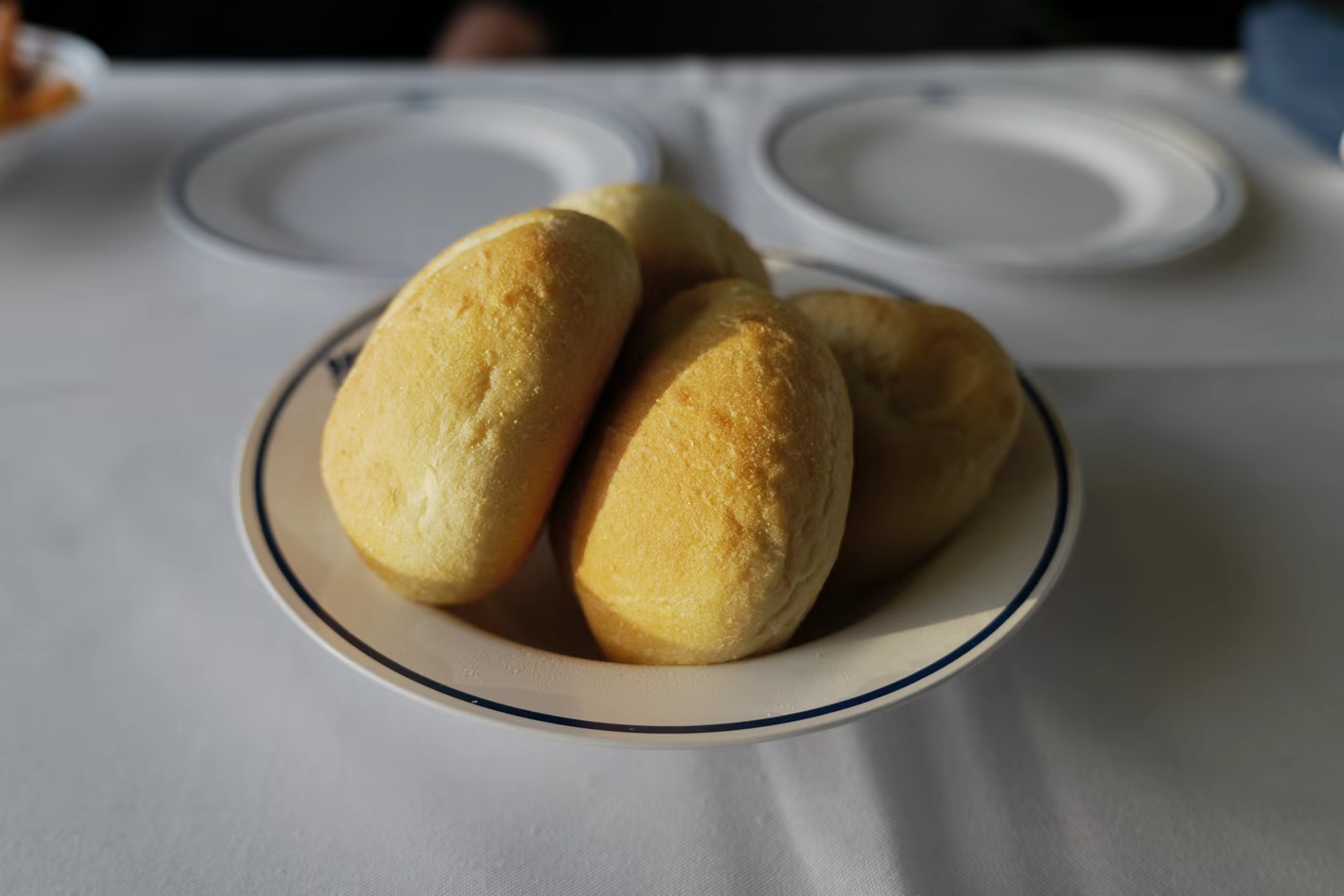
The bread was the same as yesterday — like a Costco dinner roll. Tasty with butter on it.
After dinner, same as yesterday: a shower and bed. The towels that had run out yesterday were back, so the attendant must have restocked them somewhere along the way.
DAY 3
On day three the train just blasts across flat land, and the scenery was basically fields the whole way. After two nights sleeping on a train I was faintly sleep-deprived, and tiredness had built up, so I don’t remember much. If you ride the other direction (Chicago → San Francisco), you’d be fresh for this section, which feels like a waste. I recommend San Francisco → Chicago. In fact, maybe San Francisco → Denver would be the best part.
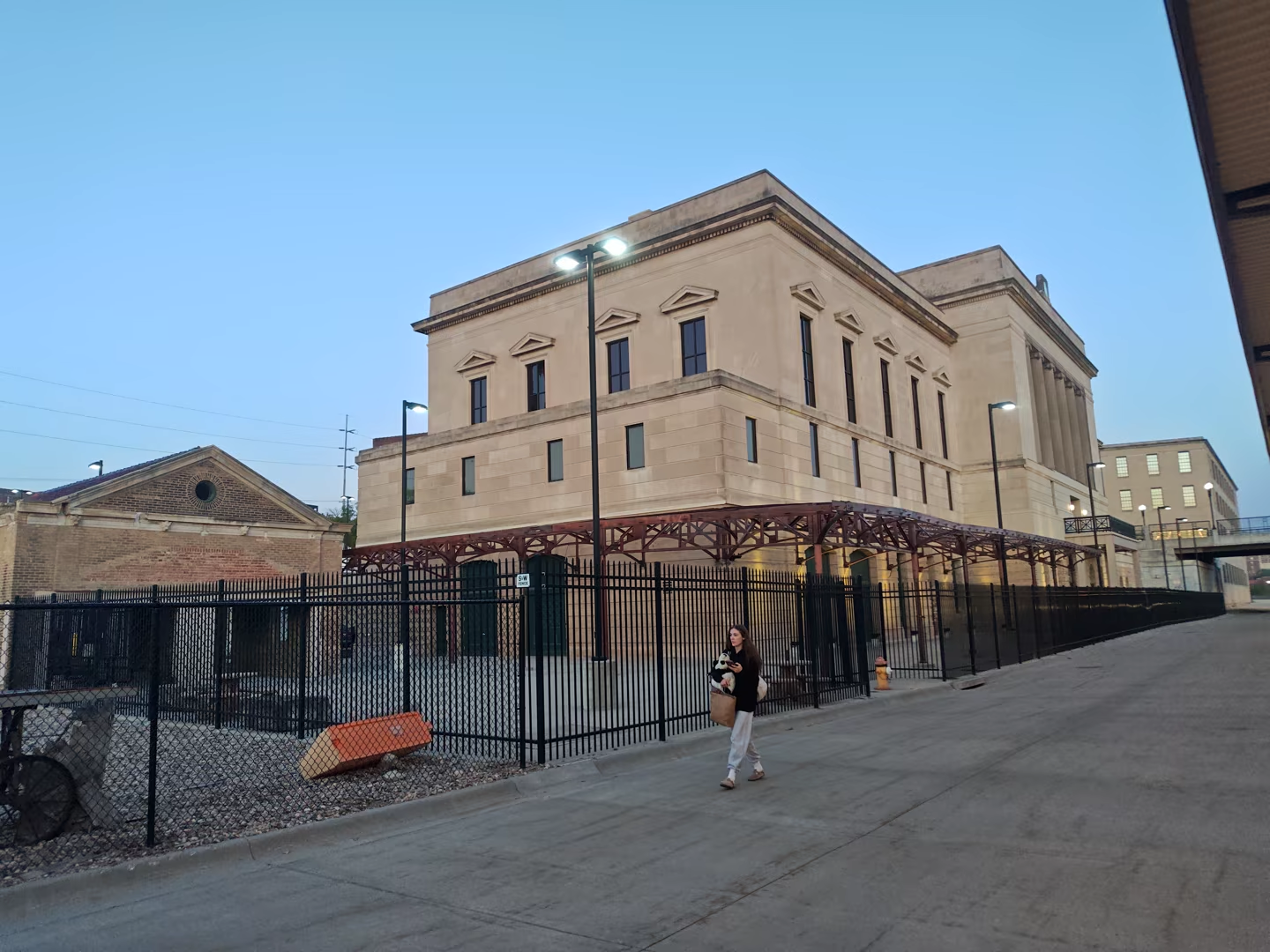
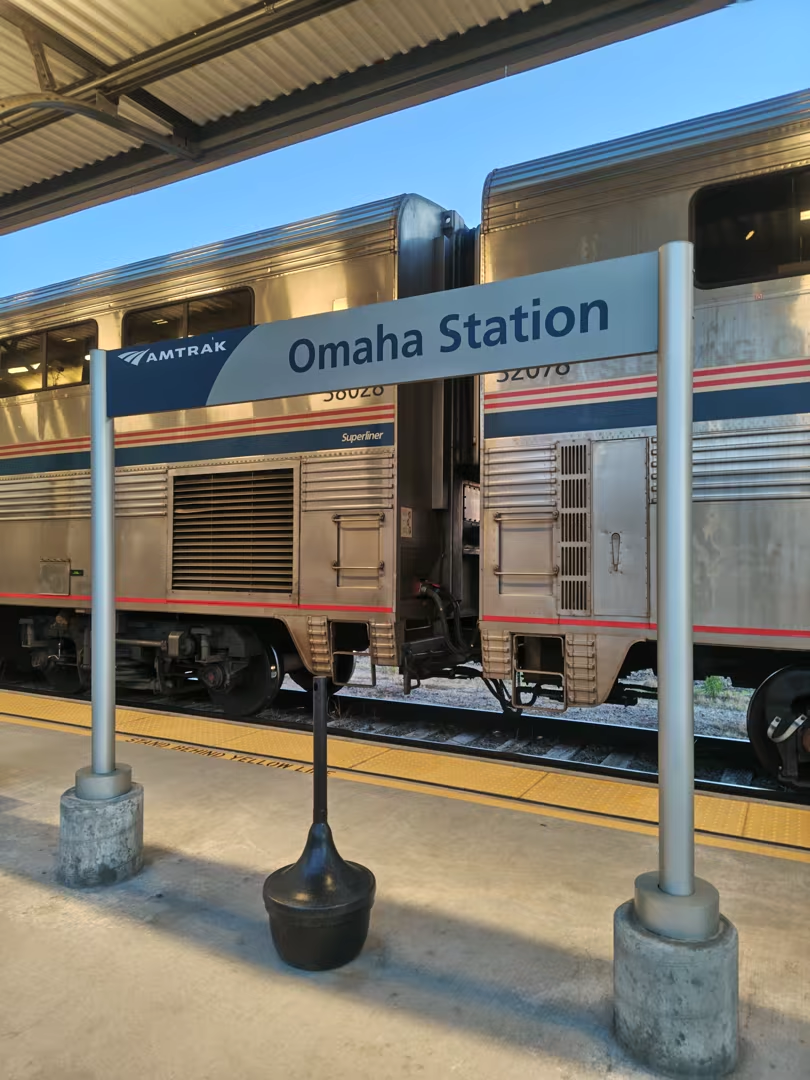
The first smoke stop of the day: Omaha. I remember it being cold, and nothing else… Before this, the train had been delayed by about an hour, waiting for an opposing train to pass, or something. If a Japanese shinkansen were delayed an hour it would be a huge deal, but one hour out of fifty-odd just gets a “huh.”
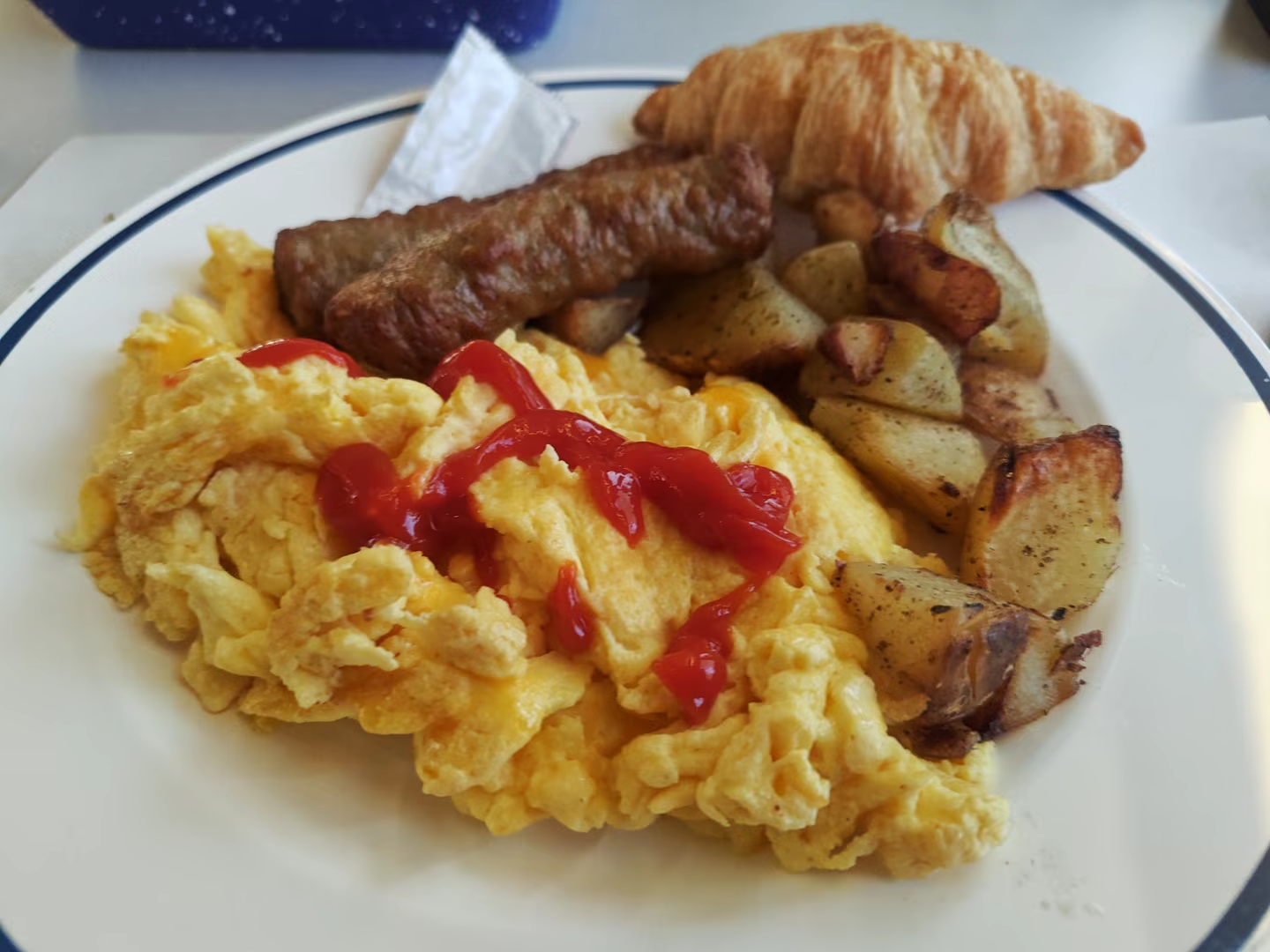
For breakfast I chose the scrambled eggs and sausage. It tastes exactly as it looks. The attendant kept telling us it was a “Busy Day,” with cleaning and turnaround preparations, so we were told to go to the dining car at the first call.
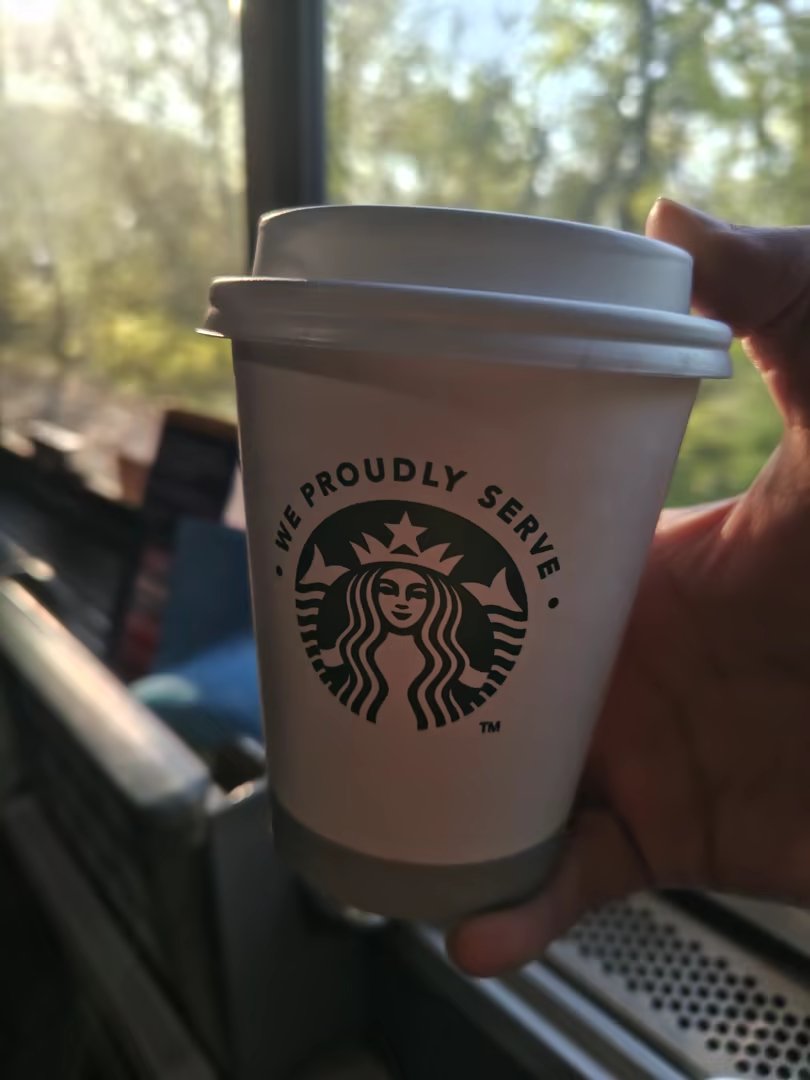
The dining car’s coffee is Starbucks-branded and tasty. You can take it away and it’s unlimited, so coffee lovers should take some with them. I later spilled this coffee all over my mattress.
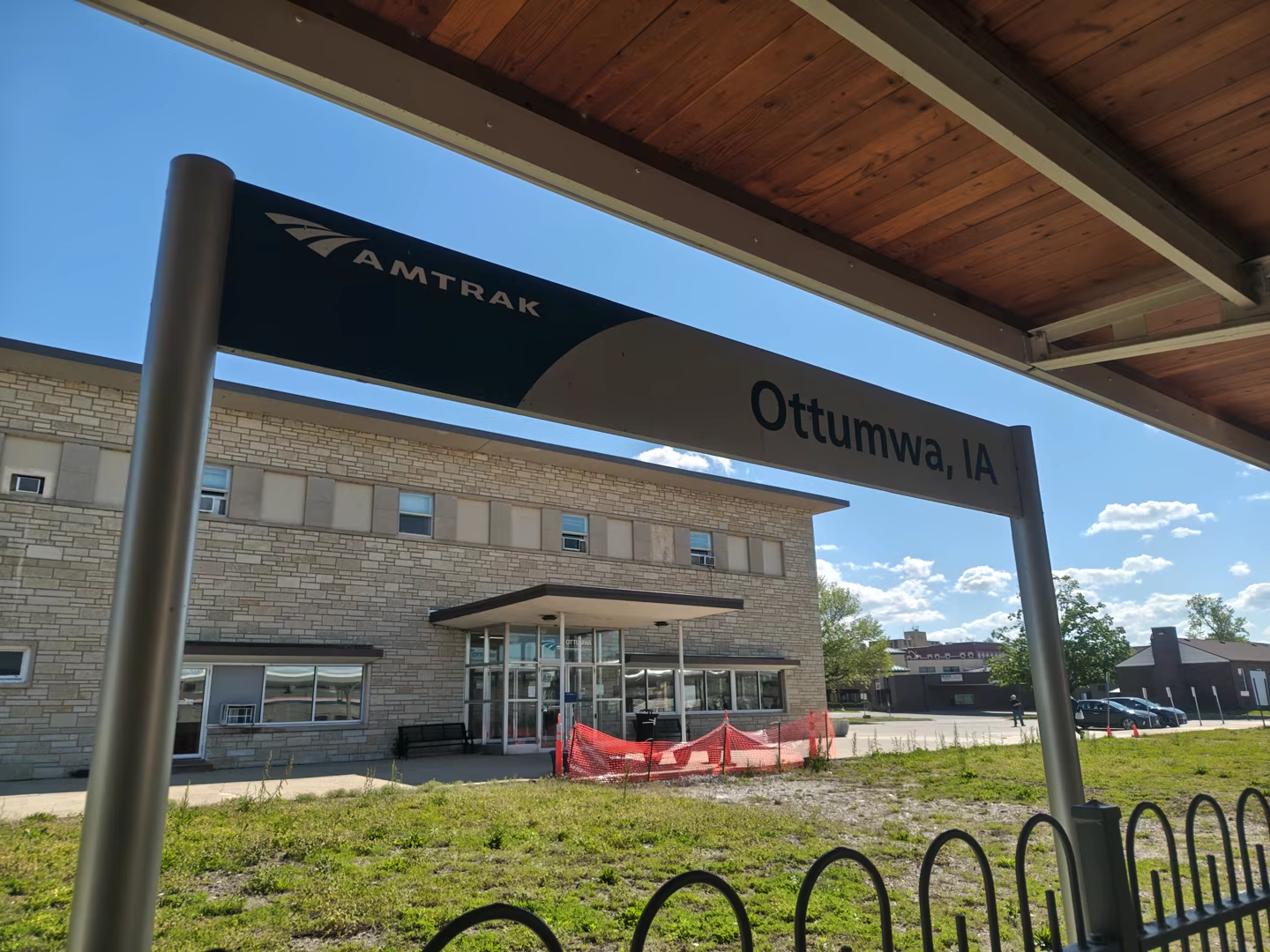
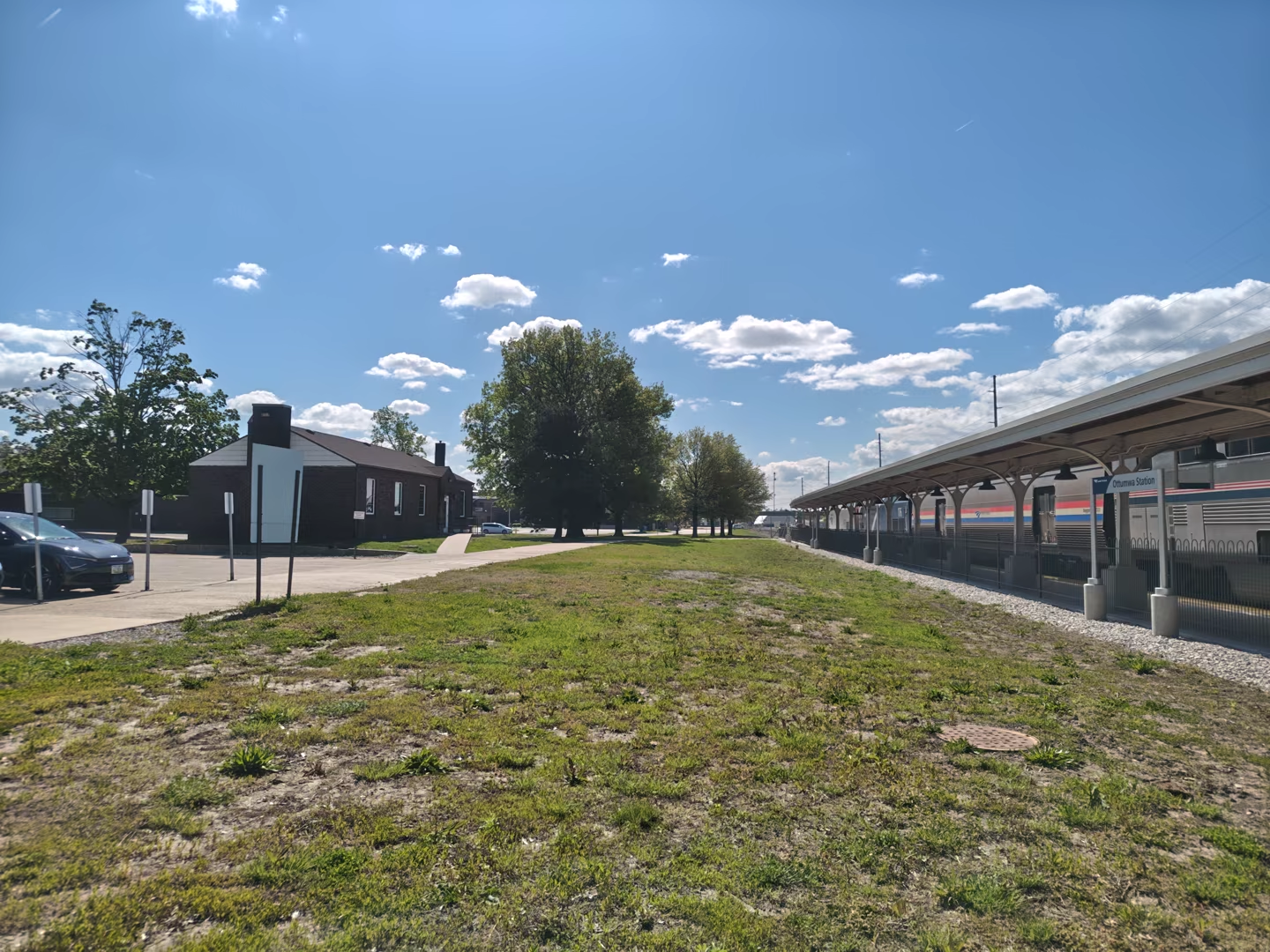
The second smoke stop: Ottumwa. At some point we’d entered Iowa. Being able to stop in a state I’d never visit in ordinary life is something special about this trip.
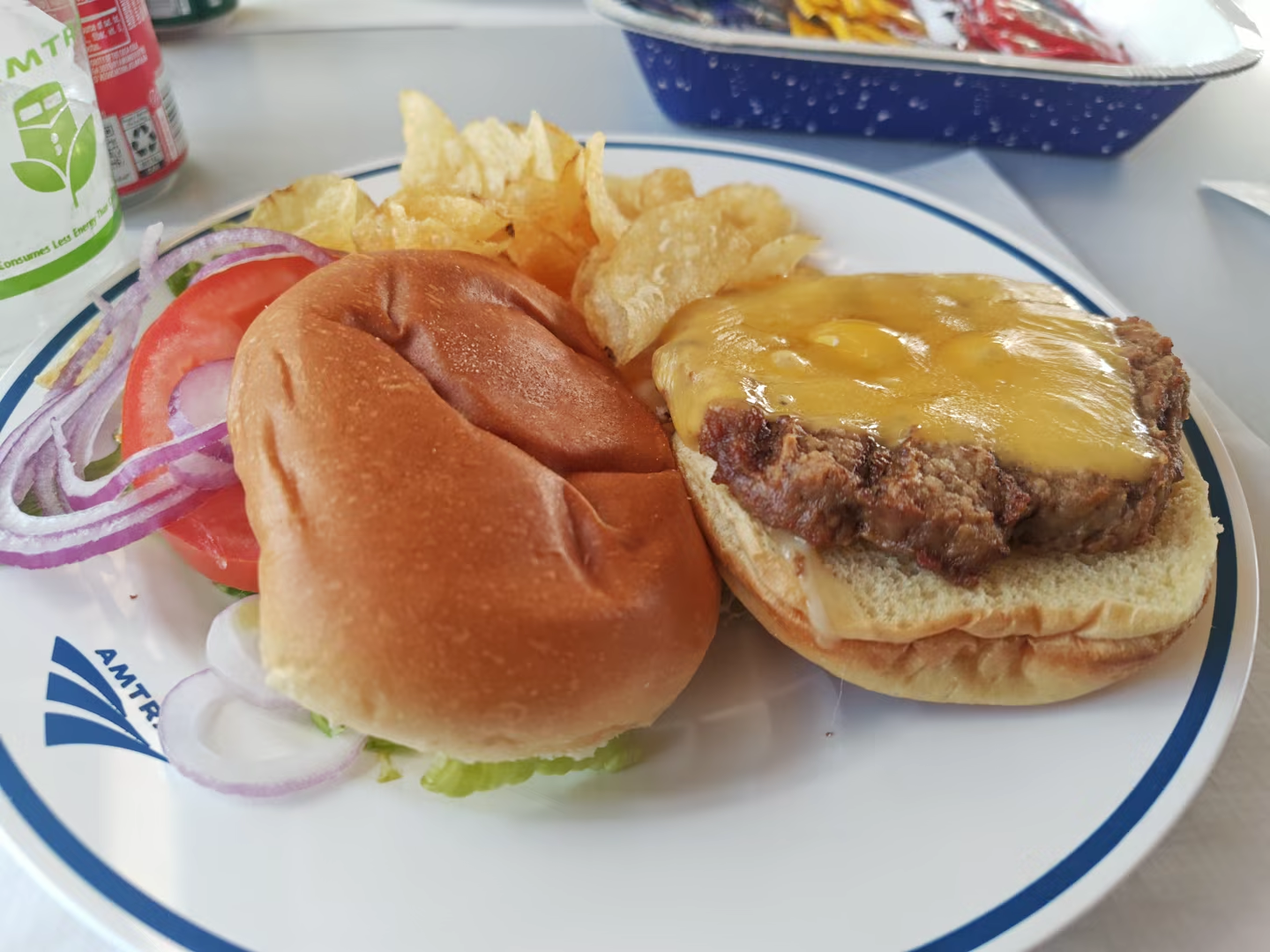
And then, the second lunch. Between breakfast and lunch I must have been asleep almost the whole time — there were hardly any photos. I chose the cheeseburger. Tasty. Though below Burger King — that’s the feeling.
During lunch, the sheets and towels were collected from the rooms, so tidy up a bit beforehand. The announcements will tell you the details. By this point, about half the passengers had gotten off, and the train was practically empty. The restaurant was empty too.
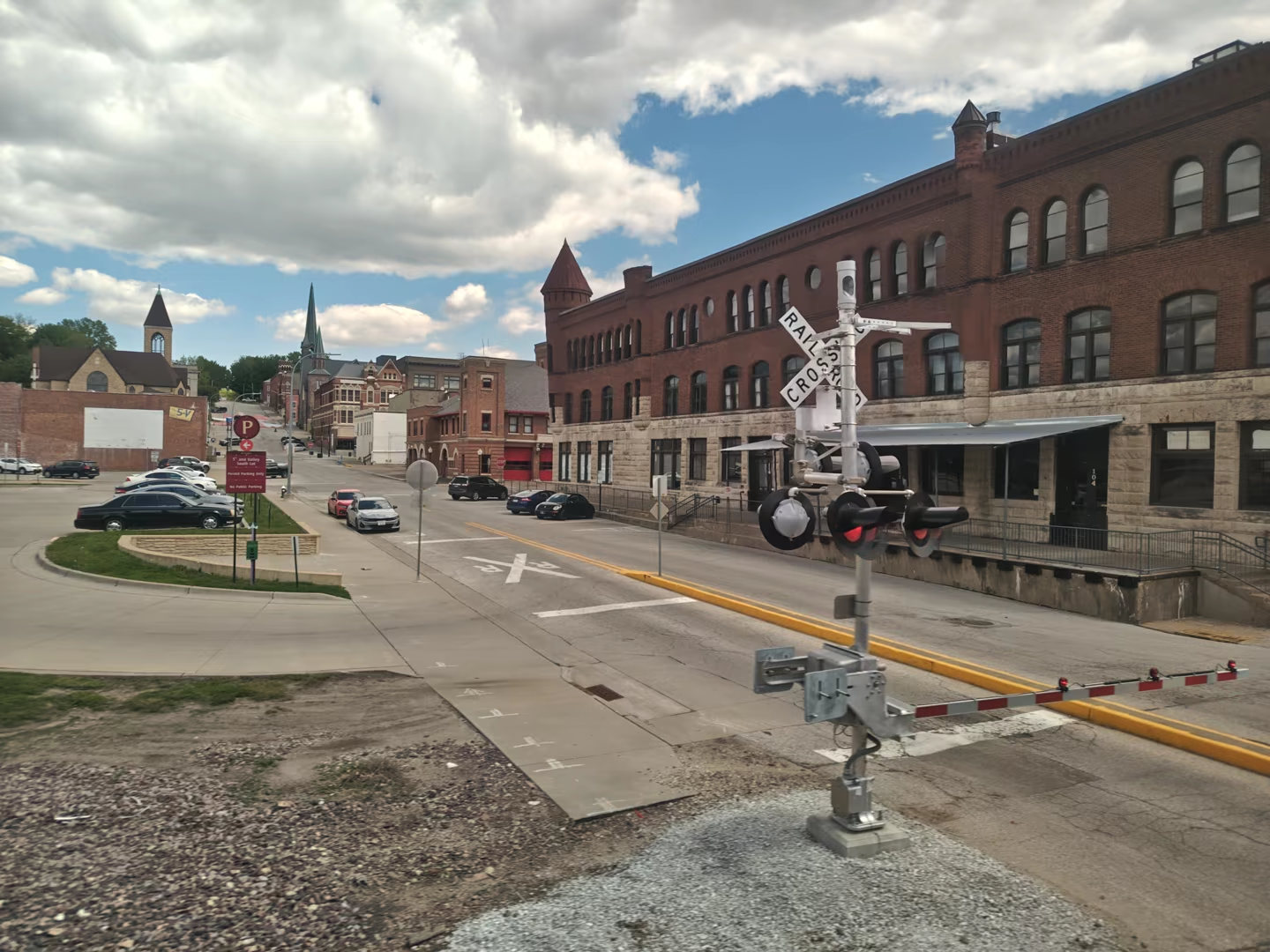
Brown, rectangular buildings were becoming more common — a sense that Chicago is getting closer.
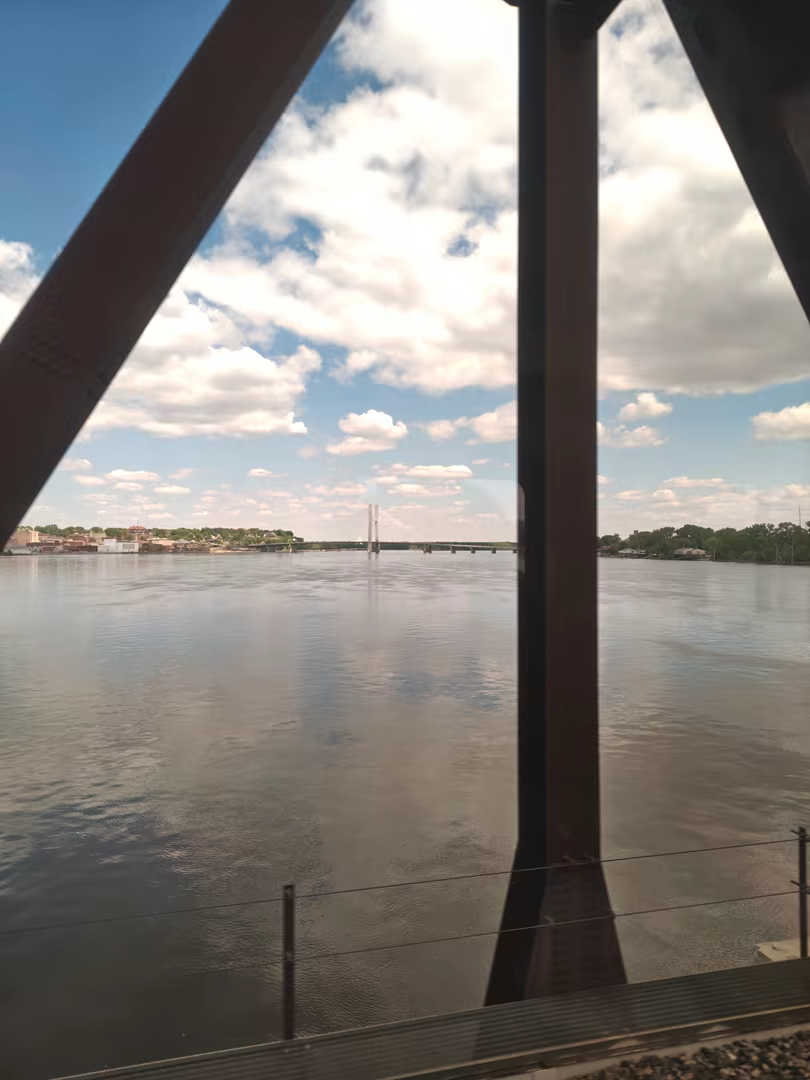
The Mississippi River! I wanted to see a genuine Mississippi red-eared slider, but I couldn’t spot one from the window. From here, we’re finally in Illinois.
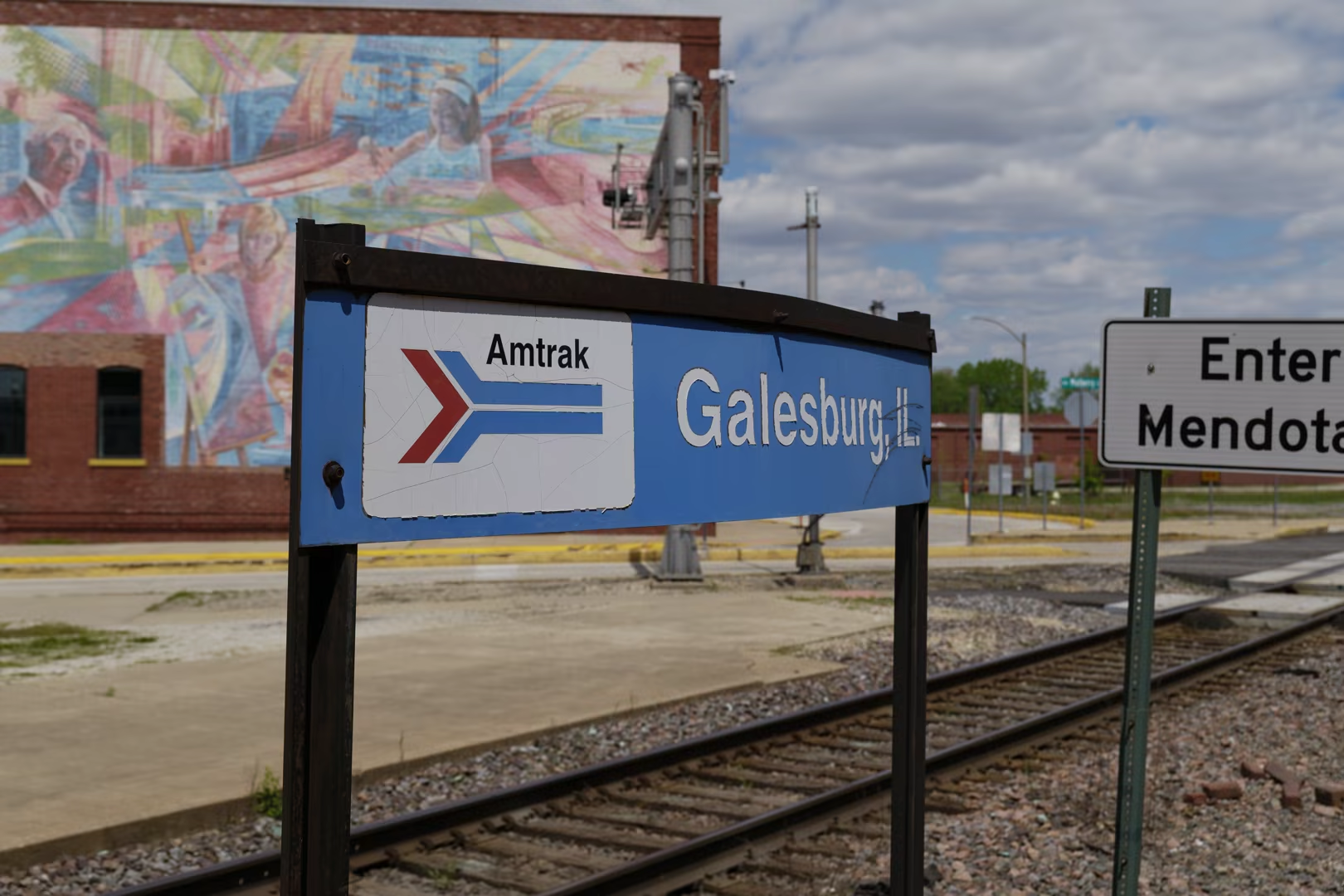
The last smoke stop: Galesburg station. Two hours and a bit from here to Chicago, and I was gradually getting sad about it.
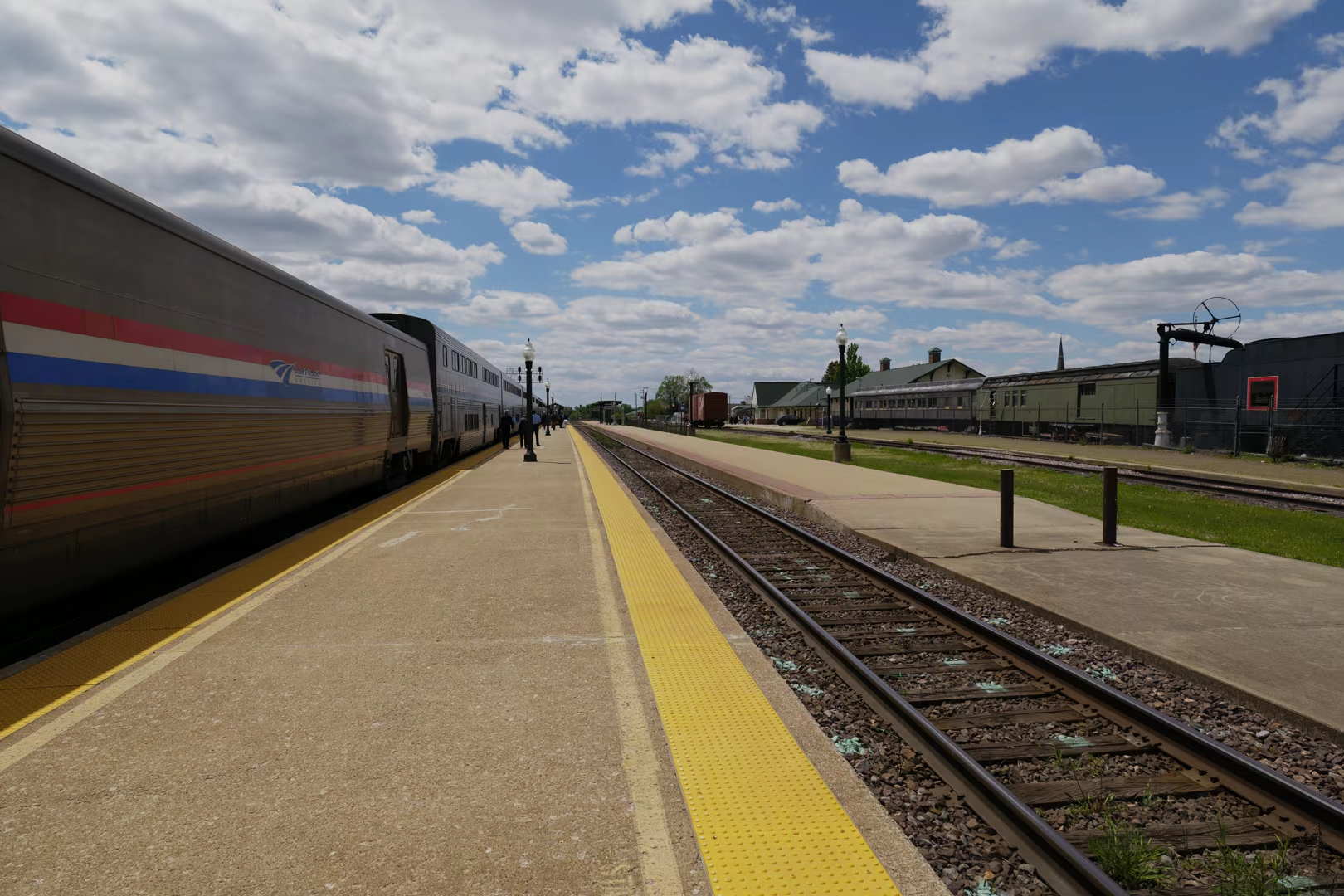
This car with no windows is the baggage car — the luggage we checked in at Emeryville is riding in it.
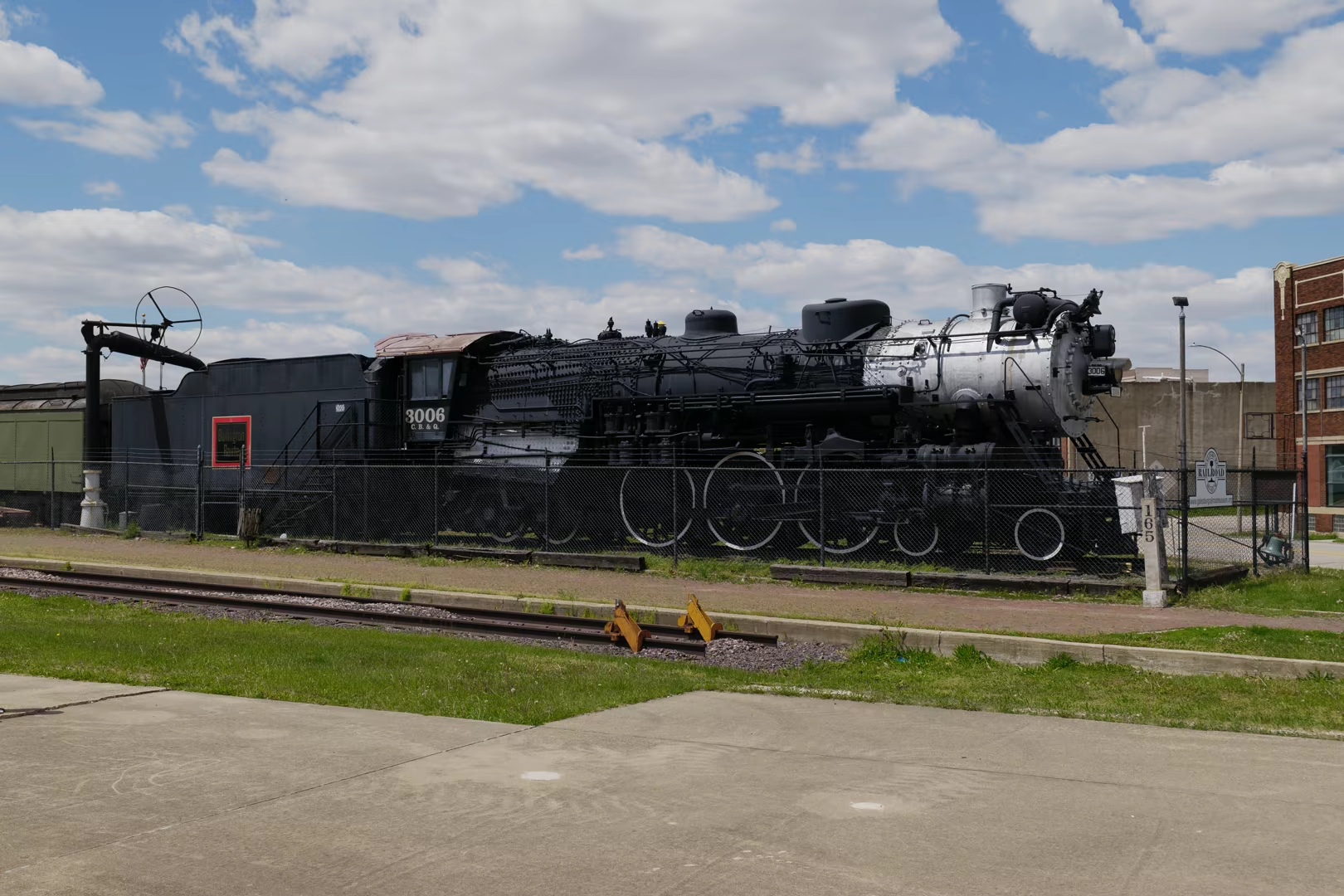
A steam locomotive (a Hudson) preserved beside the tracks. It doesn’t come across in the photo, but it’s far bigger than the diesel locomotives pulling us.
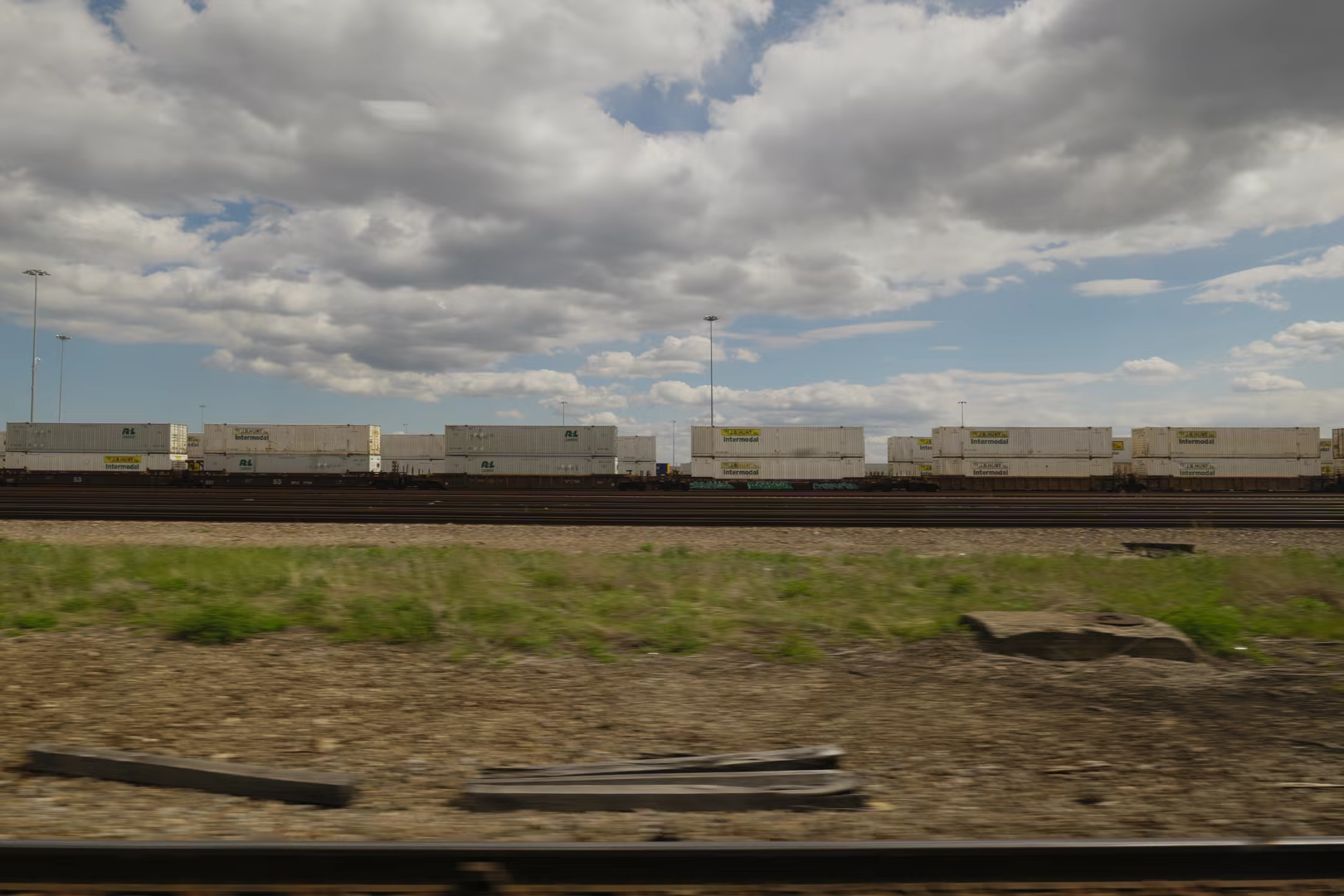
On the plains, double-stacked container trains were running everywhere. America is a car society, but this trip made me feel its logistics depend on rail.
Arrival in Chicago!
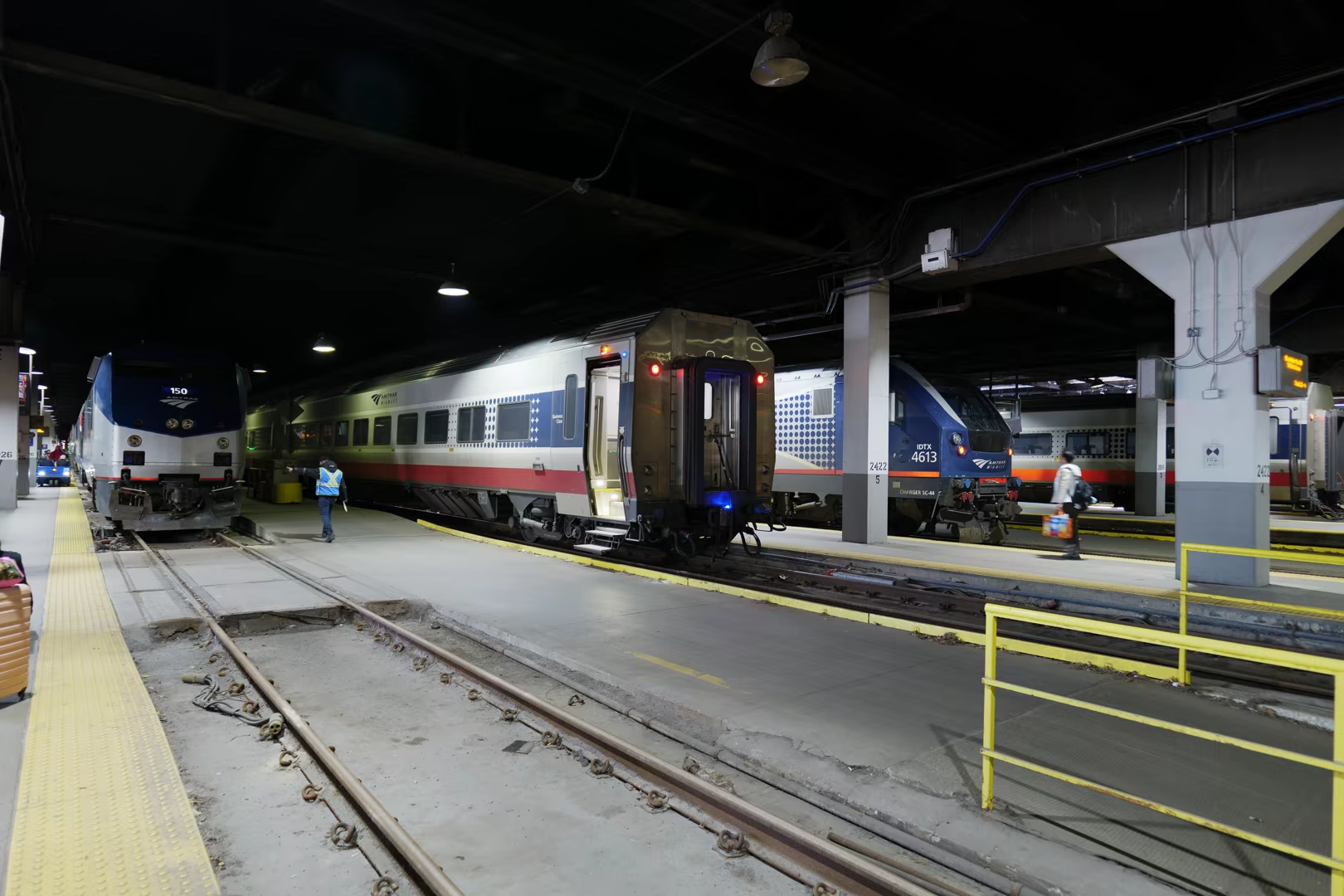
Chicago Union Station is an Amtrak stronghold, so there are all kinds of them here.
At last, we reached Chicago — about an hour behind schedule. There was no particular “sorry for the delay” announcement, and since nobody expects Amtrak to run on time, everyone just drifted away.
After arriving, you have to collect your checked luggage. I wished they’d just hand it over beside the train… but instead you wait for it to come out on an airport-style carousel. It took a fair while — I think we waited about fifteen minutes.
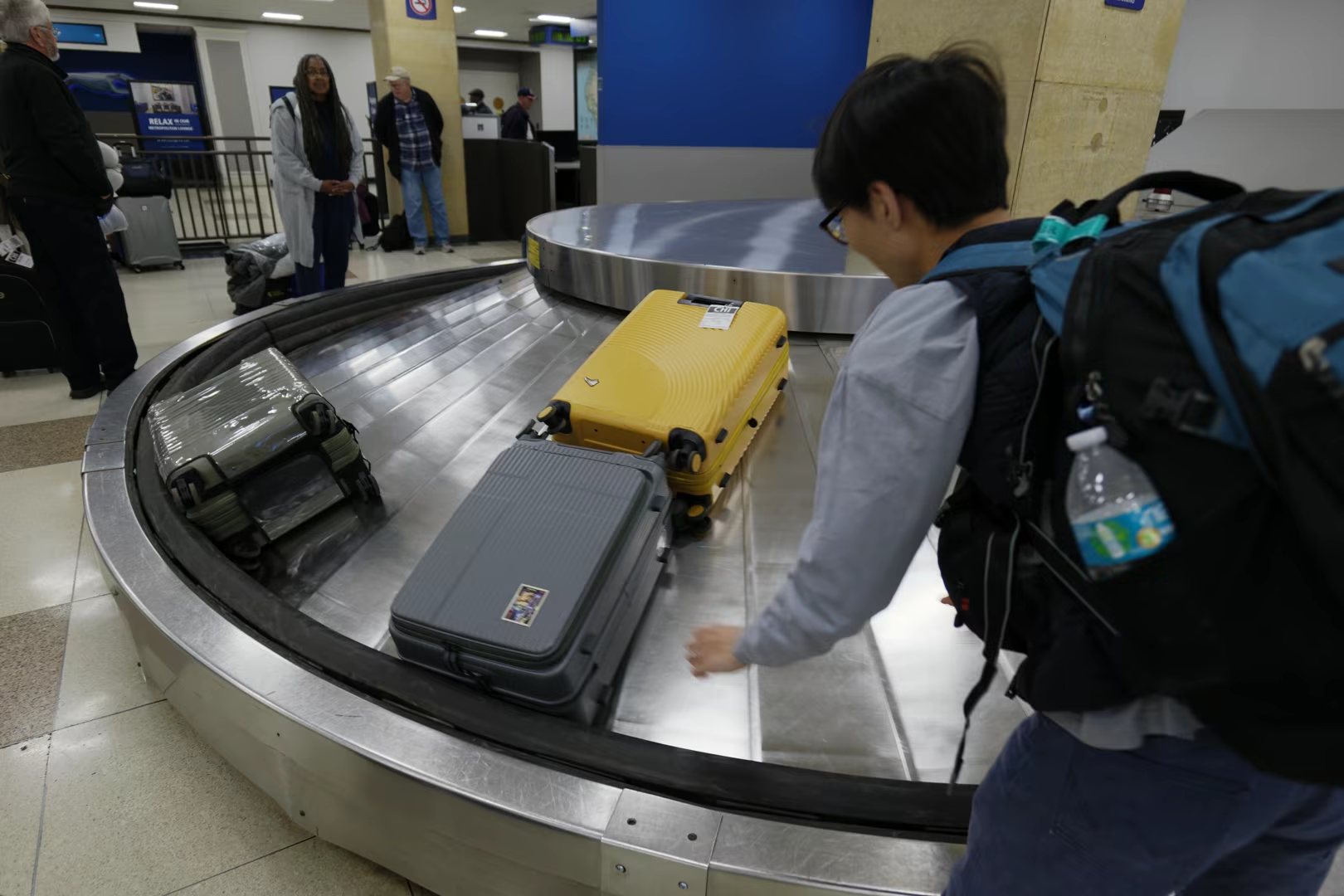
Suitcases coming out stacked two high. Lovely.
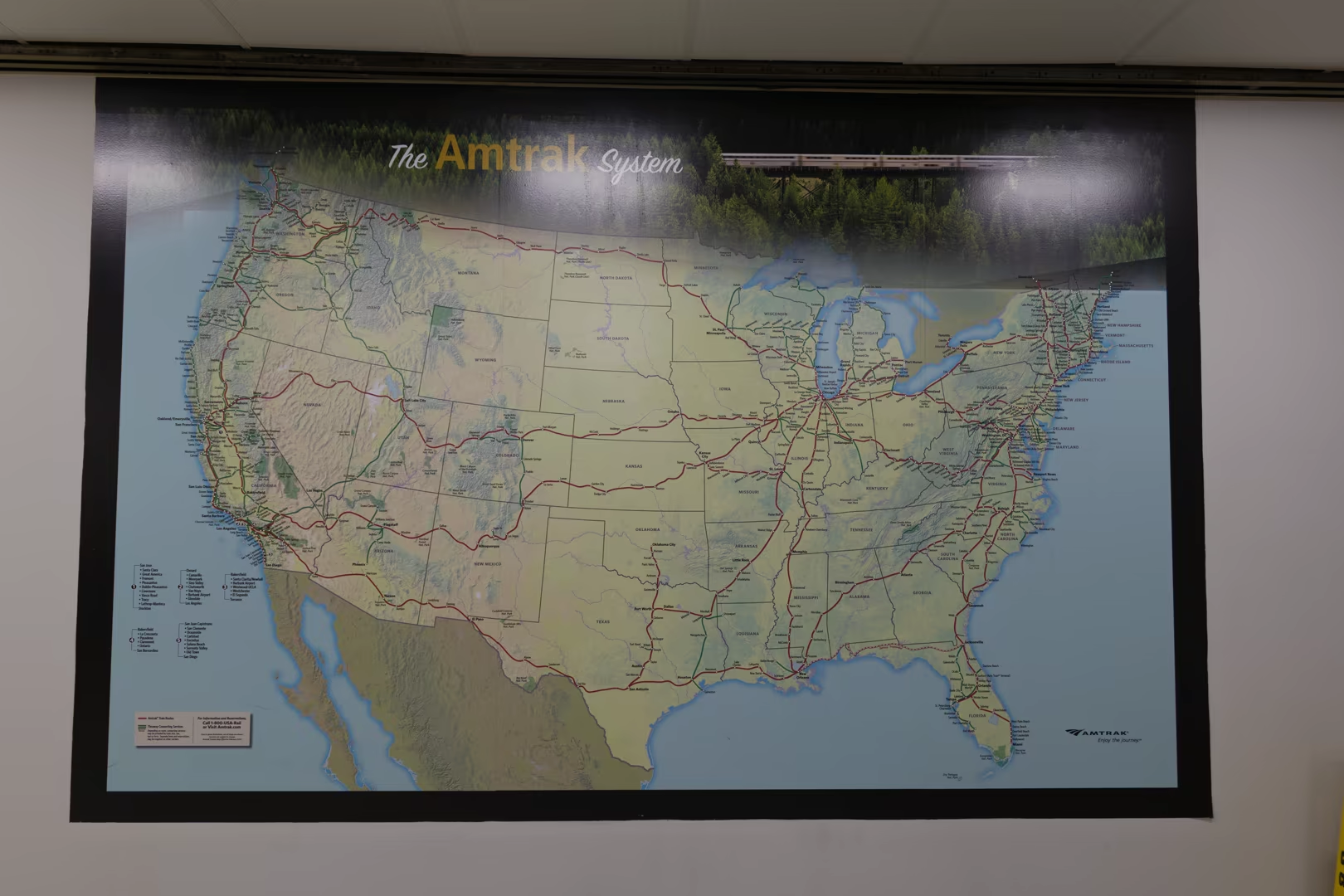
Looking at the route map at this point is emotional. We came from the West Coast to Chicago, so let me say it: we crossed the continent. …I’ve never been to the East Coast, though.
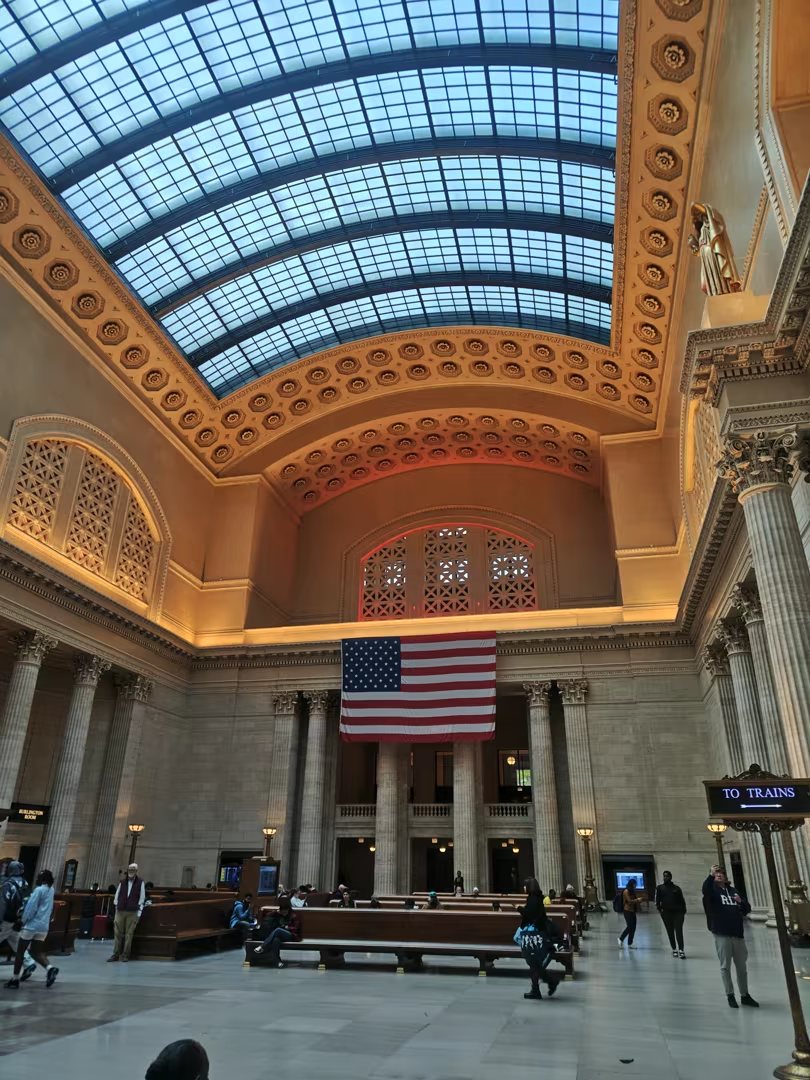
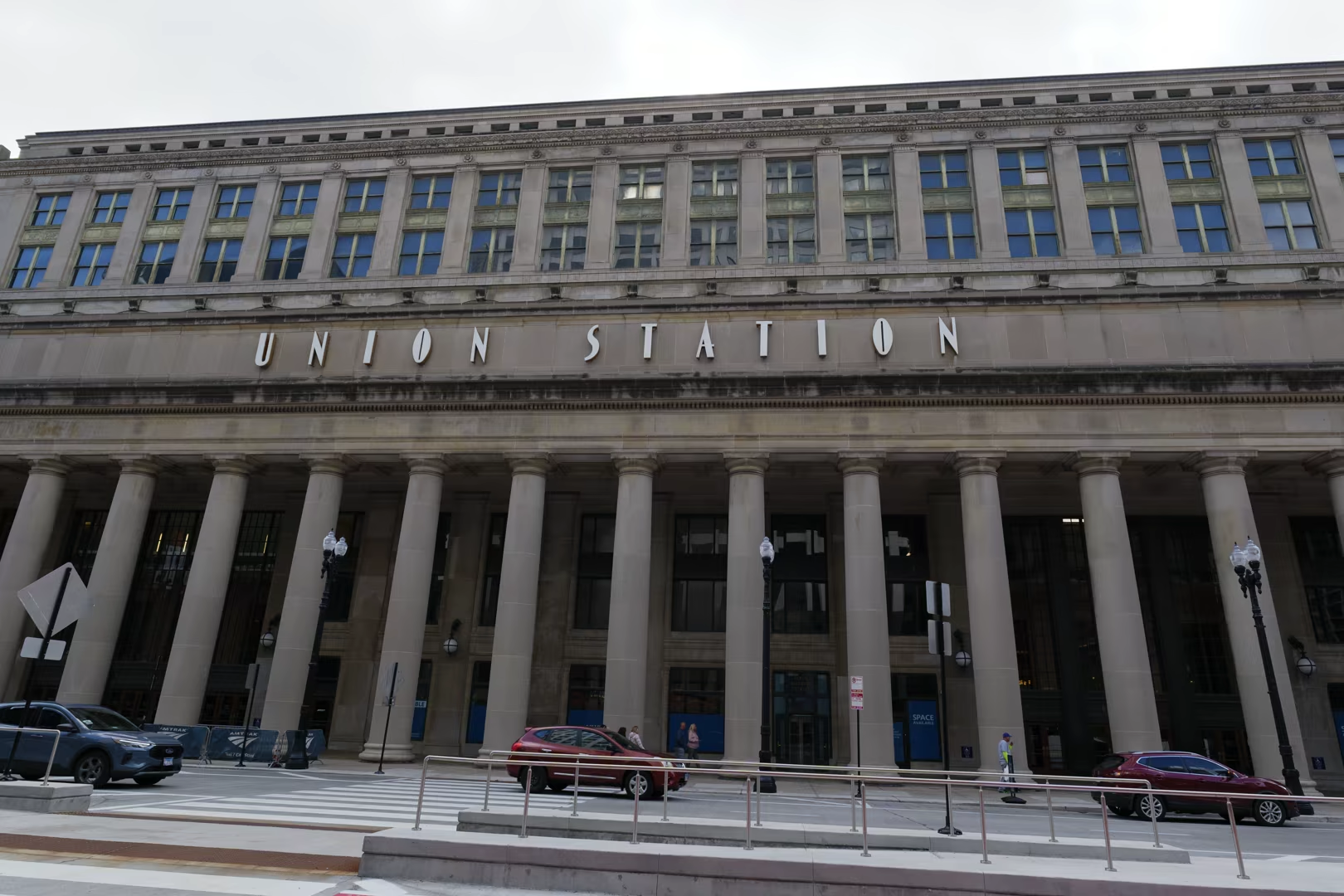
Chicago Union Station is a huge station, and it has an Amtrak lounge. You can use it for about three hours(?) after arriving too, so we had them keep our luggage. It’s supposed to be time-limited, but nobody checks the time.
That’s the end of Part 2! It ended up longer than I expected. Thank you for reading this far.
The scenery along the line was every bit as wonderful as Amtrak advertises, and the staff and passengers were all kind — it was a truly valuable experience. Touring by plane, hopping between cities, is good value for money and time, but an Amtrak trip lets you tour America’s untouched landscapes — places with barely even roads — safely and comfortably. Highly recommended.